Judicial Independence and the KRS Controversy
Analysis of the KRS controversy and judicial independence in Poland, based on "The KRS Controversy. 'We Are Turning in a World of Madness'" | Polsat News.
OPEN SOURCEThe selection process for judges in the National Judicial Council (KRS) has raised significant legal concerns, with accusations of politicization undermining judicial independence. Professor Ryszard Piotrowski criticizes the ruling party's actions, arguing that the current selection process is flawed and unconstitutional.
Concerns about the legitimacy of the current KRS arise due to its members being appointed through a process lacking a solid legal foundation. This situation has led to a growing divide among legal experts regarding the interpretation of the rule of law in Poland.
Warnings are issued about the potential for a cold civil war in Poland, stemming from ongoing political and judicial conflicts that threaten the rule of law. Historical comparisons are drawn to emphasize the seriousness of the current political situation.
The discussion highlights the complexities of legal interpretation and the varying opinions among legal experts, suggesting that the legitimacy of the current judicial framework is not universally accepted.
Participants debate the necessity of constitutional changes, with some opposing alterations while recognizing the complexities of the current political environment. The conversation underscores the tension between constitutional mandates and legislative actions.
Professor Piotrowski advocates for clarity and consensus in the constitutional process to ensure the effectiveness of any proposed changes, emphasizing the need for a robust mechanism to uphold judicial independence.
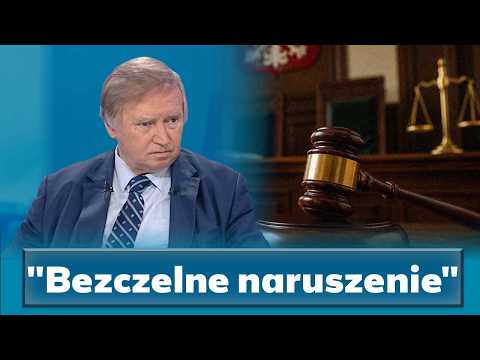
- Criticize the ruling party for manipulating the law, threatening the rule of law
- Argue that judges should select KRS members rather than parliament to uphold judicial independence
- Claim that the current selection process is legally valid and necessary for political stability
- Assert that the presidents actions are within legal bounds and do not undermine the judiciary
- Highlight the divide among legal experts regarding the constitutionality of the current judicial framework
- Raise concerns about the potential political motivations behind the presidents actions
- The selection process for judges in the National Judicial Council (KRS) is considered illegal by some, as it contradicts the constitutional mandate that judges should elect their own representatives
- Professor Ryszard Piotrowski criticizes the ruling party for manipulating the law, which threatens the rule of law and may lead to a constitutional crisis
- Concerns about the legitimacy of the current KRS arise due to its members being appointed through a process lacking a solid legal foundation, potentially invalidating their authority
- There is a growing divide in Poland regarding legal interpretation, with differing opinions among legal experts highlighting the ongoing struggle over the rule of law and judicial independence
- Historical comparisons are drawn to emphasize the seriousness of the current political situation, with warnings of a cold civil war stemming from disputes over judicial appointments
- The legality of the new National Judicial Council (KRS) and the selection of judges, with Professor Ryszard Piotrowski arguing that the current process is flawed and unconstitutional
- Piotrowski asserts that judges should select KRS members rather than parliament, highlighting a critical issue with the current legislative approach that undermines judicial independence
- The conversation reveals a divide among legal experts regarding the constitutionality of the current judicial framework, indicating a significant struggle within the legal community
- Warnings are issued about the potential for a cold civil war in Poland, arising from ongoing political and judicial conflicts that threaten the rule of law
- Despite criticisms of its legitimacy, Piotrowski maintains that the current Constitutional Tribunal is operational and must be respected until it is legally challenged or reformed
- The conflict regarding the selection of judges for the National Judicial Council (KRS) and the legality of actions by the Polish parliament, the Constitutional Tribunal, and the president
- Professor Ryszard Piotrowski criticizes the disregard for laws, describing the current political environment as a world of madness where politicians interpret laws arbitrarily
- On whether the parliament should select judges for the KRS, with legal experts expressing differing views on adherence to constitutional principles
- Concerns are raised about the legitimacy of the current Constitutional Tribunal, with arguments suggesting that its operations are compromised due to contentious judge appointments
- The conversation underscores the tension between constitutional mandates and legislative actions, asserting that the constitution should take precedence over laws that disrupt constitutional processes
- Warnings are issued about the risk of a cold civil war in Poland, driven by the politicization of the judiciary and its implications for citizens rights
- The Presidents ability to postpone the swearing-in of judges chosen by the parliament, raising questions about the legality of such delays
- The Constitutional Tribunal maintains that the President lacks the authority to evaluate the Sejms decisions on judge appointments, asserting that any hesitation should not be interpreted as a rejection of the judges
- Concerns are expressed regarding the potential political motivations behind the Presidents actions, indicating a deeper conflict among political factions in Poland
- Historical parallels are drawn to emphasize the gravity of the current political situation, comparing it to past conflicts that led to significant unrest
- The legitimacy of the procedures used by the Sejm and the President in appointing judges is scrutinized, pointing out the absence of a legal foundation for certain actions taken during this process
- The ongoing turmoil regarding the selection of judges for the National Judicial Council (KRS) adds to doubts about the legality of actions taken by the Sejm, Constitutional Tribunal, and the president
- Professor Ryszard Piotrowski criticizes the arbitrary interpretation of law by politicians, warning that this could lead to a cold civil war in Poland, where citizens may feel marginalized by a politically influenced judiciary
- The advantages of a mixed political system, suggesting it fosters broader representation among citizens, regardless of their political affiliations
- Concerns are voiced about the presidents indecision on the swearing-in of judges, with references to historical precedents that may influence current political dynamics
- Participants debate the necessity of constitutional changes, with some opposing alterations while recognizing the complexities of the current political environment
- The establishment of a new Constitutional Council in Poland, intended to reflect a variety of perspectives, as highlighted by the Presidents outreach to different parliamentary factions
- There is an ongoing debate about whether a new constitution is necessary or if modifications to the existing one would suffice, with various opinions on the potential consequences of either approach
- The conversation underscores the challenges involved in creating a new constitution, raising questions about the legal framework required for its implementation and the specific changes needed to the current constitution
- Professor Ryszard Piotrowski points out the numerous uncertainties surrounding the constitutional process, advocating for clarity and consensus to ensure the effectiveness of any proposed changes
The assumption that the current KRS selection process is fundamentally flawed rests on the premise that all legal interpretations must align with the constitution. Inference: If the legitimacy of the KRS is questioned, it could undermine the entire judicial framework, suggesting a need for a more robust mechanism to ensure compliance with constitutional mandates.
This analysis is an original interpretation prepared by Art Argentum based on the transcript of the source video. The original video content remains the property of the respective YouTube channel. Art Argentum is not responsible for the accuracy or intent of the original material.