U.S.-Iran Relations and Global Economic Challenges
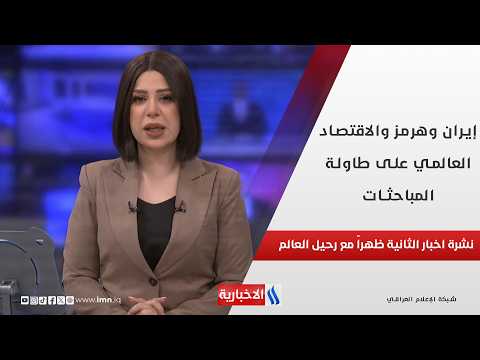
Analysis of U.S.-Iran relations and global economic challenges, based on "Trump begins a visit to Beijing today, Iran and Hormuz, and the global economy on the agenda in the 2nd bulletin" | IraqiaNews.
OPEN SOURCEPresident Trump has commenced a visit to Beijing, focusing on discussions regarding the U.S.-Iran conflict, the Strait of Hormuz, and global economic challenges. The visit underscores the strategic significance of U.S.-China relations amid ongoing regional tensions.
The Iraqi parliament is preparing for significant votes on a new ministerial program, reflecting the urgency of establishing a stable government to address national challenges. Political factions in Iraq are being urged to expedite the formation of a government with full authority.
Iran has outlined five conditions for entering negotiations with the U.S., including lifting sanctions and recognizing its sovereignty over the Strait of Hormuz. The Iranian government remains resolute in its demands, indicating a readiness to respond to U.S. pressures with various strategies.
The discussions during Trump's visit are expected to address the strategic implications of the Strait of Hormuz for global energy markets, particularly in light of rising gasoline prices and supply challenges. China's role as a potential mediator in U.S.-Iran negotiations is also highlighted.
Military movements by Britain and France indicate the formation of a new alliance aimed at securing navigation in the Strait of Hormuz, reflecting heightened stakes in the region. The effectiveness of diplomatic engagement in resolving the U.S.-Iran conflict remains uncertain amid entrenched power dynamics.
The report concludes with updates on the humanitarian situation in the region, including casualties and the effects of ongoing ceasefire negotiations, emphasizing the need for international cooperation to achieve stability.
- Emphasizes the importance of diplomatic engagement to resolve tensions with Iran
- Seeks to leverage economic relationships to gain political concessions from Iran
- Demands recognition of sovereignty and lifting of sanctions as preconditions for negotiations
- Indicates readiness to respond to U.S. pressures with military options
- Both sides acknowledge the strategic significance of the Strait of Hormuz for global energy markets
- Ongoing military movements by Britain and France highlight the urgency of securing navigation in the region
- Donald Trump has commenced a visit to Beijing, with discussions centered on Iran, the Strait of Hormuz, and the global economy
- The UK and France are reportedly forming a military alliance aimed at securing navigation in the Strait of Hormuz due to escalating tensions
- The Iraqi parliament is preparing to vote on a new ministerial program, as Prime Minister-designate Al-Zaydi works to finalize his cabinet amidst political disagreements
- Political factions in Iraq are being urged to expedite the formation of a government that has full authority to tackle ongoing national challenges
- The upcoming parliamentary session is anticipated to include significant votes on the proposed ministerial cabinet, highlighting the urgency of establishing a stable government
- President Trump is visiting Beijing to address key issues such as the U.S.-Iran conflict and global economic challenges, accompanied by prominent administration officials
- Trump stated that the U.S. does not engage in deceptive practices in negotiations with Iran and indicated that military threats could be used as leverage
- The discussions will likely focus on the strategic significance of the Strait of Hormuz and how U.S. economic policies affect Irans access to resources
- Chinas Foreign Ministry has welcomed Trumps visit, emphasizing the importance of bilateral relations and the need for dialogue on international stability
- The upcoming summit between Trump and Chinese President Xi Jinping is expected to be a pivotal meeting, addressing various geopolitical issues
- There is ongoing debate about the potential for a framework agreement or a symbolic summit between the U.S. and China, with expectations leaning towards a general framework influenced by the global economic landscape
- China is anticipated to push for a settlement that acknowledges Irans sovereignty and gradually eases sanctions in exchange for Irans commitment to freeze certain nuclear activities
- The global energy market is facing significant challenges, including a loss of one million barrels per day and rising gasoline prices in the U.S, underscoring the urgency of the discussions
- Iran has outlined five conditions for entering a second round of negotiations with the U.S, including halting hostilities and lifting sanctions, reflecting a firm negotiating position
- Chinas role is critical as it imports a large portion of Iranian oil, and the U.S. seeks to leverage this economic relationship to gain political concessions from Iran
- President Trumps upcoming visit to Beijing is viewed as a crucial opportunity to alter the dynamics of negotiations with Iran amid ongoing military tensions
details
- The international economy is at risk due to a worsening energy supply crisis, highlighted by protests from thousands of farmers in France against rising fuel prices
- Iran has established five conditions for reopening the Strait of Hormuz, which include lifting U.S. sanctions, releasing frozen assets, and recognizing its sovereignty over the strait
- The Iranian government is resolute in its demands, indicating a readiness to respond to U.S. pressures with various strategies, including military options
- China is seen as a potential mediator in U.S.-Iran negotiations, with Irans ambassador suggesting that Beijing could act as a guarantor for any agreements made
- Rising global gasoline and diesel prices are significantly affecting transportation and production costs, contributing to unprecedented financial challenges in the global economy
- Iran is preparing for potential military scenarios, including ground attacks and submarine operations, to assert control over the Strait of Hormuz
- The Iranian government is pursuing regional cooperation, particularly with Oman, to enhance security in the Strait, indicating a strategic shift towards collaboration with neighboring countries
- Irans response to U.S. negotiation conditions includes demands for guarantees from major powers like China and Russia, underscoring its strategic economic interests in the region
- The British government is engaged in discussions to secure the Strait of Hormuz, highlighting the importance of military readiness and international cooperation for maritime navigation
- Recent data indicates a significant increase in UK military spending related to fuel procurement, reflecting the heightened stakes in the region amid ongoing tensions
- The UK government is taking a strong position on Middle Eastern security, particularly in response to recent threats against British communities
- British Prime Minister Charles plans to outline 35 priorities aimed at achieving a lasting ceasefire in the region
- Despite facing political challenges domestically, the UK remains committed to international military cooperation to ensure maritime security in the Strait of Hormuz
- In Lebanon, tensions are high as Hezbollah has launched rockets at Israeli forces, leading to significant civilian casualties amid ongoing ceasefire negotiations
- Internal divisions within Lebanon complicate peace talks, as the government strives for a stable ceasefire while contending with continuous Israeli military actions
details
details
- Iraqi humanitarian aid has been delivered to southern Lebanon, providing essential supplies to displaced families affected by ongoing conflicts
- The initiative, organized by the holy shrine of Al-Abbas, includes basic necessities and support for a center established in a school in Sidon
- A total of 33 displaced families are facing significant challenges in securing daily needs, including medical supplies and food
- The Arab League hosted a global forum in Cairo aimed at enhancing cooperation between Arab and Chinese nations amid complex international challenges
- The forum highlighted the importance of building a peaceful and stable future through shared development and emphasized the role of media and think tanks in fostering collaboration
- The Iraqi military has denied reports of foreign troops in the desert area between Najaf and Karbala, asserting these claims are false
- The Chief of Staff of the Iraqi Army visited the region to verify the absence of foreign military bases and to assess the readiness of Iraqi forces
- Recent military operations included a brief presence of foreign troops that lasted less than 48 hours, according to military sources
- The Iraqi military is conducting extensive patrols and intelligence operations in desert regions to ensure security and monitor potential threats
- The Baghdad Operations Command has enhanced security checkpoints with modern surveillance systems to improve monitoring and control of vehicle traffic
details
- Local administration and security forces are set to open three new overpasses in Baghdad to enhance traffic flow and alleviate congestion in critical areas
- The overpass project includes constructions at the intersections of Baghdad Al-Jadida and Al-Quds, measuring 610 meters in length and 19 meters in width, with eight lanes
- Despite facing various challenges during construction, the project has been successfully completed, improving the citys transportation infrastructure
- The initiative also involves road expansions and the installation of traffic signs and central islands to facilitate smoother traffic movement
- Engineering teams are actively resurfacing streets in the Karrada area to address dust and road condition issues as part of a larger urban development effort
- The segment emphasizes the importance of honoring the sacrifices of martyrs in Iraq, highlighting their contributions to the nations future and the fight against terrorism
- A ceremony celebrated the College of Dentistrys achievements, which have led to its international recognition, marking a significant milestone for Iraqi academic institutions
- Geopolitical developments include Trumps visit to Beijing, which will address issues related to Iran and global economic discussions
- Military movements by Britain and France indicate the formation of a new alliance aimed at securing navigation in the Strait of Hormuz amid rising tensions
- The report concludes with an update on the humanitarian situation, mentioning casualties and the effects of the ongoing ceasefire in the region
details
The visit's implications hinge on the assumption that diplomatic engagement can effectively address tensions in the Strait of Hormuz. Inference: If the military alliance between the UK and France is successful, it may alter the balance of power in the region, yet the absence of a clear strategy for Iraq's political stability remains a critical confounder.
This analysis is an original interpretation prepared by Art Argentum based on the transcript of the source video. The original video content remains the property of the respective YouTube channel. Art Argentum is not responsible for the accuracy or intent of the original material.