Understanding the Nakba and Its Impact on Gaza Today
Analysis of Nakba commemoration and its relevance to the current humanitarian crisis in Gaza, based on "Palestinians mark the Nakba — and say today is worse" | DW News.
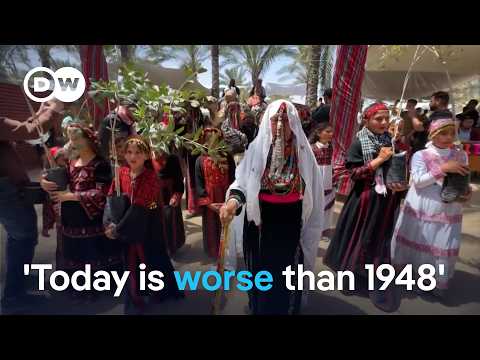
OPEN SOURCEPalestinians commemorate the 78th anniversary of the Nakba, reflecting on the mass displacement of 1948 and drawing parallels to the current humanitarian crisis in Gaza. Demonstrators in Gaza carry keys symbolizing their right to return, highlighting a collective trauma that many believe is being relived due to renewed violence and displacement.
The United Nations reports that over three-quarters of homes in Gaza have been damaged, with nearly 2.2 million Palestinians displaced, prompting some to describe the current situation as a new Nakba. Young Palestinians express fears of a new Nakba, linking the expansion of Israeli settlements in the West Bank and ongoing violence to their historical displacement and current suffering.
Omar Dajani shares his family's Nakba experience, emphasizing the lasting trauma of displacement and property confiscation faced by many Palestinians. He discusses the complex issues of justice, restitution, and the right of return for Palestinian refugees, which remain unresolved.
Dajani proposes a reimagined two-state solution that ensures freedom of movement and residence for both Palestinians and Israelis, while addressing historical grievances. He points out that previous negotiations, especially in 1999, failed to sufficiently tackle Palestinian refugee rights and the challenges posed by Israeli annexation.
The Palestinian Authority struggles with legitimacy issues, largely due to its inability to secure a peaceful future for Palestinians, alongside governance challenges and corruption. Dajani argues that significant reform of the Palestinian Authority is unlikely while the occupation continues.
Recent violence, particularly the October 26 massacre, has intensified ongoing trauma, complicating the political landscape. Many Israelis must confront their societal issues before pursuing peace negotiations, as the likelihood of achieving a two-state solution diminishes.
- View current situation in Gaza as a new Nakba, reflecting ongoing trauma and displacement
- Emphasize the need for justice, restitution, and the right of return for refugees
- Maintain policies that contribute to the ongoing conflict and displacement
- Show reluctance to engage with Arab parties and address Palestinian rights
- Palestinian Authority faces legitimacy issues due to governance challenges
- International communitys role in addressing the conflict remains critical
- On the 78th anniversary of the Nakba, Palestinians draw parallels between the mass displacement of 1948 and the current humanitarian crisis in Gaza, intensified by ongoing conflict
- Demonstrators in Gaza carry keys to symbolize their right to return, reflecting a collective trauma that many believe is being relived due to renewed violence and displacement
- The United Nations reports that over three-quarters of homes in Gaza have been damaged, with nearly 2.2 million Palestinians displaced, prompting some to describe the current situation as a new Nakba
- Young Palestinians express fears of a new Nakba, linking the expansion of Israeli settlements in the West Bank and ongoing violence to their historical displacement and current suffering
- The ongoing conflict has resulted in significant casualties, with over 70,000 Palestinians reportedly killed since the recent escalation, leaving many without hope for a stable future
details
- Omar Dajani shares his familys Nakba experience, emphasizing the lasting trauma of displacement and property confiscation faced by many Palestinians
- The Nakba is closely linked to the creation of a Jewish state, raising complex issues regarding justice, restitution, and the right of return for Palestinian refugees
- Dajani proposes a reimagined two-state solution that ensures freedom of movement and residence for both Palestinians and Israelis, while addressing historical grievances
- He points out that previous negotiations, especially in 1999, failed to sufficiently tackle Palestinian refugee rights and the challenges posed by Israeli annexation
- The current dire situation for Palestinians may create a willingness to accept a deal, but any lasting resolution must fairly address the root causes of the conflict
- The Nakba, or catastrophe, is commemorated by Palestinians as a reminder of the mass displacement in 1948, with many drawing parallels to the current situation in Gaza and the West Bank
- Omar Dajani stresses the importance of affirming the right of Palestinian refugees to return to their homes, even if most do not wish to do so, as a crucial step towards future peace and equality
- The Palestinian Authority struggles with legitimacy issues, largely due to its inability to secure a peaceful future for Palestinians, alongside governance challenges and corruption
- Dajani argues that significant reform of the Palestinian Authority is unlikely while the occupation continues, which has been deemed illegal by the International Court of Justice
- Akiva Eldar notes the varied ways Palestinians observe the Nakba, emphasizing that the trauma of displacement persists, particularly for those who have experienced repeated displacements amid recent violence
- Over 55% of Israeli Arabs are willing to vote for Arab parties that align with the Israeli Jewish coalition, indicating a desire for political integration despite facing systemic exclusion
- The likelihood of achieving a two-state solution is diminishing, as no major Israeli political party currently advocates for it, highlighting a growing alienation of the Arab population
- Israeli politicians remain reluctant to engage with Arab parties, even though public sentiment among Israeli Arabs largely opposes violence and seeks greater representation in government
- Recent violence, particularly the October 26 massacre, has intensified ongoing trauma, complicating the political landscape and necessitating that many Israelis confront their own societal issues before pursuing peace negotiations
details
The assumption that the current humanitarian crisis is a direct continuation of the Nakba overlooks the complex socio-political dynamics at play. Inference: The lack of a comprehensive peace process and the ongoing expansion of Israeli settlements are critical variables that exacerbate the situation, yet they remain inadequately addressed in discussions about the Nakba's legacy.
This analysis is an original interpretation prepared by Art Argentum based on the transcript of the source video. The original video content remains the property of the respective YouTube channel. Art Argentum is not responsible for the accuracy or intent of the original material.