Unemployment Trends and Economic Challenges in France
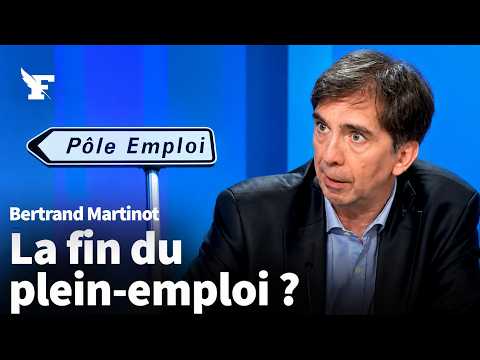
Analysis of unemployment trends and economic challenges in France, based on "Unemployment at 8.1%: the end of full employment? Bertrand Martinot" | LeFigaro.
OPEN SOURCEThe unemployment rate in France has surpassed 8% for the first time in five years, signaling a change in the labor market following the COVID pandemic. Bertrand Martinot links this rise to economic stagnation and political instability, which lead companies to adopt a more cautious approach to hiring.
Youth unemployment is particularly alarming, as young job seekers experience longer delays in hiring, with companies often freezing junior positions during economic downturns. The government has introduced a plan to address youth unemployment, featuring 15 measures aimed at supporting at-risk individuals.
There is an urgent need to enhance vocational education to better equip students for the job market, as many young people lack sufficient support after completing their professional training. The French economy is currently experiencing a slowdown, with low hiring rates particularly impacting young job seekers who are more susceptible to economic changes.
While the government has limited ability to affect immediate employment outcomes, it can address long-term issues such as initial training, school-to-work transitions, and improved student orientation. Approximately 30% of students encounter orientation challenges, resulting in high dropout rates from vocational programs and higher education.
Concerns regarding the impact of artificial intelligence on job loss are common, yet historical trends indicate that predictions of widespread unemployment due to technological advancements have often been exaggerated. The effects of automation and artificial intelligence on the job market are anticipated to unfold gradually, leading to changes in work organization and the creation of new job roles over time.
Younger generations are increasingly facing a disconnect between their social security contributions and the retirement benefits they can expect, with higher contributions potentially resulting in lower pensions. Finding equitable solutions to balance financial responsibilities between retirees and younger workers is crucial, as neglecting this may foster discontent among younger generations regarding their future contributions.
- Highlights the need for long-term solutions like training and orientation to address unemployment
- Notes that government intervention has limited ability to affect immediate employment outcomes
- Argues that economic stagnation and political instability are significant factors affecting hiring
- Claims that youth unemployment is exacerbated by companies freezing junior positions during downturns
- Acknowledges that approximately 30% of students face orientation challenges
- Recognizes that automation and AI will gradually transform the job market
- The unemployment rate in France has surpassed 8% for the first time in five years, signaling a change in the labor market following the COVID pandemic
- Bertrand Martinot links this rise to economic stagnation and political instability, which lead companies to adopt a more cautious approach to hiring
- Youth unemployment is particularly alarming, as young job seekers experience longer delays in hiring, with companies often freezing junior positions during economic downturns
- The government has introduced a plan to address youth unemployment, featuring 15 measures, including the effective contract of engagement for youth aimed at supporting at-risk individuals
- There is an urgent need to enhance vocational education to better equip students for the job market, as many young people lack sufficient support after completing their professional training
details
- The French economy is currently experiencing a slowdown, with low hiring rates particularly impacting young job seekers who are more susceptible to economic changes
- While the government has limited ability to affect immediate employment outcomes, it can address long-term issues such as initial training, school-to-work transitions, and improved student orientation
- Approximately 30% of students encounter orientation challenges, resulting in high dropout rates from vocational programs and higher education, highlighting the need for better guidance
- Although the unemployment rate has exceeded 8%, this is not unprecedented compared to historical targets, which were previously set around 5% in France
- Apprenticeship programs are recognized as effective, but there is a need for more targeted financial support to ensure equitable access for all students, especially those from disadvantaged backgrounds
- Concerns regarding the impact of artificial intelligence on job loss are common, yet historical trends indicate that predictions of widespread unemployment due to technological advancements have often been exaggerated
- The effects of automation and artificial intelligence on the job market are anticipated to unfold gradually, leading to changes in work organization and the creation of new job roles over time
- Younger generations are increasingly facing a disconnect between their social security contributions and the retirement benefits they can expect, with higher contributions potentially resulting in lower pensions
- Retirement funding relies heavily on contributions, yet two-thirds of it is supported by taxes and state subsidies, indicating a pressing issue in public finance that requires attention
- The upcoming political discussions on retirement will necessitate collective sacrifices across all demographics, as pension costs represent a significant portion of public expenditure
- Finding equitable solutions to balance financial responsibilities between retirees and younger workers is crucial, as neglecting this may foster discontent among younger generations regarding their future contributions
- Bertrand Martinot highlights a significant disconnect between social contributions and retirement benefits, particularly impacting younger generations who may receive lower pensions despite contributing more
- He notes that only two-thirds of retirement funding is derived from contributions, with the remainder coming from taxes and state subsidies, raising concerns about the systems financial sustainability
- The upcoming presidential debates are expected to center on pension reform, as the retirement system constitutes a major portion of public spending and poses challenges for future financial stability
- Martinot emphasizes that all demographics, including retirees and younger workers, will need to share the financial burden, potentially through measures such as pension under-indexing and increasing the retirement age
The assumption that political instability directly impacts hiring practices overlooks other potential confounders, such as global economic trends and sector-specific challenges. Inference: The lack of job creation may not solely stem from political factors but could also be influenced by broader economic conditions. Without a clear mechanism to isolate these variables, the argument remains incomplete.
This analysis is an original interpretation prepared by Art Argentum based on the transcript of the source video. The original video content remains the property of the respective YouTube channel. Art Argentum is not responsible for the accuracy or intent of the original material.