Trump's Diplomatic Visit to Beijing: Key Insights
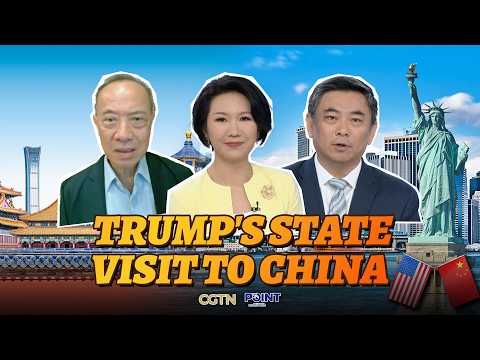
Analysis of Trump's Beijing visit, based on 'What's really at stake in Trump's Beijing trip?' | CGTN.
OPEN SOURCEPresident Trump's visit to Beijing marks the first by a US president in nearly a decade, highlighting the evolving dynamics between the US and China. Both nations are seeking to stabilize their bilateral relationship amid global uncertainties and shifting power balances.
During the COVID years, China has solidified its role as a leading global manufacturer, while the US has been focused on conflicts in Ukraine and the Middle East, shifting the power dynamics in negotiations. Both countries are aiming for a more stable bilateral relationship; the US is prioritizing domestic issues like fentanyl and immigration, while China seeks to stabilize its ties with Taiwan and address tariffs and technology controls.
Trump's choice of a yellow tie for the trip is seen as a goodwill gesture towards China, contrasting with his usual red tie and reflecting his intent to promote a positive relationship during this pivotal visit.
China and the United States, as the two largest economies, have significant potential for collaboration on global issues like AI regulation, public health, and geopolitical challenges. The current U.S. political landscape complicates efforts for bilateral cooperation and cultural exchanges.
China considers Taiwan a core national interest, with any U.S. provocation potentially provoking a strong response from Beijing. The upcoming summit may lead to a more flexible approach on Taiwan, contingent on a positive overall agenda.
Trump's delegation includes key business leaders from companies like Tesla and Apple, highlighting a focus on stabilizing supply chains and improving market access in China. The business delegations composition reflects a strong interest in economic cooperation and stability, especially in the context of previous trade tensions.
- Considers Taiwan a core national interest, with clear red lines
- Seeks to stabilize relations with the US while addressing trade and technology issues
- Prioritizes domestic issues like fentanyl and immigration during the visit
- Faces a political environment that complicates cooperation with China
- Both nations aim for a more stable bilateral relationship
- Trumps delegation includes key business leaders, emphasizing economic cooperation
- President Trumps visit to Beijing is the first by a US president in nearly a decade, carrying significant implications for the future of China-US relations amid global uncertainty
- During the COVID years, China has solidified its role as a leading global manufacturer, while the US has been focused on conflicts in Ukraine and the Middle East, shifting the power dynamics in negotiations
- Both countries are aiming for a more stable bilateral relationship; the US is prioritizing domestic issues like fentanyl and immigration, while China seeks to stabilize its ties with Taiwan and address tariffs and technology controls
- Trumps choice of a yellow tie for the trip is seen as a goodwill gesture towards China, contrasting with his usual red tie and reflecting his intent to promote a positive relationship during this pivotal visit
- China and the United States, as the two largest economies, have significant potential for collaboration on global issues like AI regulation, public health, and geopolitical challenges
- The current U.S. political landscape, with its emphasis on national security, complicates efforts for bilateral cooperation and cultural exchanges
- President Trumps choice of a yellow tie for his Beijing visit symbolizes goodwill towards China, contrasting with his usual red ties and indicating his intent to foster better relations
- The success of Trumps visit is crucial for him domestically, as positive developments in China-U.S. relations could alleviate some of his political pressures at home
- Chinas long-term strategy focuses on cooperation and mutual benefits, which contrasts with the zero-sum approach of some U.S. policymakers, potentially obstructing progress in their relationship
- Improving trade relations could lower costs for American consumers and attract Chinese investments, ultimately benefiting the U.S. economy
- China considers Taiwan a core national interest, with any U.S. provocation potentially provoking a strong response from Beijing
- The upcoming summit between Trump and Chinese leaders may lead to a more flexible approach on Taiwan, contingent on a positive overall agenda
- There are concerns in the U.S. that Trump might make commitments on Taiwan that could weaken American deterrence, although stabilizing U.S.-China relations is viewed as advantageous for regional stability
- China is calling for a reduction in U.S. arms sales to Taiwan, arguing that increased military support fosters Taiwanese independence and threatens its territorial integrity
- Trumps delegation includes key business leaders from companies like Tesla and Apple, highlighting a focus on stabilizing supply chains and improving market access in China
- The business delegations composition reflects a strong interest in economic cooperation and stability, especially in the context of previous trade tensions
details
- President Trumps delegation includes executives from major U.S. companies, emphasizing a focus on strengthening economic ties and ensuring market access in China
- The leader of Micron Technology, involved in legislation to limit Chinas chip manufacturing, underscores the tension between U.S. technology policy and Chinas self-sufficiency goals
- The Taiwan issue remains a critical national interest for China, significantly impacting U.S.-China relations and regional stability
- Concerns exist that Trump may make commitments during his visit that could weaken U.S. deterrence regarding Taiwan, although improving U.S.-China relations is viewed as advantageous for the Western Pacific
- U.S. companies face a dilemma in the ongoing technology and trade competition with China, balancing national security concerns with the need for cooperation
The visit assumes that goodwill gestures, like Trump's choice of a yellow tie, can meaningfully alter the trajectory of US-China relations. Inference: This overlooks deeper structural issues such as trade imbalances and geopolitical tensions that may undermine any superficial diplomatic efforts.
This analysis is an original interpretation prepared by Art Argentum based on the transcript of the source video. The original video content remains the property of the respective YouTube channel. Art Argentum is not responsible for the accuracy or intent of the original material.