U.S.-China Relations and Latin America's Strategic Position
Analysis of U.S.-China relations and Latin America's role, based on "How Latin America Can Emerge in the Meeting Between Trump and Xi Jinping" | Uol.
OPEN SOURCEDonald Trump is visiting China for the first time as U.S. president in nearly ten years, aiming to demonstrate power and stability in negotiations, particularly concerning the ongoing conflict with Iran. The meeting with Xi Jinping is significant as China currently views the U.S. as in decline, which may affect the tone and outcomes of their discussions.
Trump's visit was postponed by six weeks in hopes of resolving issues related to Iran, but the situation remains unresolved, with Iran retaining substantial missile capabilities. As Iran's main trading partner, China buys 90% of its oil, giving it considerable influence in discussions about reopening the Strait of Hormuz, a vital shipping route.
China is urging the United States to adopt a stance more aligned with its position on Taiwan, seeking diplomatic signals that would indicate a reduction in U.S. support for Taiwan's independence. There are concerns that the Trump administration may be open to compromising on Taiwan's independence in exchange for trade advantages.
Key topics for China in the upcoming meeting with Trump include addressing the delay in arms sales to Taiwan and strengthening ties with Taiwan's opposition party to counter the current pro-independence government. The complexities of U.S.-China relations are heightened by Trump's aim to project strength and stability, particularly in the context of the ongoing unresolved issues related to Iran.
The upcoming meeting between Trump and Xi Jinping will focus on economic and trade relations, particularly regarding Latin America and Brazil's export opportunities. Brazil's key exports, including soybeans, corn, and oil, are being discussed, which could significantly alter its trade relationship with China.
Despite existing tariffs between the U.S. and China, there is an ongoing effort to engage in dialogue to stabilize global economic conditions, which may indirectly influence Brazil's involvement in these discussions.
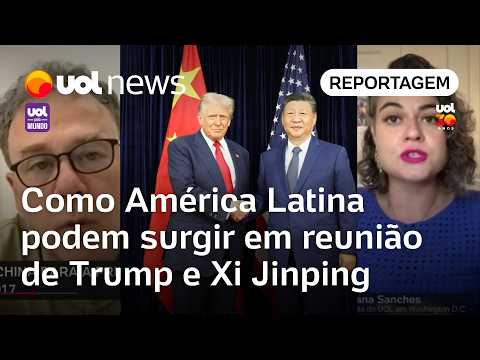
- Seeks to demonstrate power and stability in negotiations with China
- Aims to counter Chinas influence in Latin America and secure trade advantages
- Desires U.S. alignment on Taiwan and reduced military support
- Seeks to maintain strong trade relations with Iran and influence in Latin America
- Both nations are navigating complex geopolitical dynamics
- Donald Trump is visiting China for the first time as a U.S. president in nearly ten years, with the goal of demonstrating power and stability in negotiations, especially concerning the ongoing conflict with Iran
- The meeting with Xi Jinping is significant as China currently views the U.S. as in decline, which may affect the tone and outcomes of their discussions
- Trumps visit was postponed by six weeks in hopes of resolving issues related to Iran, but the situation remains unresolved, with Iran retaining substantial missile capabilities
- As Irans main trading partner, China buys 90% of its oil, giving it considerable influence in discussions about reopening the Strait of Hormuz, a vital shipping route
- The issue of Taiwan is anticipated to be a major topic during the talks, as China considers Taiwan an integral part of its territory and opposes its autonomy
details
details
- China is urging the United States to adopt a stance more aligned with its position on Taiwan, seeking diplomatic signals that would indicate a reduction in U.S. support for Taiwans independence
- There are concerns that the Trump administration may be open to compromising on Taiwans independence in exchange for trade advantages, despite the U.S.s historical reluctance to endorse such a move
- Key topics for China in the upcoming meeting with Trump include addressing the delay in arms sales to Taiwan and strengthening ties with Taiwans opposition party to counter the current pro-independence government
- The complexities of U.S.-China relations are heightened by Trumps aim to project strength and stability, particularly in the context of the ongoing unresolved issues related to Iran
- The possibility of a trade-off involving Taiwans military support raises significant concerns in both Washington and Taipei, as it could put pressure on Taiwans security for broader economic agreements
details
- The upcoming meeting between Trump and Xi Jinping will focus on economic and trade relations, particularly regarding Latin America and Brazils export opportunities
- Brazils key exports, including soybeans, corn, and oil, are being discussed, which could significantly alter its trade relationship with China
- The U.S. is increasingly concerned about Chinas expanding influence in Latin America, especially in electric vehicles and infrastructure, leading to a push for stronger ties with regional leaders
- Trumps administration prioritizes the Americas as a key area for U.S. influence, aiming to counter Chinas presence, particularly in critical resources like rare earth minerals
- Despite existing tariffs between the U.S. and China, there is an ongoing effort to engage in dialogue to stabilize global economic conditions, which may indirectly influence Brazils involvement in these discussions
details
details
- The meeting between Trump and Xi Jinping will emphasize economic stability, particularly concerning rare earth materials vital for U.S. military and technology sectors
- The U.S. is increasingly wary of Chinas expanding influence in Latin America, particularly in infrastructure and mining, highlighted by substantial Chinese investments in the region
- A significant outcome of Lulas recent visit to Washington was the announcement of a visa exemption for Chinese tourists, reflecting a shift in diplomatic relations
- The U.S. is seeking alternative sources for rare earth minerals, as 90% of these exports currently originate from China, underscoring Brazils strategic importance
- Discussions between Trump and Xi may also address nuclear proliferation, with projections indicating that by 2035, China could equal the U.S. and Russia in nuclear capabilities
The assumption that Trump's visit will stabilize negotiations overlooks the complex dynamics of U.S.-China relations and Iran's influence. Inference: The effectiveness of this visit in altering perceptions of U.S. power is contingent on China's response and the unresolved status of Iran's missile capabilities, which could undermine any perceived gains.
This analysis is an original interpretation prepared by Art Argentum based on the transcript of the source video. The original video content remains the property of the respective YouTube channel. Art Argentum is not responsible for the accuracy or intent of the original material.