Freud's Theories on Drives and Human Behavior
Analysis of Freud's theories on drives and their implications for understanding harmful habits, based on "The Case of Freud (3/5): Drives" | DerStandardat.
OPEN SOURCEExplores the psychological motivations behind harmful habits, particularly smoking while drinking alcohol. Hosts Lucia and Antonio share their experiences, questioning why they engage in behaviors they know are detrimental to their health.
Examines Sigmund Freud's theories on the unconscious mind and their relevance in understanding these impulses. The discussion highlights Freud's disciplined routine and dedication to his practice, juxtaposed with his personal contradictions.
Addresses the impact of societal norms and internal conflicts on individual behavior. Freud's theories on sexuality and the concept of the superego are introduced, illustrating the tension between primal urges and moral constraints.
Delves into Freud's model of the psyche, emphasizing the interplay between the id, ego, and superego. This dynamic can lead to behaviors like smoking, despite awareness of health risks, suggesting that repressed desires can manifest in various ways.
Discusses the establishment of the Psychoanalytic Society and Freud's relationships with contemporaries like Carl Jung and Alfred Adler. These interactions highlight the evolution of psychoanalysis and the ongoing relevance of Freud's theories.
Concludes with reflections on modern self-optimization trends and the importance of understanding one's impulses. The conversation suggests that acknowledging these drives may be more beneficial than mere suppression.
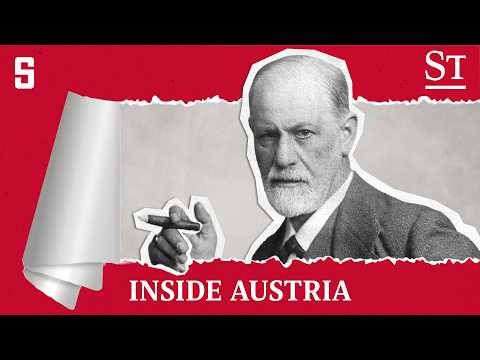
- Highlights the relevance of Freuds insights into the unconscious mind for understanding harmful habits
- Emphasizes the importance of acknowledging primal drives rather than suppressing them
- Questions the universal applicability of Freuds theories, suggesting they overlook individual differences
- Discusses the tension between societal norms and individual instincts
- Explores the historical context of Freuds theories and their evolution over time
- Hosts Lucia and Antonia share their experience of smoking as a guilty pleasure, particularly when consuming alcohol, despite generally maintaining healthy lifestyles
- They delve into the psychological motivations behind engaging in harmful habits, questioning the reasons for such behaviors
- The discussion references Sigmund Freuds theories on the unconscious mind, exploring their relevance in understanding these impulses
- Freuds disciplined daily routine is highlighted, showcasing his dedication as a physician and academic, with long work hours and a commitment to his practice
- The segment suggests that Freuds insights may still offer valuable perspectives on contemporary self-analysis and human behavior
- Antisemitism in Europe significantly impacted Freuds academic progress, particularly following the 1873 stock market crash, which led to increased scapegoating of Jewish individuals
- Freud encountered substantial resistance from the scientific community, especially regarding his theories on sexuality, which controversially suggested that even children possess sexual drives
- Despite his innovative ideas, Freud struggled with personal contradictions, such as his heavy smoking habit, which he acknowledged as harmful yet found difficult to overcome, highlighting the conflict between desire and self-control
- The concept of the superego is introduced as a moral regulator that influences behavior, illustrating Freuds belief that internalized societal norms can clash with primal urges, resulting in feelings of guilt and rebellion against ones own discipline
- Freuds model of the psyche consists of three components: the id, the ego, and the superego, which interact to shape human behavior and impulses
- The id embodies primal drives like sexuality and hunger, while the superego represents moral constraints, leading to internal conflicts that can result in behaviors such as smoking despite awareness of health risks
- Freud emphasizes the significant influence of the unconscious mind on our actions, often revealing itself through everyday mistakes or slips, suggesting that repressed desires and memories can affect behavior
- He contends that these drives are not inherently negative; instead, they are crucial for motivation and can be redirected into creative expressions, such as art
- A tension between contemporary self-optimization trends and Freuds views, indicating that understanding and acknowledging our impulses may be more beneficial than simply suppressing them
- Freud would likely perceive modern culture as one that enforces significant repression of instincts, resulting in ongoing dissatisfaction and restlessness among individuals
- There exists a tension between the pursuit of self-optimization and the natural human instincts that are often suppressed, indicating that such suppression can disrupt inner balance
- Freuds theories encountered skepticism during his era, particularly as they challenged the dominant belief in human rationality and highlighted the unconscious minds substantial influence on behavior
- The establishment of the Psychoanalytic Society was a crucial development in Freuds career, creating a structured community for the discussion of psychoanalytic concepts with Freud as the central figure
- Freuds correspondence with Carl Jung exemplifies their profound intellectual exchange, focusing on dream interpretation and sexual theories, which played a significant role in the evolution of psychoanalysis
- Sigmund Freud appointed Carl Jung as the first president of the International Psychoanalytical Association, viewing him as a potential successor
- A significant rift emerged between Freud and Jung, primarily due to Jungs critique of Freuds libido theory in his work Transformation and Symbols of the Libido, where he prioritized the collective unconscious over childhood sexual development
- Freuds authoritarian style and resistance to criticism led to the deterioration of their relationship, ultimately resulting in Freud terminating their friendship and Jung moving away from Freudian principles to create his own theoretical framework
- Freud also experienced conflicts with Alfred Adler, another student, who later founded Individual Psychology, emphasizing the individual as a unique entity influenced by social contexts
- The relevance of Freuds theories persists in modern psychoanalysis, as practitioners like Margarita Fink continue to investigate the unconscious and its therapeutic implications
details
- Margarita Fink, a psychoanalyst, highlights that in psychoanalysis, every detail, including slips of the tongue and unexpressed thoughts, can carry meaning
- In a discussion about smoking, Fink advises focusing on understanding the underlying motivations for the behavior rather than merely attempting to stop it
- The conversation reveals that smoking may be linked to deeper compulsions, such as the pressure to adhere to a healthy lifestyle
- A technical failure with the recording device prompts reflection on whether this incident symbolizes a subconscious sabotage of their efforts
- The episode suggests that the implications of this technical issue will be explored in the next installment, indicating a connection between personal habits and unconscious motivations
of smoking as a guilty pleasure assumes a direct correlation between alcohol consumption and the urge to smoke, yet it overlooks individual psychological differences and social contexts that may influence behavior. Inference: The reliance on Freud's theories may not account for contemporary understandings of addiction and habit formation, which could provide a more nuanced view of these impulses. Without considering these variables, the conclusions drawn may be overly simplistic.
This analysis is an original interpretation prepared by Art Argentum based on the transcript of the source video. The original video content remains the property of the respective YouTube channel. Art Argentum is not responsible for the accuracy or intent of the original material.