Hantavirus Outbreak Linked to Cruise Ship
Analysis of hantavirus outbreak linked to a cruise ship, based on "The hantavirus route: health crisis due to the cruise" | Lanacion.
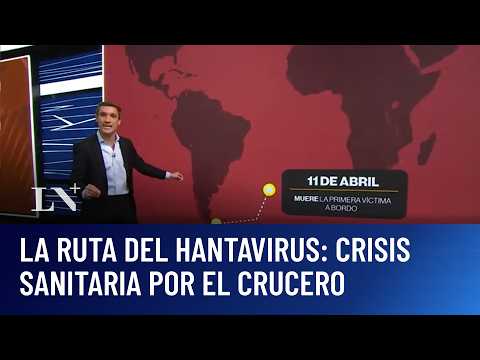
OPEN SOURCEA hantavirus outbreak linked to a cruise ship has raised significant global health concerns, prompting close monitoring by health authorities. The outbreak originated with a couple from the Netherlands, identified as case zero, who may have contracted the virus during their travels in Argentina or southern Chile.
As of early May, three confirmed deaths from hantavirus have occurred among passengers, starting with a 70-year-old Dutch man, followed by his wife and another passenger. Health authorities are conducting epidemiological surveys and implementing strict quarantine measures for affected passengers.
Passengers from the cruise, which traveled through Argentina and Chile, have been disembarking in Spain, where health authorities are overseeing the disembarkation process. Significant health measures include mandatory six-week quarantines for affected passengers upon their arrival in Spain.
Public anxiety in the Canary Islands reflects recent pandemic experiences, with varying quarantine requirements based on nationality. Spanish nationals must isolate for six weeks, while American passengers face different regulations, raising questions about the fairness and efficacy of the response.
Local officials have expressed frustration over the lack of communication from the central government during the crisis. A critical disinfection of the cruise ship is planned in Rotterdam, as authorities work to trace the initial source of infection.
Despite initial public concerns, the situation is stabilizing, with local authorities reaffirming their commitment to public health and solidarity while navigating the disembarkation process.
- Implement strict quarantine measures for affected passengers
- Conduct comprehensive epidemiological surveys to trace contacts
- Express frustration over the lack of communication from the central government
- Raise concerns about varying quarantine measures based on nationality
- Confirm multiple fatalities linked to the outbreak
- Highlight the ongoing disinfection efforts of the cruise ship
- A cruise ship linked to a hantavirus outbreak has raised global health concerns, prompting close monitoring by the World Health Organization
- The outbreak originated with a couple from the Netherlands, identified as case zero, who may have contracted the virus in Argentina or southern Chile, resulting in multiple fatalities among passengers
- As of early May, three confirmed deaths from hantavirus have occurred, starting with a 70-year-old Dutch man, followed by his wife and another passenger
- Passengers from the cruise, which traveled through Argentina and Chile, have been disembarking in Spain, where health authorities are conducting epidemiological surveys and PCR tests to trace potential contacts
- Significant health measures have been implemented, including a mandatory six-week quarantine for affected passengers upon their arrival in Spain
- A cruise ship linked to hantavirus cases has raised global health concerns, with passengers from multiple nationalities involved
- The initial case, a Dutch couple, likely contracted the virus in Argentina or southern Chile, resulting in several infections and fatalities among passengers
- As of May 2, three confirmed deaths from hantavirus have been reported on the cruise, prompting ongoing contact tracing efforts
- Spains health authorities are overseeing the disembarkation of passengers, implementing quarantine measures for those deemed at risk, while public anxiety in the Canary Islands reflects recent pandemic experiences
- The operational response includes comprehensive health screenings and PCR tests for passengers, with quarantine requirements varying by nationality, illustrating the complexities of international health protocols
- The disembarkation of passengers from a cruise ship linked to hantavirus has heightened public anxiety in the Canary Islands, particularly due to recent COVID-19 experiences
- Quarantine requirements for passengers vary by nationality; Spanish nationals must isolate for six weeks, while American passengers face different regulations
- A critical disinfection of the cruise ship will take place in Rotterdam, Netherlands, as authorities work to trace the initial source of infection
- Local officials have expressed frustration over the World Health Organizations directors presence, citing a lack of communication and collaboration from the central government during the crisis
- Despite initial public concerns, the situation is stabilizing, with local authorities reaffirming their commitment to public health and solidarity while navigating the disembarkation process
The outbreak's origin raises questions about the effectiveness of health monitoring systems in preventing such crises. Inference: The lack of immediate detection and response mechanisms suggests a significant gap in public health preparedness, which could lead to further outbreaks if not addressed.
This analysis is an original interpretation prepared by Art Argentum based on the transcript of the source video. The original video content remains the property of the respective YouTube channel. Art Argentum is not responsible for the accuracy or intent of the original material.