Intel / Middle East
Iran Conflict and U.S. Foreign Policy
Donald Trump claims the war in Iran is over, but many experts believe the situation remains unresolved and complex. Iran's announcement that the Strait of Hormuz is open for passage could significantly affect global oil supply and geopolitical relations. Critics highlight that Joe Rogan's foreign policy insights may be limited due to his choice of guests, potentially missing broader geopolitical complexities.
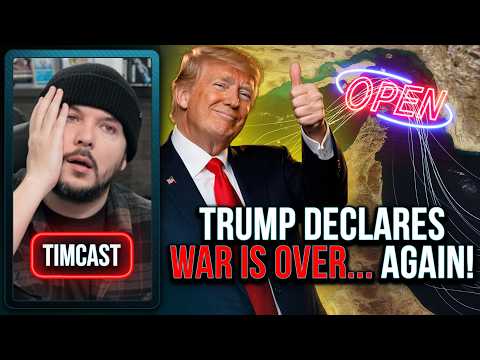
Source material: Trump Declares IRAN WAR IS OVER... AGAIN! | Tim Pool
Summary
Donald Trump claims the war in Iran is over, but many experts believe the situation remains unresolved and complex. Iran's announcement that the Strait of Hormuz is open for passage could significantly affect global oil supply and geopolitical relations. Critics highlight that Joe Rogan's foreign policy insights may be limited due to his choice of guests, potentially missing broader geopolitical complexities.
The conflict in Iran is intensifying, with missile strikes causing significant destruction and raising concerns about U.S. strategy in the region. Speculation suggests that Trump may leverage the Foreign Intelligence Surveillance Act to target political opponents, indicating a potential shift in power dynamics. The narrative suggests that Trump's presidency was orchestrated to manage anti-establishment sentiments while maintaining elite control.
Perspectives
Analysis of U.S. foreign policy and the Iran conflict.
Pro-Trump Perspective
- Claims the war in Iran is over, indicating a potential peace deal
- Highlights the strategic importance of the Strait of Hormuz for global oil supply
- Argues that Trumps actions are part of a larger geopolitical strategy
- Poses that the military industrial complex has a plan despite claims of chaos
Critics of Trump and U.S. Policy
- Questions the validity of Trumps claim that the war is over
- Highlights the ongoing violence and destruction in the region
- Critiques Joe Rogans limited perspective on foreign policy
- Expresses concern over the implications of Trumps foreign policy decisions
Neutral / Shared
- Notes the complexities of geopolitical dynamics in the region
- Acknowledges the impact of energy markets on global relations
- Mentions the ongoing humanitarian crisis resulting from the conflict
Metrics
population
90 million people
Iran's population size
A large population indicates significant military and economic capacity.
It's a country of 90 million people.
net_exporter
first time since World War II
US oil export status
Becoming a net exporter alters global energy dynamics.
The US is set to be a net oil exporter for the first time since World War II.
casualties
more than 2100 people
casualties in Lebanon
This highlights the severe impact of the conflict on civilian populations.
More than 2100 people have been killed in Lebanon.
fuel_supply
Europe is maybe six weeks of jet fuel left weeks
jet fuel supply in Europe
This indicates a looming energy crisis that could affect air travel and logistics.
Europe is maybe six weeks of jet fuel left.
other
massively increased production of energy
Trump's energy policy
Increased energy production could shift global power dynamics.
Trump massively increased production of energy.
other
shutting all of this stuff down like Keystone pipeline oil contracts
Biden's energy policy
This could impact U.S. energy independence and market stability.
Biden comes in and immediately starts shutting all of this stuff down like Keystone pipeline oil contracts.
other
the straight of four moves is completely open
Iran's oil passage status
This could impact global energy markets and geopolitical relations.
the straight of four moves is completely open
other
IMF and World Bank renew Venezuela ties after six year rupture
Venezuela's economic reintegration
This signals a shift in regional power dynamics.
IMF and World Bank renew Venezuela ties after six year rupture
Key entities
Timeline highlights
00:00–05:00
Donald Trump claims the war in Iran is over, but many experts believe the situation remains unresolved and complex. Iran's announcement that the Strait of Hormuz is open for passage could significantly affect global oil supply and geopolitical relations.
- Donald Trump claims the war in Iran is over, but many experts believe the situation remains unresolved and complex
- Irans announcement that the Strait of Hormuz is open for passage could significantly affect global oil supply and geopolitical relations
- The U.S. is on track to become a net oil exporter for the first time since World War II, changing the global energy market
- Countries like Australia, China, and various European nations are experiencing fuel shortages, which may lead to economic and political instability
- A potential peace deal between the U.S. and Iran is under consideration, but details remain unclear
- Critics highlight that engaging with Iran involves complexities that are often overlooked, given its size and military strength
05:00–10:00
Critics highlight that Joe Rogan's foreign policy insights may be limited due to his choice of guests, potentially missing broader geopolitical complexities. Iran's declaration of the Strait of Hormuz being open for commercial vessels coincides with a ceasefire in Lebanon, raising questions about its implications for U.S.
- Critics argue that Joe Rogans perspective on foreign policy is limited by his guest choices, which may not provide a comprehensive view. This narrow focus can overlook the complexities of current geopolitical issues
- Iran has declared the Strait of Hormuz open for commercial vessels, coinciding with a ceasefire in Lebanon. This development adds to doubts about how it will affect U.S
- The ongoing conflict in the region has resulted in significant casualties, with thousands killed since the start of U.S. and Israeli strikes
- Australia and Europe are facing critical fuel shortages, which could have dire economic consequences. These energy crises highlight the interconnectedness of global supply chains and the potential for widespread instability
- Trumps foreign policy maneuvers, including potential negotiations with Iran, could reshape alliances and energy markets. The U.S
- The chaotic nature of current international relations raises concerns about who truly benefits from these developments. Major players like Russia and Saudi Arabia may gain from the turmoil, complicating the geopolitical landscape
10:00–15:00
The conflict in Iran is intensifying, with missile strikes causing significant destruction and raising concerns about U.S. strategy in the region.
- The conflict in Iran is escalating, with missile strikes causing widespread destruction and raising concerns about U.S. strategy in the region
- Current events suggest that Trumps energy independence initiatives may be part of a broader strategy to shift U.S. positioning globally
- Trumps foreign policy could disrupt the traditional reliance on Gulf states for energy, potentially leading to significant geopolitical changes
- There is a noticeable disconnect between political leaders and the realities of international relations, which may impede effective decision-making
- Concerns exist regarding Trumps adherence to conventional foreign policy, indicating he might be responding to external pressures that affect his interests
- Trumps actions in the Middle East could represent a significant restructuring of U.S. influence in the region
15:00–20:00
Democrats express concerns about the integrity of the 2024 election, reflected in their reluctance to disclose an internal analysis. Speculation suggests that Trump may leverage the Foreign Intelligence Surveillance Act to target political opponents, indicating a potential shift in power dynamics.
- Democrats are worried about the integrity of the 2024 election, which is evident in their hesitance to share an internal analysis of the results
- Speculation arises that Trump may use the Foreign Intelligence Surveillance Act to target his opponents, indicating a potential shift in political power
- Recent actions suggest the U.S. is striving to reclaim its status as a leading global power, especially in energy markets
- There is a theory that Trump has been part of the deep state, manipulating populist sentiments to maintain political control despite opposition
- The military-industrial complex appears to have a strategic plan, challenging the notion that U.S. foreign policy is random
- Venezuelas renewed engagement with international financial institutions signals a strategy to reintegrate it into the global economy, which could shift regional power dynamics
20:00–25:00
The narrative suggests that Trump's presidency was orchestrated to manage anti-establishment sentiments while maintaining elite control. This cyclical political strategy may create an illusion of choice for voters, masking underlying agendas.
- Trumps candidacy was seen as a way to manage anti-establishment feelings, creating a controlled opposition that benefits the political elite. This strategy allows the establishment to maintain influence while appearing to address populist concerns
- The theory suggests Trumps presidency was crafted to seem like a challenge to the establishment, enabling him to enact policies that favor those in power. This manipulation could sustain the status quo while appeasing his populist supporters
- Trumps first term is viewed as a period that positioned the U.S. as a leading oil producer, which may have set the groundwork for future political strategies
- The narrative indicates that Bidens administration was intended to manage unpopular decisions, allowing Trump to return as a perceived savior. This cyclical approach may create an illusion of choice for voters while ensuring elite control persists
- Concerns are raised about the opacity of political strategies, suggesting the public is largely unaware of the underlying agendas. This lack of transparency could foster disillusionment among citizens who feel manipulated by the political system
- The segment warns that the ongoing culture war might serve as a distraction for the public. By engaging citizens in divisive issues, the elite can maintain their power without facing significant opposition