Intel / Middle East
Sudan's War and Global Indifference
The conflict in Sudan has resulted in an estimated 400,000 deaths and millions displaced, creating a significant humanitarian crisis. The violence, driven by a power struggle between the Rapid Support Forces and the Sudanese Armed Forces, has largely been ignored by the international community.
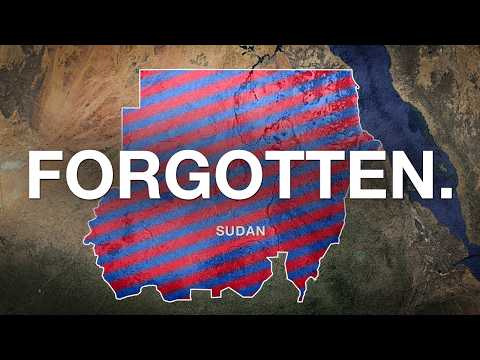
Source material: The World is Still Ignoring Sudan's War
Summary
The conflict in Sudan has resulted in an estimated 400,000 deaths and millions displaced, creating a significant humanitarian crisis. The violence, driven by a power struggle between the Rapid Support Forces and the Sudanese Armed Forces, has largely been ignored by the international community.
Media coverage of Sudan's atrocities is significantly lower than that of other conflicts, raising concerns about racial biases and the international community's indifference. Studies show that major news outlets publish far fewer stories about Sudan compared to Ukraine or Gaza, highlighting a troubling disparity in attention.
The complexity of the Sudanese conflict, marked by atrocities on all sides, contributes to the lack of public engagement. Unlike the clear narratives in other conflicts, Sudan's situation involves multiple factions and external actors, making it difficult for the average person to grasp.
Institutional failures further complicate the situation, as influential nations prioritize their strategic interests over humanitarian concerns. The involvement of countries like the UAE and Saudi Arabia in the conflict reflects a broader geopolitical struggle that undermines peace efforts.
Perspectives
short
Advocates for Increased Attention to Sudan
- Highlights the staggering death toll and humanitarian crisis in Sudan
- Questions the global indifference towards the conflict despite its severity
- Calls for a reevaluation of media coverage priorities to include Sudan
- Emphasizes the need for international intervention to address the crisis
- Warns of potential regional destabilization due to ongoing conflict
Critics of Global Response
- Argues that geopolitical interests overshadow humanitarian concerns
- Points out the complexity of the conflict as a barrier to public engagement
- Notes the disparity in media coverage compared to other conflicts
- Critiques the ineffectiveness of international diplomatic efforts
Neutral / Shared
- Describes the power struggle between the Rapid Support Forces and the Sudanese Armed Forces
- Mentions the involvement of external actors in the conflict
- Acknowledges the historical context of the conflict and its implications
Metrics
media_mentions
600 stories
average monthly media coverage of Sudan
This low figure underscores the lack of attention given to the humanitarian crisis in Sudan.
Sudan by contrast averaged a mere 600 stories per month.
media_mentions
100,000 stories
average monthly media coverage of Ukraine and Gaza
This stark contrast illustrates the media's prioritization of certain conflicts over others.
over 100,000 stories published each month by major news outlets covering Ukraine and Gaza.
comparative_mentions
13 times
average mentions of Ukraine compared to Sudan in the New York Times
This significant difference raises questions about media bias and public interest.
the New York Times on average mentioned Ukraine 13 times more than it did Sudan.
Key entities
Timeline highlights
00:00–05:00
The conflict in Sudan has resulted in an estimated 400,000 deaths and millions displaced, creating a significant humanitarian crisis. The violence, driven by a power struggle between the Rapid Support Forces and the Sudanese Armed Forces, has largely been ignored by the international community.
- The conflict in Sudan has led to an estimated 400,000 deaths and millions displaced, creating a humanitarian crisis that remains largely ignored by the international community
- The capture of El Fashir by the Rapid Support Forces in late 2022 resulted in a death toll that could range from 6,000 to 100,000, yet this brutality has not sustained global attention
- Despite initial outrage over the violence, the international response has been inadequate, highlighting a concerning trend of neglect towards Sudans ongoing war
- The violence is fueled by a power struggle between the Rapid Support Forces and the Sudanese Armed Forces, rooted in deep-seated historical and political tensions
- The RSF, which evolved from the Janjaweed militias, has been accused of ethnic cleansing against Black communities in Darfur, raising alarms about potential genocide
- As the war extends into its third year, the staggering statistics can numb public perception, making it crucial to keep the suffering of Sudanese civilians in the spotlight
05:00–10:00
The conflict in Sudan is driven by a power struggle between the Rapid Support Forces and the Sudanese Armed Forces, leading to severe humanitarian crises. Global media coverage of Sudan's atrocities is significantly lower than that of other conflicts, raising concerns about racial biases and the international community's indifference.
- The ongoing conflict in Sudan stems from a power struggle between the Rapid Support Forces and the Sudanese Armed Forces, resulting in severe humanitarian crises marked by high death tolls and mass displacement
- Global media coverage of Sudans atrocities is significantly lower than that of other conflicts, raising concerns about the reasons for this indifference to the suffering of Sudanese people
- Racial biases may play a role in the limited coverage of Sudan, as many victims are perceived as Black, although historical precedents show that the West has supported non-white victims in other crises
- The RSF, which originated from militias involved in the Darfur genocide, has become a powerful military entity, facing accusations of genocide due to its ethnic targeting practices
- The 2021 coup that disrupted Sudans democratic transition intensified the conflict, highlighting the vulnerability of democratic movements in authoritarian-leaning regions
- The stark contrast in media attention and public concern regarding Sudans war indicates a troubling trend in global priorities, necessitating a more equitable response to humanitarian crises
10:00–15:00
The Sudanese conflict is characterized by a complex power struggle between the Rapid Support Forces and the Sudanese Armed Forces, leading to significant humanitarian crises. External geopolitical interests and institutional failures further complicate the situation, resulting in inadequate international response and media coverage.
- The Sudanese conflicts complexity hinders public understanding, leading to reduced media coverage and interest compared to other wars
- Despite both the Sudanese Armed Forces and Rapid Support Forces committing human rights violations, the SAF is often seen as the lesser evil, complicating the narrative and reducing urgency for intervention
- External actors like the UAE and Egypt have vested interests in the conflict, adding geopolitical layers that obscure potential resolutions
- In 2026, the saturation of global crises has led to public fatigue regarding international conflicts, making it difficult for issues like Sudan to receive necessary attention
- The appointment of unqualified negotiators for peace talks reflects institutional failures in addressing the Sudan crisis, indicating global powers neglect
- The United Nations faces criticism for its inaction in Sudan, despite prior warnings about the RSFs potential for war crimes, revealing systemic issues in crisis response
15:00–20:00
The conflict in Sudan is exacerbated by the involvement of influential nations prioritizing their strategic interests over humanitarian concerns. This complicates peace efforts and raises the risk of regional destabilization as various countries align with different factions.
- Influential nations are hesitant to act in Sudans war due to their own interests, complicating peace efforts as regional rivalries take precedence over stopping the violence
- The conflict in Sudan poses a risk of regional destabilization as countries align with different factions, increasing the likelihood of broader conflict
- Major powers are prioritizing strategic interests over the humanitarian crisis in Sudan, which could have severe consequences for global stability
- The international communitys indifference to Sudan reflects a historical pattern of neglecting distant conflicts until they escalate, risking underestimation of global interconnectedness
- The ineffective intervention by organizations like the African Union and the UN underscores a systemic failure, allowing ongoing atrocities in Sudan to continue unchecked
- As the situation in Sudan worsens, the potential for instability to spread beyond its borders raises urgent concerns for global security