Intel / Middle East
Winnability of the Iran War
Recent military actions against Iran have not resulted in a decisive victory for any party, as Iran's regime remains intact despite significant bombardment. The ongoing conflict may lead to negotiations where Iran could leverage its survival as a form of victory, potentially easing economic pressures through partial sanctions relief. Iran's ten-point plan aims to secure protections for its regional proxy groups, which is crucial for maintaining its influence. Even minor concessions in negotiations could be perceived as significant victories for Iran's regime amidst ongoing military pressures.
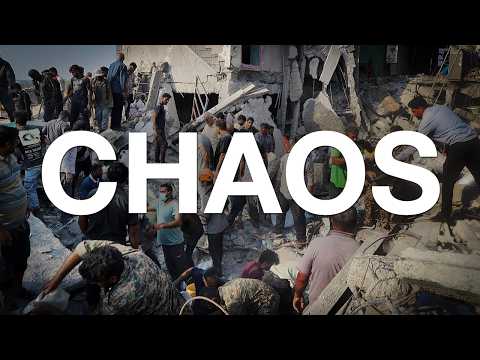
Source material: Is the Iran War Even Winnable Anymore?
Summary
Recent military actions against Iran have not resulted in a decisive victory for any party, as Iran's regime remains intact despite significant bombardment. The ongoing conflict may lead to negotiations where Iran could leverage its survival as a form of victory, potentially easing economic pressures through partial sanctions relief. Iran's ten-point plan aims to secure protections for its regional proxy groups, which is crucial for maintaining its influence. Even minor concessions in negotiations could be perceived as significant victories for Iran's regime amidst ongoing military pressures.
U.S. military objectives have shifted, complicating the evaluation of success. While significant damage has been inflicted on Iran's military capabilities, the regime remains resilient, and the potential for regime change appears limited. Israel's military operations against Hezbollah are intricately linked to its broader conflict with Iran, complicating the path to a decisive victory. Achieving all objectives simultaneously may prove impossible, particularly given international pressure on Israel to halt its operations.
Perspectives
Analysis of the ongoing conflict and its implications.
Iran
- Survives significant bombardment from advanced militaries
- Maintains regime stability despite military pressures
- Leverages survival as a potential negotiation victory
- Seeks partial sanctions relief to improve economic conditions
- Demands protections for regional proxy groups in negotiations
- Adapts and consolidates power under new leadership structures
United States and Israel
- Inflicts substantial damage on Irans military infrastructure
- Destroys a significant portion of Irans missile production capacity
- Eliminates key figures in Irans leadership structure
- Attempts to disrupt Irans support for proxy groups
- Seeks to achieve regime change in Iran as a long-term goal
- Links military operations against Hezbollah to broader objectives
Neutral / Shared
- Military actions have not led to a clear victory for any side
- Complex political dynamics complicate military objectives
Metrics
duration
nearly seven weeks days
duration of military actions against Iran
This timeframe highlights the prolonged nature of the conflict.
It's been nearly seven weeks since American Israel struck Iran
bombardment
50 days of bombardment days
duration of bombardment endured by Iran
This indicates Iran's resilience under sustained military pressure.
Iran has absorbed nearly 50 days of bombardment
economic_impact
hyperinflation setting in the economy
economic conditions in Iran
Hyperinflation exacerbates the challenges faced by the Iranian regime.
Buryol has been crashing for years now with hyperinflation setting in the economy
stockpile
roughly half of its original size %
Iran's missile stockpile after bombardment
This indicates that while damage was done, Iran retains significant missile capabilities.
Iran's missile stockpile has been reduced to roughly half of its original size.
leadership_elimination
three chiefs of staff individuals
Iran's military leadership losses
This weakens Iran's military command structure.
had suffered the loss of several senior figures including three chiefs of staff.
casualties
more than 350 people
casualties from Operation Eternal Darkness
This highlights the scale of military engagement and its human cost.
killing more than 350 people
targets_struck
over 100 Hezbollah targets
targets hit during Operation Eternal Darkness
This indicates the intensity and focus of Israel's military strategy.
striking over 100 Hezbollah targets
Key entities
Timeline highlights
00:00–05:00
Recent military actions against Iran have not resulted in a decisive victory for any party, as Iran's regime remains intact despite significant bombardment. The ongoing conflict may lead to negotiations where Iran could leverage its survival as a form of victory, potentially easing economic pressures through partial sanctions relief.
- Recent military actions against Iran have failed to achieve a clear victory for any party involved, as Irans regime remains resilient despite heavy bombardment
- Irans ability to withstand the conflict may enable it to negotiate from a position of strength, potentially framing its survival as a form of victory
- The possibility of a negotiated settlement prompts each party to evaluate how they can present their outcomes as beneficial to their interests
- Irans strategy seems aimed at outlasting U.S. resolve and increasing the conflicts costs to encourage negotiations
- Any agreement that offers partial sanctions relief could be viewed as a significant win for Iran, easing long-standing economic pressures
- If Iran regains control over the Strait of Hormuz, it could impose tolls on vessels, creating a controversial yet potentially profitable situation that challenges U.S. influence
05:00–10:00
Iran's ten-point plan aims to secure protections for its regional proxy groups, which is crucial for maintaining its influence. Even minor concessions in negotiations could be perceived as significant victories for Iran's regime amidst ongoing military pressures.
- Irans ten-point plan focuses on securing protections for its regional proxy groups, which is vital for its influence. Even partial success in this plan would strengthen Irans position after the war
- Iran does not need to achieve all its demands to claim victory; even minor concessions can significantly benefit its regime. For a government facing existential threats, any negotiation gains are viewed as major improvements
- The U.S. struggles to define victory due to unclear military objectives set by President Trump, complicating the evaluation of its success
- Despite significant damage to Irans missile production, its missile stockpiles remain largely unaffected. This persistence poses ongoing challenges for U.S
- Irans naval capabilities have been diminished, especially among larger warships, yet it still operates many small, agile vessels. These fast boats continue to threaten strategic waterways, complicating U.S
- The U.S. is working to disrupt Irans financial networks, which may limit its support for proxy groups in the region
10:00–15:00
Iran's strategy of concealing highly enriched uranium complicates U.S. retrieval efforts, requiring extensive resources.
- Irans strategy of concealing its highly enriched uranium complicates U.S. efforts to retrieve it, necessitating extensive resources for access
- Despite the destruction of centrifuges, Irans regime remains intact and has shifted to a more hard-line faction, undermining U.S. objectives
- The closure of the Strait of Hormuz due to the conflict disrupts global trade routes, illustrating the failure of military actions to achieve their goals
- Israeli Prime Minister Netanyahu has minimized the perceived threat from Iran, indicating a shift in Israels military objectives while the broader goal of regime change remains unfulfilled
- Israels military operations have weakened Irans military capabilities, including its air defenses, but have not achieved the critical objective of regime change
- The lack of a domestic uprising in Iran, despite targeted assassinations, reveals a miscalculation by Israeli intelligence and suggests ongoing instability in the region
15:00–20:00
Iran's leadership has shown resilience despite military efforts to eliminate key figures, indicating a capacity to adapt and consolidate power. Israel's military operations against Hezbollah are intricately linked to its broader conflict with Iran, complicating the path to a decisive victory.
- Irans leadership remains stable despite efforts to eliminate key figures, indicating the regimes ability to adapt and consolidate power, complicating the prospect of a quick victory
- Israels military actions against Hezbollah are closely tied to its conflict with Iran, as any ceasefire is contingent on resolving the situation in Lebanon, creating a diplomatic stalemate
- After a ceasefire, Israel conducted a major operation against Hezbollah, resulting in significant casualties, highlighting its commitment to dismantling the group as part of its security strategy
- Hezbollah is viewed by Israel as a significant threat due to its connections with Iran and military capabilities, making its continued operation unacceptable for Israels northern border security
- Israels objectives have broadened from merely addressing Irans nuclear threat to include regime change and disarming Hezbollah, presenting a complex challenge amid rising international pressure
- Despite the challenges, Israel remains resolute in pursuing its regional objectives, suggesting that achieving a comprehensive victory will require considerable time and effort