Intel / Middle East
Real-time monitoring of security incidents, escalation signals and threat indicators across global hotspots, focusing on rapid alerts and emerging risk developments. Topic: Middle-East. Updated briefs and structured summaries from curated sources.
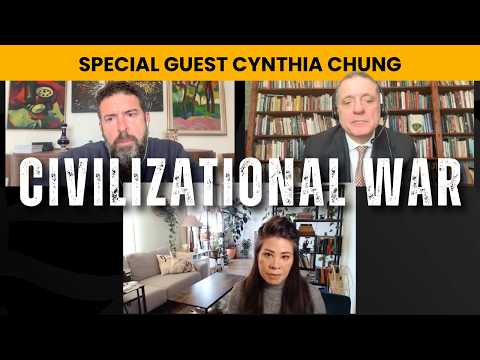
Civilizational War. Zero Sum Game Theory Politics w/ Cynthia Chung
Summary
Cynthia Chung discusses the alarming rhetoric from U.S. leaders regarding the potential destruction of civilizations, particularly in the Middle East. She expresses concern over statements made by the U.S. president that suggest a willingness to destroy entire civilizations, which she views as deeply troubling and indicative of a broader anti-civilizational agenda.
Chung argues that the militarization of the U.S. economy is detrimental to its citizens and promotes unsustainable practices. She highlights the normalization of aggressive rhetoric in U.S. politics, which could lead to increased domestic instability and societal division.
The discussion emphasizes that ISIS targets cultural and historical sites to erase civilizations' identities, undermining those who resist subjugation. Chung asserts that a proud civilization is less likely to be easily enslaved, and the U.S. has engaged in cultural warfare that affects its own society.
Chung posits that democracy and imperialism are fundamentally incompatible, as evidenced by the experiences of Britain and the United States. She contrasts this with China's governance, which she describes as a blend of historical lessons and cooperative international relations.
Perspectives
Analysis of civilizational war and U.S. foreign policy.
Cynthia Chung's Perspective
- Highlights alarming rhetoric from U.S. leaders about destroying civilizations
- Argues that U.S. militarization harms citizens and promotes unsustainable practices
- Claims ISIS targets cultural sites to erase identities and undermine resistance
- Poses that democracy and imperialism are incompatible
U.S. Government Perspective
- Utilizes aggressive rhetoric in foreign policy
- Pursues militarization as a means of maintaining global dominance
- Engages in cultural warfare to influence foreign nations
- Operates under the assumption of U.S. superiority in international relations
- Attempts to secure economic interests through military presence
Neutral / Shared
- Discusses the historical context of U.S. foreign policy
- Mentions the complexities of international relations and economic dependencies
Metrics
other
an entire civilization is going to be destroyed tonight
statement made by Trump regarding Iran
This statement exemplifies the dangerous rhetoric that can escalate conflicts.
an entire civilization is going to be destroyed tonight
other
the federal government shouldn't be responsible for things like healthcare
Trump's stance on government priorities
This reflects a misalignment of government priorities, focusing on military over healthcare.
the federal government shouldn't be responsible for things like healthcare
other
constant bombing campaign that's been occurring in the Middle East since the false flag of 9-11
historical military interventions
This highlights the ongoing impact of U.S. military actions in the region.
constant bombing campaign that's been occurring in the Middle East since the false flag of 9-11
other
make Iran poor again
statement by Treasury Secretary
This reflects a strategic intent to weaken nations for geopolitical gain.
Scott Besench, the Secretary of Treasury, he said when he was getting sworn into the Senate that he made the statement, make Iran poor again.
trade surplus
trade surplus despite the 2025 tariffs with the US USD
China's economic performance amidst tariffs
A trade surplus indicates economic resilience against external pressures.
China had a trade surplus despite the 2025 tariffs with the US.
humanitarian crisis
this isn't just a humanitarian crisis for Iran units
Scope of humanitarian crises
Understanding the broader implications of humanitarian crises is crucial for global stability.
This isn't just a humanitarian crisis for Iran.
military_conflict
the Iran war is not going to be a short war
duration of potential military conflict
Understanding the expected duration of conflict can inform military and diplomatic strategies.
the Iran war is not going to be a short war
defense_preparedness
they have a massive underground, you know, bunker system that they've prepared for
Iran's military readiness
This indicates Iran's capability to withstand military attacks, complicating U.S. military strategies.
they have a massive underground, you know, bunker system that they've prepared for
Key entities
Timeline highlights
00:00–05:00
Cynthia Chung highlights the alarming rhetoric from U.S. leaders regarding the potential destruction of civilizations, particularly in the Middle East.
- Cynthia Chung warns about the dangerous rhetoric from U.S. leaders regarding the potential destruction of civilizations, especially in the Middle East
- Statements from the U.S. president regarding Irans civilization are indicative of a broader pattern of militaristic foreign policy
- Chung argues that the current geopolitical landscape is shaped by historical Western imperialism and colonialism. Understanding this context is vital for grasping the motivations behind modern policies
- The increasing normalization of violent language in political discourse signals a shift in leaders views on international relations. This trend may result in greater militarization and a neglect of diplomatic efforts
- Chung critiques the focus on military goals over pressing domestic issues like healthcare, highlighting a misalignment in government priorities. This could have severe consequences for American society
- The military interventions in the Middle East since 9/11 are part of a historical pattern of aggression. Recognizing this context is crucial for understanding their effects on global stability
05:00–10:00
The U.S. economy's militarization is detrimental to citizens and promotes unsustainable practices.
- The militarization of the U.S. economy harms citizens and promotes unsustainable practices
- The current political agenda has intensified, revealing anti-civilizational goals that Americans must urgently recognize
- The rise of aggressive language from political leaders indicates a concerning shift in U.S. foreign policy
- Statements from officials, like the Treasury Secretarys remark about Iran, reflect a strategic intent to weaken nations for geopolitical gain
- Cultural warfare has historically contributed to chaos, with U.S. actions playing a role in the emergence of terrorist groups
- Economic warfare against specific nations increases instability and aids terrorist recruitment, undermining both international relations and domestic security
10:00–15:00
ISIS targets cultural and historical sites to erase civilizations' identities, undermining those who resist subjugation. The U.S.
- ISIS targets cultural and historical sites to erase civilizations identities, as a strong history fosters self-respect and sovereignty. This tactic aims to undermine those resisting subjugation
- The U.S. has engaged in cultural warfare similar to ISIS, contributing to societal decline and making populations more vulnerable to control and manipulation
- Ancient civilizations like Russia, China, and Iran value coexistence and cultural pride, contrasting with the divisive narratives prevalent in the West
- Zero-sum game theory has led many in the West to perceive a binary choice between religions, neglecting the historical coexistence of diverse beliefs, which exacerbates conflict
- The U.S. militarys transition from defense to imperialistic operations has significant psychological impacts on its personnel and society
- Imperialistic policies reshape domestic society and foreign relations, resulting in a loss of democratic principles and affecting the core of American life
15:00–20:00
Democracy and imperialism are fundamentally incompatible, as demonstrated by the experiences of Britain and the United States. China's governance, influenced by historical chaos, combines various styles, allowing it to pursue cooperative international relations amidst global economic crises.
- Democracy and imperialism cannot coexist, as evidenced by the experiences of Britain and the United States, threatening the integrity of democratic values in these nations
- China is often oversimplified in the West as a purely communist state, but it actually combines various governance styles, including capitalism and historical philosophies, which is essential for understanding its international relations
- Chinas historical struggles with chaos and warlords have influenced its governance, fostering adaptability and a focus on learning from the past, which enables it to pursue cooperative strategies unlike the Wests zero-sum approach
- The energy crisis in Europe and Asia underscores the interconnectedness of global economies, with Chinas energy independence allowing it to support neighboring countries during crises and promote regional stability
- The United States imperialistic actions are viewed as harsh and self-serving, jeopardizing global livelihoods in its quest for dominance, which could lead to significant long-term consequences for international stability
- Current humanitarian crises reflect broader systemic issues impacting global economies, making it crucial to understand these dynamics to effectively address the root causes of instability and conflict
20:00–25:00
The discussion highlights the complexities of U.S. involvement in the Middle East, particularly regarding Iran's aspirations and the implications for U.S.
- The segment primarily focuses on promotional content, including retail offers and subscriptions
25:00–30:00
The U.S. is increasing its antagonism towards Iran, potentially strengthening China's alliance with Iran due to historical ties.
- The U.S. is increasing its antagonism towards Iran, which may lead to a stronger alliance with China due to their historical connections
- The U.S. government appears disconnected from reality, viewing other nations as mere strategic pieces rather than complex entities
- Key figures in the U.S. administration are advocating for ideologies that clash with practical realities, including extreme geopolitical ambitions
- The U.S. has misjudged the determination of countries like Iran, underestimating their ability to resist coercion
- The likelihood of military conflict with Iran is high, given its robust underground defenses and strong commitment to sovereignty. A war in this area would likely be prolonged and complex, posing serious challenges for the U.S
- The current situation illustrates a recurring theme of the U.S. misjudging the strength and resolve of ancient civilizations