Intel / Middle East
Real-time monitoring of security incidents, escalation signals and threat indicators across global hotspots, focusing on rapid alerts and emerging risk developments. Topic: Middle-East. Updated briefs and structured summaries from curated sources.
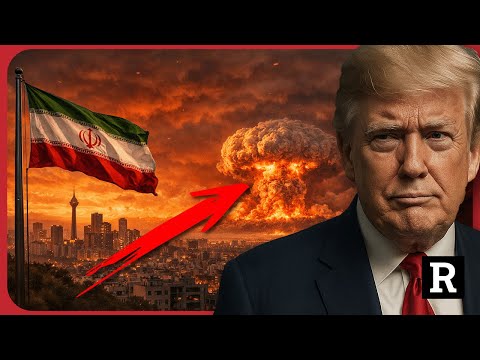
MASSIVE ATTACK ON ISRAEL, TRUMP VOWS "TOTAL ANNIHILATION" OF IRAN | Redacted News
Summary
President Trump has issued a deadline for Iran to negotiate a ceasefire, threatening severe military consequences if they fail to comply. The U.S. has restricted access to satellite imagery of Iran, raising questions about transparency and the rationale behind such actions. Experts express concern that Trump's rhetoric may be hyperbolic, suggesting that conventional military strategies could be employed instead of nuclear options.
Military actions against Iran could lead to significant humanitarian crises in the Gulf states, as the destruction of energy infrastructure would leave millions without essential resources. The interconnectedness of global economies means that rising oil prices could trigger widespread economic downturns, affecting not only the U.S. but also allies like Japan and South Korea.
Concerns about Trump's cognitive fitness have emerged, with noticeable changes in his demeanor prompting questions about his leadership capabilities. The military situation in the Gulf is increasingly precarious, with American forces at risk from Iranian missile capabilities, complicating troop movements and operational safety.
The reliance on military threats may provoke increased hostility from Iran rather than compliance, as historical patterns suggest that such tactics often lead to resistance. The effectiveness of Israel's Iron Dome is under scrutiny, with reports indicating diminishing capabilities against sustained missile attacks.
Perspectives
Analysis of the escalating conflict in the Middle East and its implications.
Pro-Trump Military Strategy
- Claims that military action will decisively impact Irans capabilities
- Argues that conventional military strategies can effectively disrupt Iranian power
- Highlights the urgency of U.S. military readiness in the Gulf region
Critique of Military Intervention
- Questions the effectiveness of military strategies against a resilient Iran
- Denies the assumption that military threats will deter Iranian aggression
Neutral / Shared
- Notes the complexities of regional power dynamics
- Acknowledges the potential for economic repercussions from military actions
- Recognizes the interconnectedness of global economies in the context of rising oil prices
Metrics
threat_level
the entire country will be taken out in one night
Trump's statement on potential military action
This highlights the extreme rhetoric surrounding the conflict.
the entire country will be taken out in one night
satellite_blackout
the US has put a blackout on satellite images
US strategic actions regarding Iran
This indicates a significant level of secrecy and potential military planning.
the US has put a blackout on satellite images
military_action
a punishing series of strikes designed to destroy petrochemical plants
Potential U.S. military response
This suggests a targeted approach to disrupt Iran's energy infrastructure.
a punishing series of strikes designed to destroy petrochemical plants
population
67 million people
population of the Gulf states
A large population is at risk of humanitarian crises due to energy disruptions.
they have almost 67 million people living in that region
gasoline_price
$11 USD
gasoline price in Germany
High gasoline prices indicate broader economic instability linked to global oil supply.
they're paying the equivalent of about $11 per gallon for gasoline
price
all time highs USD
gold and silver prices
Rising prices indicate investor concern over economic stability.
golden silver have both soared to all time highs.
impact
a decade or more years
timeframe for energy system overhaul
Long-term disruptions could lead to sustained economic instability.
the whole energy system in the world is being disrupted and ultimately is going to have to be rebuilt and it's going to take a decade or more.
risk
potential victim of the 25th amendment
Trump's leadership concerns
Leadership instability could affect national and international policy.
he is going to he's going to be in a lot of trouble.
Key entities
Timeline highlights
00:00–05:00
President Trump has set a deadline for Iran to negotiate a ceasefire, threatening severe consequences if they fail to comply. The U.S.
- President Trump has issued a deadline for Iran to negotiate a ceasefire, warning of severe repercussions if they do not comply, raising fears about nuclear weapon use and global security risks
- The U.S. has requested a blackout on satellite imagery of Iran, leading to speculation about its strategic intentions
- Colonel Douglas McGregor argues that Trumps threats may be overstated and suggests that conventional methods could effectively disrupt Irans power infrastructure
- A potential U.S. military response could include targeted strikes on Irans energy facilities
- Iran has warned it will retaliate against any military action, which could further escalate the conflict and is viewed as a significant concern
- The situation is dynamic, with military action potentially occurring sooner than expected, and Trumps unpredictable statements contribute to the surrounding tension
05:00–10:00
A military response to Iran could severely impact energy infrastructure, leading to a humanitarian crisis for millions in the Gulf states. The U.S.
- A military response to Iran could disrupt energy infrastructure in the region, potentially leading to a humanitarian crisis for millions in the Gulf states who rely on basic necessities
- Israels expansionist ambitions hinder peace prospects with Iran and other Muslim nations, intertwining the conflict with U.S. interests
- The U.S. militarys role is perceived as a way to strengthen Israel, but this approach may prove ineffective in the long run
- Trumps withdrawal from the Iranian nuclear deal is viewed as prioritizing Israels interests over those of Iran, altering U.S. foreign policy dynamics
- The conflict is likely to trigger global economic downturns, with rising oil prices and shortages threatening economic stability in many countries, including allies
- Countries like Japan and South Korea face challenges in securing energy resources due to escalating global prices, underscoring the interconnectedness of global economies amid regional conflicts
10:00–15:00
The global energy market is facing significant disruptions as competition for oil intensifies among Japan, South Korea, and Europe, potentially leading to a decade-long overhaul. Concerns are rising regarding former President Trump's cognitive fitness, with noticeable changes in his demeanor prompting questions about his leadership capabilities.
- The global energy market is experiencing significant disruptions as Japan and South Korea compete with Europe for oil, potentially leading to a decade-long overhaul of the energy system
- Predictions indicate a stock market crash could happen soon, which would severely impact the global economy and worsen financial instability
- Excessive money printing and inflated markets are driving gold and silver prices to record highs, prompting investors to consider these metals as a safeguard against an impending financial crisis
- Germanys heavy reliance on external energy sources, especially after losing access to cheaper Russian supplies, makes it particularly susceptible to economic disruptions from Iran
- Concerns about former President Trumps cognitive fitness are rising, with noticeable changes in his demeanor compared to previous years, raising questions about his leadership capabilities
- Some lawmakers are advocating for a reassessment of military engagement duration, suggesting limits without a formal declaration of war, reflecting doubts about the current strategys sustainability
15:00–20:00
There is growing support for the U.S. to reassess its financial aid to Israel due to diminishing perceived benefits.
- There is increasing support for the U.S. to reevaluate its financial aid to Israel, as the perceived benefits are diminishing
- Reports show President Trumps emergency command aircraft near a U.S. nuclear command center, raising alarms about military readiness
- Discussions are underway regarding the potential deployment of ground forces in the Persian Gulf, though the effectiveness of such actions remains uncertain due to regional complexities
- Concerns are mounting over Irans nuclear capabilities and their potential threat to Israel, highlighting the significant risks associated with nuclear weapons
- Skepticism exists about the likelihood of the U.S. using nuclear weapons, as the goal is to avoid mass casualties
- The deployment of military assets, including several aircraft carriers, indicates a serious escalation in tensions, prompting observers to consider the implications of these developments
20:00–25:00
The military situation in the Gulf is increasingly dangerous, with American forces at risk from Iranian missile capabilities. Airlifting troops into the region poses significant challenges due to the likelihood of detection by Iranian forces.
- The military situation in the Gulf is precarious, with American forces vulnerable to attacks in a hostile environment, raising concerns about operational safety
- Irans missile capabilities, including tactical and theater ballistic missiles, pose a significant threat to U.S. military assets in the region
- Airlifting troops into the Persian Gulf presents major challenges, as Iranian forces are likely to detect any troop movements, complicating military strategies
- President Trumps recent press conference with military leaders aimed to reassure the public about troop safety, but critics question the necessity of such reassurances if military action is not planned
- The mission to rescue pilots is crucial for demonstrating military support for personnel in dangerous situations, which is essential for troop morale
- Concerns persist about the effectiveness of U.S. military operations in Iran, especially regarding the security of sensitive materials like enriched uranium
25:00–30:00
The military operation to secure enriched uranium in Iran faced significant challenges, raising doubts about U.S. effectiveness in the region.
- The recent military operation to secure enriched uranium in Iran faced significant obstacles, raising doubts about the U.S. effectiveness in the region
- In Israel, neighborhoods are ablaze and unrest is escalating, prompting many citizens to evacuate, which threatens government stability
- The Iron Dome defense system is reportedly struggling against missile threats, potentially leading to higher casualties and escalating conflict
- Iran has experienced civilian casualties but has reportedly improved its ability to manage the situation compared to past conflicts, which may influence its military strategy
- The Israeli government is utilizing unwavering U.S. support to advance its regional goals, complicating the prospects for diplomatic solutions
- The ongoing conflict is straining U.S. foreign policy as military objectives become increasingly difficult to achieve