Intel / Middle East
Real-time monitoring of security incidents, escalation signals and threat indicators across global hotspots, focusing on rapid alerts and emerging risk developments. Topic: Middle-East. Updated briefs and structured summaries from curated sources.
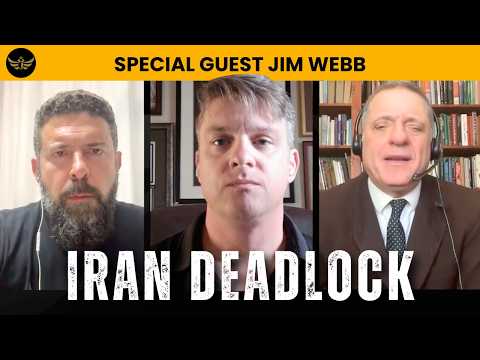
Iran, Hormuz & the War America Wasn't Ready to Fight w/ Jim Webb
Summary
The discussion centers on the current military operations in Iran, highlighting a lack of strategic planning and inadequate troop deployment. Jim Webb emphasizes that the U.S. military's approach appears chaotic and poorly thought out, contrasting it with past operations like Desert Storm, which involved extensive preparation and troop buildup.
Webb critiques the U.S. military's underestimation of Iran's capabilities and alliances, arguing that the current strategy fails to account for the complexities of the geopolitical landscape. He points out that the reliance on outdated models of warfare could lead to catastrophic miscalculations.
The conversation shifts to the nature of Iranian military strategy, which has evolved to emphasize asymmetrical warfare, complicating U.S. defense capabilities. Webb notes that the U.S. lacks a robust air defense system, making it vulnerable to Iranian missile and drone threats.
Webb argues that military actions, such as seizing Iranian islands, are unlikely to resolve the conflict and may increase risks for U.S. troops. He advocates for a diplomatic approach, suggesting that negotiations could lead to a de-escalation of tensions.
Perspectives
Analysis of U.S. military strategy in relation to Iran, emphasizing the need for diplomacy.
Jim Webb's Perspective
- Critiques the chaotic nature of U.S. military operations in Iran
- Highlights the underestimation of Irans military capabilities
- Argues for the necessity of a diplomatic approach to de-escalate tensions
- Warns against the risks of military actions without public support
- Calls for Congress to reclaim its role in military decision-making
U.S. Military Strategy
- Assumes military superiority can resolve conflicts swiftly
- Relies on outdated models of warfare that ignore modern complexities
- Underestimates the potential backlash from military actions
- Fails to adequately prepare for the realities of asymmetrical warfare
- Neglects the importance of public discourse on military limitations
Neutral / Shared
- Acknowledges the historical context of U.S.-Iran relations
- Recognizes the evolving nature of Iranian military strategy
- Notes the complexities introduced by Russian support for Iran
Metrics
troops
50,000 units
current troop deployment in Iran
This number reflects the scale of U.S. military presence and preparedness.
we have just now plused up the number of troops in theater to 50,000.
troops
40,000 units
previous troop deployment in Iran
The increase in troop numbers indicates a response to perceived threats.
Before this, it was 40,000.
aircraft
way less than any other operation units
air support for the operation
Insufficient air support may hinder operational effectiveness.
the number of aircraft that were put in theater to conduct these operations from day one or way less than any other operation we've done in the past.
troops
50,000 troops units
current U.S. troop deployment in the region
This number indicates a significant reduction in military presence compared to historical conflicts.
I think I you mentioned 50,000 troops that the United States has in the area now.
troops
800,000 troops units
troop deployment during the Gulf War
This comparison highlights the stark difference in military readiness and strategic planning.
The operation against Saddam Hussein from memory has something like 800,000 troops brought into the area.
troop_deployment
20, 30, 100, 200,000 units
potential troop increase needed for conflict with Iran
A significant troop increase is necessary for effective military engagement.
we would have put an extra 20, 30, 100, 200,000 guys on the ground
military_readiness
not sure we have
uncertainty about troop deployment capabilities
Uncertainty in troop availability undermines military strategy.
I'm not sure we have, you know, with the ability to deploy there
air_defense
not deployed yet
current status of U.S. air defense systems
Lack of deployed air defenses increases vulnerability to Iranian attacks.
they're not deployed yet
Key entities
Timeline highlights
00:00–05:00
The military operation in Iran is characterized by inadequate strategic planning and troop deployment, raising concerns about U.S. effectiveness.
- The military operation in Iran lacks strategic planning, raising doubts about U.S. effectiveness
- Unlike past campaigns like Desert Storm, the current deployment of 50,000 troops lacks adequate preparation and ground combat forces
- Current air support for the operation is significantly lower than what has been used in previous conflicts
- The rationale for military action relies heavily on perceived external threats from Iran, which undermines U.S. credibility
- Irans potential closure of the Strait of Hormuz could escalate tensions, indicating a need for a more robust strategy
- The operation is viewed as an unnecessary war of choice, with potential long-term consequences for U.S. interests
05:00–10:00
The U.S. military's current position in Iran is characterized by a lack of decisive action and inadequate troop deployment.
- The U.S. militarys current position in Iran is weak, lacking decisive action on the ground
- U.S. officials had foreseen the possibility of Iran closing the Strait of Hormuz, highlighting a failure to prepare for Iranian counteractions
- The number of U.S. troops deployed in the region is significantly lower than during the Gulf War, which saw around 800,000 troops
- Irans military strength and alliances present a more formidable challenge than Iraqs isolation under Saddam Hussein. The absence of thorough planning for a conflict with Iran indicates a critical misjudgment by U.S
- The U.S. militarys engagement in a conflict for which it is ill-prepared reflects a troubling strategic misalignment
- Irans predictable responses to U.S. actions suggest that military operations may backfire
10:00–15:00
Iran's military strategy has evolved to emphasize asymmetrical warfare, complicating U.S. defense capabilities against missile and drone threats.
- Iran has shifted its military strategy to focus on asymmetrical warfare, complicating U.S. defense against its missile and drone capabilities
- U.S. intelligence acknowledges the threat posed by Irans missile program, which is exacerbated by the militarys inadequate air defense systems
- Engaging in conflict with Iran would require a significant troop increase, but current military readiness and public backing for such an escalation are uncertain
- The administrations lack of preparation for a potential conflict with Iran reflects past errors seen in the Iraq War, risking prolonged military involvement without clear goals
- The evolving regional dynamics indicate that the U.S. may become involved in a conflict it is not fully prepared to manage, raising concerns about the sustainability of military operations
- The debate over military action emphasizes the need for public support and congressional approval, as their absence could lead to a drawn-out and unpopular conflict
15:00–20:00
The belief that seizing Iranian islands will alter the strategic landscape is misguided, as historical precedents indicate that territorial losses do not diminish Iran's resolve. A shift towards diplomacy is essential for de-escalating tensions, contrasting sharply with the military-centric approaches of recent years.
- The belief that seizing Iranian islands will change the strategic situation is flawed, as history shows that territorial losses do not weaken Irans resolve, evidenced by their experience in the Iraq War
- Conducting special forces operations in Iran is risky due to the countrys large size and challenging terrain, indicating that military solutions may not produce swift outcomes
- Diplomacy is essential for resolving the current crisis, contrasting with the military-centric strategies of recent years; genuine negotiations and concessions are necessary to reduce tensions
- The assassination of Iranian leaders has united their population against external threats, strengthening regime support and demonstrating the need for a more nuanced approach to military actions
- Reevaluating U.S. military bases in the region is important, as these are perceived by Iran as direct threats
- President Trumps commitment to ending stupid wars resonates with voters, suggesting that a withdrawal from the region could fulfill campaign promises and appeal to both domestic and international audiences
20:00–25:00
The strategy to seize islands in the region is unlikely to resolve the conflict and may increase risks for US troops. A shift towards diplomacy is essential for de-escalating tensions, contrasting sharply with the military-centric approaches of recent years.
- Seizing islands in the region is unlikely to resolve the conflict and may increase risks for US troops, potentially leading to high casualties without strategic gain
- The strategy to capture Kark is a significant miscalculation, as Iran may resort to destroying its own infrastructure to resist US forces, highlighting the conflicts existential stakes for Iran
- The current US military presence is inadequate for the vast areas it covers, raising concerns about operational effectiveness against a capable adversary like the IRGC
- There is a perception that the US has moved away from effective diplomatic strategies that previously helped resolve conflicts, suggesting a need to re-engage with partners like China and Russia
- Chinas interest in ending the war indicates a growing danger in the region, and its influence over Iran could be pivotal for pursuing a diplomatic resolution
- The lack of a senior American diplomat to engage with global powers on this issue is a critical oversight, as coordinated international efforts could pressure Iran to negotiate
25:00–30:00
The U.S. has shifted from diplomatic engagement to coercive tactics, making China a more appealing partner for economically focused nations.
- The U.S. has transitioned from diplomatic engagement to coercive tactics, making China a more attractive partner for nations focused on economic development
- The rise of neoconservatives has led to a militaristic U.S. foreign policy, complicating efforts to address global conflicts
- Policymakers often lack military experience, resulting in a casual attitude towards interventions. This detachment risks underestimating the human costs of conflict and its impact on service members
- The volunteer nature of the military fosters a bond among service members, which is threatened by trivial civilian decisions. This disconnect can erode trust and have lasting effects on national security
- The U.S. must reclaim its role as a key negotiator in international disputes to foster stability
- Current diplomatic strategies often emphasize punitive measures like sanctions instead of constructive engagement. This could backfire, diminishing U.S