Intel / Middle East
Real-time monitoring of security incidents, escalation signals and threat indicators across global hotspots, focusing on rapid alerts and emerging risk developments. Topic: Middle-East. Updated briefs and structured summaries from curated sources.
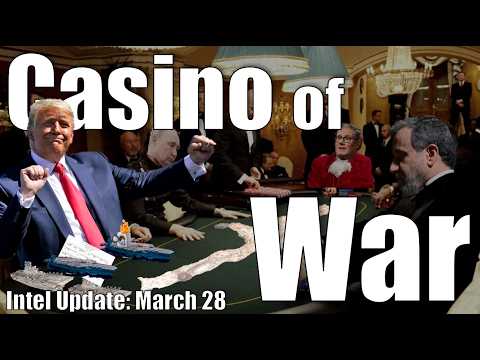
Intel Update - March 28 - Casino of War
Summary
The Gulf War has escalated significantly, with Iranian counterattacks severely impacting Israel and Turkey's involvement raising concerns about regional stability. Concurrently, the war in Ukraine is intensifying, complicating global markets and leading to potential famine in Southeast Asia due to disrupted fertilizer supplies.
Domestic issues, such as wildfires in Nebraska, threaten food supply chains, highlighting the interconnectedness of global and local crises. Recent indictments of Chinese nationals for an attempted attack at McDill Air Force Base raise concerns about potential false flag operations during wartime.
The ongoing conflict in the Middle East is impacting military strategies, as airstrikes yield diminishing returns, raising concerns about the effectiveness of U.S. operations. The Pentagon's military strategy is criticized for lacking ethical integrity, leading to unnecessary civilian casualties and complicating the conflict.
The U.S. military's initial strategy involved a surprise attack that resulted in significant diplomatic fallout. The Iranian regime maintains a strategic position that complicates peace negotiations, as both sides exhibit unreliable communication and propaganda.
Perspectives
short
U.S. Military Strategy
- Critiques airstrikes for yielding diminishing returns
- Highlights ethical concerns regarding civilian casualties
- Questions the effectiveness of current military operations
- Notes the disconnect between military leadership and ground realities
- Warns against the reliance on indiscriminate weapons
Iranian Response
- Maintains a strategic position complicating peace negotiations
- Exhibits unreliable communication and propaganda
- Conducts reciprocal targeting in response to U.S. actions
- Demonstrates resilience against U.S. military strategies
Neutral / Shared
- Notes the interconnectedness of global and local crises
- Acknowledges the impact of domestic issues on military strategy
- Recognizes the potential for misinformation in various media
Metrics
other
60,000 units
months into the Gulf War
Indicates the duration of ongoing conflict and its potential for escalation.
Well, we are officially one month into the Gulf War
other
largest wildfire in state history
impact of wildfires in Nebraska
Highlights the severity of environmental challenges amidst geopolitical conflicts.
the immoral fire being the largest wildfire in state history
other
diminishing returns
U.S. airstrikes in Iran
Indicates a depletion of viable military targets.
evidence is mounting that they are running out of the easy targets to strike
other
two construction vehicles
Targets of recent airstrikes
Raises questions about the legitimacy of military targets.
this video shows airstrikes of at least two construction vehicles
bombs_dropped
10,000 units
total bombs dropped during the war
This figure indicates the scale of military engagement and the challenges in finding effective targets.
the Pentagon has indeed run 10,000 sorries so far during this war
other
almost 2,000 impact craters units
number of impact craters plotted on maps
This indicates the scale of military operations and potential collateral damage.
I have plotted almost 2,000 impact craters on my maps
troops
10,000 more troops units
potential deployment of U.S. military forces
This indicates a significant escalation in U.S. military involvement.
the Pentagon has slated up to 10,000 more troops regular army to deploy
Key entities
Timeline highlights
00:00–05:00
The Gulf War has escalated significantly, with Iranian counterattacks severely impacting Israel and Turkey's involvement raising concerns about regional stability. Concurrently, the war in Ukraine is intensifying, complicating global markets and leading to potential famine in Southeast Asia due to disrupted fertilizer supplies.
- The Gulf War is now in its second month, with escalating conflicts in the Middle East indicating a worsening regional crisis without a clear resolution
- Irans intensified counterattacks are significantly affecting Israel by damaging early warning systems, highlighting the broader implications for regional stability
- Turkeys role in the conflict is increasing, especially after an attack on a tanker in its waters, raising concerns about potential regional escalation
- The war in Ukraine is escalating, with Ukrainian forces targeting oil terminals in St. Petersburg, further complicating the geopolitical landscape
- Global markets are strained by these conflicts, particularly due to fertilizer shortages from disrupted supply chains, which could lead to famine in Southeast Asia
- In the U.S, wildfires in Nebraska have severely impacted agricultural areas, adding to the domestic challenges alongside international conflicts
05:00–10:00
The ongoing conflict in the Middle East is impacting domestic issues, such as Nebraska wildfires, which threaten food supply chains. Recent indictments of Chinese nationals for an attempted attack at McDill Air Force Base raise concerns about potential false flag operations during wartime.
- The ongoing Middle East conflict is overshadowing domestic issues like Nebraska wildfires, which threaten food supply chains and highlight logistical vulnerabilities
- The indictment of two Chinese nationals for an attempted attack at McDill Air Force Base raises concerns about potential false flag operations during wartime
- The term diminishing returns reflects U.S. airstrikes in Iran targeting less significant objectives, indicating a depletion of viable military targets
- A video of airstrikes on construction vehicles questions the legitimacy of these targets, risking misallocation of military resources and potential criticism
- The current environment features increased risks of attacks from various groups, complicating the attribution of responsibility for future incidents
- The speaker emphasizes the need for deeper investigation into domestic threats and military engagements, indicating a commitment to thorough analysis as new information emerges
10:00–15:00
The Pentagon's military strategy in Iran is facing challenges as airstrikes yield diminishing returns, raising concerns about the effectiveness of U.S. operations.
- The Pentagons search for effective military targets in Iran reveals a trend of diminishing returns in airstrikes, raising concerns about the effectiveness of U.S. strategy and the potential for a prolonged conflict
- Despite extensive bombing campaigns, Iranian military capabilities remain resilient, as ongoing missile attacks on Israel demonstrate that airstrikes alone cannot achieve total submission without ground forces
- President Trumps inconsistent ultimatums regarding Irans actions undermine the credibility of U.S. diplomatic efforts, as repeated deadline extensions create instability in negotiations
- Israels ongoing strikes against Iranian targets, despite U.S. calls for a ceasefire, complicate the situation and reduce the chances for peace in the region
- The current military approach reflects a historical pattern of initiating conflicts with tactics typically reserved for their conclusion, which may hinder future negotiations and undermine U.S. influence
- The likelihood of a negotiated settlement diminishes if the U.S. continues actions that weaken its negotiating power
15:00–20:00
The U.S. military's initial strategy involved a surprise attack that resulted in significant diplomatic fallout.
- The U.S. militarys initial strategy included a surprise attack that involved the assassination of a significant religious figure, leading to unforeseen diplomatic complications and entrapment for the U.S
- While publicly advocating for diplomacy, U.S. officials were covertly pursuing military action, undermining any real chances for peace
- The aggressive tactics employed at the start of the conflict have created challenges for ground personnel, complicating troop management during chaotic conditions
- The Pentagons current strategy raises ethical concerns by prioritizing destruction over humanitarian considerations, risking further escalation if ground troops are deployed
- There is increasing worry that military leaders are straying from ethical warfare principles, which could have severe repercussions for combat operations
- As the conflict progresses, the consequences of these military decisions will become clearer, particularly with the potential introduction of ground forces, intensifying moral dilemmas for soldiers
20:00–25:00
The current military strategy is criticized for lacking ethical integrity, leading to unnecessary civilian casualties and complicating the conflict. The Pentagon's aggressive propaganda and actions against civilian infrastructure are damaging U.S.
- The current military strategy lacks ethical integrity, resulting in unnecessary civilian casualties and complicating the conflict further
- Respecting the enemy is essential to avoid strategic failures and increased hostility in military operations
- The Pentagons aggressive propaganda indicates a lack of strategic direction, fostering a destructive mentality that alienates potential allies
- U.S. leadership has damaged its moral standing through deceptive diplomacy, eroding trust with adversaries
- Current military actions that target civilian infrastructure violate international norms, risking the U.S.s global reputation
- The use of indiscriminate weapons like land mines endangers civilians and threatens the legitimacy of U.S. military operations
25:00–30:00
The Iranian regime maintains a strategic position that complicates peace negotiations, as both sides exhibit unreliable communication and propaganda. The U.S.
- The Iranian regimes strategic position in the conflict gives it leverage that could extend the war, complicating peace negotiations due to a lack of trust in U.S. commitments
- Both American and Iranian communications are unreliable, with propaganda from both sides hindering the potential for meaningful dialogue and exacerbating tensions
- Israeli military actions, such as targeting Iranian sites, risk undermining U.S.-Iran peace efforts
- Despite a declared ceasefire, the U.S. is increasing military readiness, suggesting an intention to escalate rather than de-escalate the situation
- The deployment of more U.S. troops indicates a commitment to a prolonged military presence, raising concerns about possible ground operations in Iran
- The conflict remains unresolved after a month, with the Iranian regime demonstrating resilience, making a quick resolution unlikely