Intel / Middle East
Real-time monitoring of security incidents, escalation signals and threat indicators across global hotspots, focusing on rapid alerts and emerging risk developments. Topic: Middle-East. Updated briefs and structured summaries from curated sources.
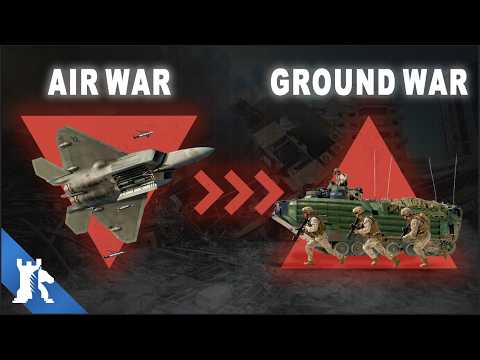
Why boots on the ground is coming
Summary
The U.S. is contemplating ground operations in Iran as airstrikes have not effectively altered Iran's military strategy. Discussions have emerged regarding the potential for special operations missions, which offer more flexibility than conventional warfare. However, the complexities of executing such operations raise significant concerns about their effectiveness and political ramifications.
Raiding Iran's enriched uranium sites could disrupt its nuclear ambitions, but these operations are fraught with risks and time constraints. The decentralized nature of Iran's military complicates efforts to achieve lasting disruption through targeted strikes or assassinations. Any tactical success could quickly turn into a political crisis if American forces face casualties.
Marine expeditionary units are being considered for missions targeting Iran's oil export infrastructure, as recent airstrikes have not significantly impacted it. The potential for limited territorial operations exists, but the challenges of conducting amphibious assaults against a defended coastline are substantial. A full-scale invasion remains unlikely without major provocation due to the extensive resources and regional cooperation required.
A full-scale invasion of Iran could lead to a prolonged conflict, draining U.S. resources and complicating stabilization efforts. Historical precedents indicate that such military interventions often result in drawn-out engagements rather than quick victories. The reliance on proxy forces may further complicate U.S. objectives and prolong the conflict.
Perspectives
Analysis of U.S. military options in Iran.
Pro-ground operations
- Considers special operations as a flexible military option
- Identifies potential targets within Irans military infrastructure
- Highlights the need for decisive action against Irans nuclear capabilities
Anti-ground operations
- Warns of the risks associated with ground operations
- Questions the effectiveness of limited strikes against a decentralized military
- Rejects the notion that a full-scale invasion would lead to quick victory
Neutral / Shared
- Acknowledges the complexities of military operations in Iran
- Recognizes the potential for political fallout from military actions
- Notes the historical challenges of stabilizing regions post-invasion
Metrics
uranium_stockpile
around 400 kilograms
Iran's stockpile of highly enriched uranium
Securing this material is critical for U.S. national security.
Iran is believed to possess around 400 kilograms of uranium enriched to roughly 60%.
troops
roughly 4,400 Marines units
deployment of U.S. Marines to the Persian Gulf
This deployment enhances the U.S. military's ability to conduct limited operations against Iran.
the Pentagon has ordered two marine expeditionary units numbering roughly 4,400 Marines to move toward the Persian Gulf
troops
around 200,000 soldiers units
comparison to the invasion of Iraq in 2003
This highlights the scale of resources needed for a potential invasion of Iran.
the invasion of Iraq in 2003 required more than six months to assemble around 200,000 soldiers in the region.
Key entities
Timeline highlights
00:00–05:00
The U.S. is considering ground operations in Iran as airstrikes have not effectively altered Iran's military strategy.
- The U.S. is exploring ground operations in Iran due to the ineffectiveness of airstrikes in changing Irans military strategy
- Implementing ground operations poses significant challenges due to the complex military and political landscape in Iran. These factors could complicate U.S
- Special operations missions are viewed as a more politically acceptable form of U.S. intervention
- The U.S. military possesses elite units that can quickly deploy for specific operations within Iran
- Irans substantial stockpile of highly enriched uranium represents a serious risk. Securing this material is a critical priority for U.S
- The possibility of U.S. ground operations highlights the volatile nature of the conflict with Iran
05:00–10:00
Raiding Iran's enriched uranium sites could disrupt its nuclear ambitions, but such operations are time-sensitive and risky. The decentralized nature of Iran's military complicates efforts to achieve lasting disruption through targeted strikes or assassinations.
- Raiding Irans enriched uranium sites could significantly disrupt its nuclear ambitions, but these operations are time-sensitive and may provoke a rapid military response from Iran
- While special forces can target nuclear facilities, such actions would only delay Irans military capabilities due to the dispersed nature of its industrial network
- Assassinating key military leaders in Iran is complicated by the decentralized structure of its defense forces, which means removing individual commanders may only provide temporary disruption
- Engaging opposition groups in Iran could be a strategy for special forces, but building a successful insurgency requires significant time and local support, making it uncertain
- Failed covert operations could result in substantial political backlash in the U.S, echoing past military failures and making administrations wary of escalating actions in Iran
- The U.S. may consider limited territorial operations targeting specific coastal sites rather than a full-scale invasion
10:00–15:00
Marine expeditionary units are being considered for missions targeting Iran's oil export infrastructure, as recent airstrikes have not significantly impacted it. A full-scale invasion of Iran is deemed unlikely without major provocation due to the extensive resources and regional cooperation required.
- Marine expeditionary units are well-suited for rapid missions targeting Irans oil export infrastructure, enhancing U.S. operational capabilities
- Recent U.S. airstrikes on Kharg Island have not significantly impacted Irans energy infrastructure, which remains largely intact
- Capturing key ports like Bandar Abbas or Chabahar could disrupt Irans maritime trade, but executing such assaults would face significant challenges against a defended coastline
- While the U.S. has successfully conducted unopposed landings in the past, contested operations would expose troops to threats from drones and coastal defenses
- A full-scale invasion of Iran would demand extensive resources and regional cooperation, which are currently absent, making such an operation unlikely without a major provocation
- Sustaining a prolonged ground war requires public support and congressional approval, both of which present significant challenges for the U.S
15:00–20:00
A full-scale invasion of Iran could lead to a prolonged conflict, draining U.S. resources and complicating stabilization efforts.
- A full-scale invasion of Iran could lead to a lengthy conflict, potentially lasting months or years, which poses risks of draining U.S. resources
- The geographical complexities and large population of Iran would complicate stabilization efforts, risking a long-term military commitment for U.S. forces
- Using proxy forces instead of direct military action may result in strategic failures, prolonging the conflict and complicating U.S. objectives
- A prolonged engagement in Iran could negatively affect U.S. military readiness in other regions
- Historical patterns of U.S. military interventions indicate that quick victories are unlikely in complex environments like Iran
- The feasibility of a ground war in Iran depends heavily on public support and political will in the U.S, making sustained operations challenging without a clear mandate