AI and Human Understanding in Scientific Discovery
Analysis of AI's impact on scientific discovery, based on 'AI+Science: Role of Human Understanding in the Future of Scientific Discovery' | Stanford HAI.
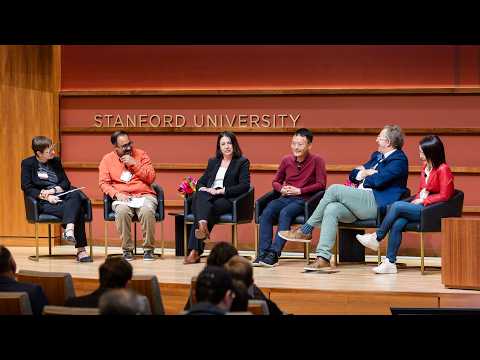
OPEN SOURCEThe panel discusses the role of human understanding in the future of scientific discovery, emphasizing the intersection of AI and science. Experts from various fields share insights on how AI technologies can augment or replace traditional scientific processes. The conversation highlights the importance of recognizing the social, cultural, and economic dynamics that shape AI development and its implications for scientific integrity.
Angel Christine critiques the venture capital-driven model prevalent in Silicon Valley, pointing out its potential conflicts with academic values. She identifies key issues such as opacity, efficiency, and cost-cutting that arise from the integration of large language models (LLMs) in academia. The panelists express concerns about how these models may threaten the roles of emerging researchers and the integrity of scientific inquiry.
The discussion shifts to the challenges posed by LLMs, particularly regarding their opacity and the emphasis on efficiency over creativity. Panelists argue that while LLMs can enhance research productivity, they may also narrow the scope of inquiry and undermine the exploratory nature of scientific discovery. The need for human oversight in interpreting AI-generated results is emphasized.
As the conversation progresses, the panelists explore the potential for AI to generate innovative solutions through analogy and cross-disciplinary collaboration. They highlight the importance of fostering a diverse research environment that encourages creativity and exploration, rather than succumbing to an AI monoculture that prioritizes efficiency and standardization.
The panel concludes with reflections on the future of AI in science, expressing hopes for a balanced integration that preserves human creativity and intuition. Concerns about skill atrophy and the homogenization of scientific inquiry are raised, alongside a vision for a collaborative landscape where AI and human researchers coexist and thrive.
- AI can enhance scientific discovery by accelerating research processes and generating innovative solutions
- Collaboration between AI and human researchers can lead to new insights and foster creativity
- Panelists advocate for a balanced approach that preserves human creativity alongside AI advancements
- The panel explores how AI intersects with scientific discovery, featuring experts from fields such as automated laboratories and machine learning
- Angel Christine highlights the importance of understanding AI, especially generative AI and large language models, as influenced by social, cultural, and economic factors rather than just as tools
- She critiques the venture capital-driven model prevalent in Silicon Valley, pointing out its high-risk nature, casual data collection, and extractive practices that may clash with academic science values
- Christine argues that the principles underlying large language models reflect Silicon Valleys logics, which diverge from those guiding academic research, potentially threatening scientific integrity and sustainability
- The panel examines the disconnect between the values of large language models (LLMs) and the principles of academic discovery, highlighting issues of opacity, efficiency, and cost-cutting
- LLMs are often opaque due to their complex algorithms and proprietary models, which contrasts with academias focus on transparency and open-source knowledge sharing
- Silicon Valleys drive for efficiency tends to prioritize rapid results, potentially undermining the exploratory and serendipitous aspects of scientific research
- The industrys emphasis on automation and cost reduction may threaten the roles of postdoctoral researchers and PhD students, who are vital for advancing scientific inquiry
- Concerns are raised about how LLMs might change the responsibilities of scientists as mentors and educators, stressing the importance of balancing technological progress with the development of future scientific talent
- Concerns are raised about the impact of AI on academic fields that may not see significant benefits from AI advancements, prompting questions about their future
- A clear distinction exists between industry values, which prioritize opacity and efficiency, and academic values that focus on openness, creativity, and education
- While AI can improve research efficiency, it is crucial not to overlook the importance of the scientific process, which relies on serendipity and creativity
- There is a caution against allowing AI models to dictate academic practices, highlighting the need for academics to guide the integration of AI tools in alignment with their values
- The evolution of AI models has led to a situation where many discoveries are now produced by AI, increasing reliance on human interpretation over original human discovery
details
details
details
- AI systems can generate scientific papers, but many lack substance and originality, raising concerns about their reliability and the risk of misleading conclusions
- While scientists using AI tools experience increased citations and career advancement, this trend may narrow inquiry, as AI often reinforces existing knowledge instead of fostering new questions
- Scientific breakthroughs are often unpredictable, with the most impactful papers emerging from unexpected insights, underscoring a key difference between human and AI-driven research
- Recent AI advancements allow models to engage in complex reasoning, yet the resulting papers frequently lack genuine innovation, showing semantic collapse despite greater lexical diversity
- The rise of AI agents in scientific discovery introduces ethical challenges, as they can produce convincing but flawed research, highlighting the need for careful oversight to maintain scientific integrity
details
- AI can generate surprising insights in scientific research, but without human oversight, it often leads to predictable and less impactful results
- In quantum matter research, the diversity of experiments produces varied data, making it difficult for AI to draw meaningful conclusions without human interpretation
- Studies indicate that papers based on unexpected findings are more likely to receive awards, highlighting the role of unpredictability in scientific progress
- Human involvement is essential for framing research questions and interpreting complex data, as AI struggles with the intricacies of material system interactions
- To enhance scientific discovery, AI systems should be designed to incorporate diverse perspectives and foster curiosity, avoiding the pitfalls of computational conformity
- The unique behavior of each material system in quantum matter research complicates the use of AI tools, as they operate in a diverse and continuous action space
- Success bias in research documentation results in a scarcity of information on failures, limiting AIs ability to learn from contrasting experimental outcomes
- Theoretical models in quantum matter are often restricted by biases like symmetry requirements, which can obstruct the acceptance of AI-generated predictions that deviate from established norms
- Current large language models face challenges with the complex, multimodal problems in quantum theory, achieving only about 30% success in addressing relevant academic questions
- Despite these challenges, AI can enhance the research process in quantum matter by assisting in literature surveys and formulating research questions
details
- AI can enhance collaboration among researchers by facilitating idea exploration and question formulation, but it is crucial to remain vigilant against biases in existing literature that may create echo chambers
- Automating repetitive algorithmic tasks is vital, allowing researchers to focus on innovative thinking instead of spending years on redundant workflows
- The diverse and sparse data landscape in quantum matter research requires careful algorithm design and emphasizes the importance of expert human judgment in decision-making
- The speaker compares the evolution of the periodic table to current data analysis in materials science, indicating that systematic approaches can lead to groundbreaking discoveries
- Human scientists play a key role in synthesizing information, addressing knowledge gaps, and guiding research efforts in an era where AI tools are becoming more prevalent
- Historical European maps reflect a past belief in complete knowledge, which was upended by the discovery of new continents, underscoring the importance of acknowledging ignorance and the need for exploration
- Current AI models face challenges in recognizing their knowledge gaps, similar to students struggling to understand what they do not know, highlighting the need to cultivate curiosity and insightful questioning
- The speaker emphasizes the importance of teaching future generations to learn dynamically and adapt their inquiries, as AI lacks the ability to engage in real-time learning and question formulation
- James So presents AI as a collaborative scientist, advocating for AI agents that can generate hypotheses, design experiments, and analyze data across various research fields
- The virtual lab project at Stanford illustrates this concept, where AI agents simulate a physical lab environment to conduct experiments and collaborate, thereby enhancing research capabilities
- AI agents have successfully designed innovative nano bodies for COVID variants, surpassing human-designed options and highlighting AIs potential in scientific advancements
- The Agents for Science Conference focused on human-AI collaboration, allowing AI to act as both authors and reviewers, which provided insights into their partnership dynamics
- Collaboration analysis showed that while AIs role in generating hypotheses is limited, it becomes more autonomous in later stages such as data analysis and writing, reflecting a growing trust in AI as projects evolve
- The conference attracted over 300 submissions from 28 countries, indicating widespread global interest in AIs applications across various scientific disciplines, including social and life sciences
- A significant paper presented at the conference featured an AI agent simulating job markets, which was reviewed by a Nobel laureate, showcasing AIs ability to generate innovative ideas acknowledged by human experts
details
details
- Traditional scientific papers often fail to capture essential insights from extensive research, leading to inefficiencies in knowledge sharing
- A proposed solution is to create dynamic AI agents that can interactively explain research methods, apply them to new challenges, and enhance the reproducibility of scientific results
- This innovative approach could lower barriers to knowledge dissemination and improve the reliability of scientific findings
- An illustrative case involved two AI agents collaborating based on different research papers, resulting in the identification of a new mutation linked to ADHD risk
- There exists a tension between the efficiency of AI in producing results and the necessity of human understanding in scientific inquiry, especially in disciplines like mathematics where the discovery process is highly valued
- The integration of AI in science prompts critical discussions about balancing impactful outcomes with the retention of intuitive insights among researchers
- Understanding is essential in scientific disciplines, especially in mathematics and physics, where the discovery process and communication of insights hold significant value
- AI systems can effectively meet specific goals, such as drug development and engineering solutions, but poorly defined objectives may lead to diminishing returns
- The use of AI in medical algorithms raises concerns about unintended consequences, including healthcare access disparities, emphasizing the importance of carefully defined objectives
- The interplay between science and engineering is intricate, requiring a balance between achieving practical results and fostering understanding among researchers
- Assessing scientific progress involves not only measuring improvements but also determining whether they are marginal or transformative, necessitating clear standards
details
- The absence of clear boundaries in metric-driven approaches can impede motivation and hinder significant advancements in scientific research, obscuring the potential for transformative results
- While metric-driven strategies have achieved some success, they frequently neglect critical metrics that may not be immediately apparent, complicating the assessment of progress
- Successfully integrating AI systems into existing frameworks necessitates a comprehensive understanding of social dynamics and collective goals, rather than focusing solely on individual incentives
- Current interactions with AI often emphasize personal success metrics, which can result in a homogenization of scientific outputs, reflecting historical patterns in scientific recognition
- Innovative design in science and technology should incorporate incentive structures that encourage creativity and the discovery of unexpected data, rather than merely addressing existing knowledge gaps
- AI can enhance scientific inquiry by generating synthetic data and retraining models, similar to adaptive processes in evolutionary biology
- The idea of an arms race between AI and data suggests that AIs evolution could foster creativity and diversity in scientific research
- Encouraging AI to draw analogies from various fields, such as telecommunications and biology, can lead to innovative solutions and improved creativity in problem-solving
- There is a risk that the increasing adoption of AI across disciplines may lead to a convergence towards a computer science-centric approach, potentially limiting methodological diversity
- Collaboration between humans and AI can bridge gaps in vocabulary and syntax across different fields, promoting deeper collaboration and empowering researchers
- Concerns about skill atrophy in scientific fields due to AI reliance are countered by the intrinsic joy of learning and hands-on experimentation, indicating that curiosity can sustain engagement in science
- AI has the potential to significantly accelerate scientific discovery, enabling researchers to explore multiple approaches quickly and efficiently, thereby optimizing their time
- Historical examples show that over-reliance on computational power in past scientific conferences led to over-characterization of data, highlighting the importance of genuine exploration of uncharted data spaces
- While AI is expected to promote interpolative science by merging ideas from various fields, there is concern that this may detract from the pursuit of groundbreaking extrapolative ideas beyond conventional frameworks
- The emergence of new subfields focused on understanding the complexities of AI systems could lead to innovative applications of scientific principles
details
details
- Concerns about an AI monoculture in academia suggest that over-reliance on AI could limit the diversity of scientific inquiry and stifle innovation
- An ideal future for scientific research would resemble a Japanese garden, promoting a variety of research approaches and disciplines to coexist with AI rather than being dominated by it
- While AI can enhance the combination of existing ideas and streamline scientific processes, there are worries that it may hinder the pursuit of groundbreaking extrapolations that lead to significant breakthroughs
- Panelists advocate for a balanced integration of AI in science, emphasizing the importance of preserving the human elements of creativity and exploration
The reliance on venture capital in AI development assumes that rapid growth is inherently beneficial, overlooking the long-term implications for scientific integrity. Inference: This raises questions about the sustainability of scientific practices when driven by profit motives, suggesting a need for a reevaluation of funding structures to align with academic values.
This analysis is an original interpretation prepared by Art Argentum based on the transcript of the source video. The original video content remains the property of the respective YouTube channel. Art Argentum is not responsible for the accuracy or intent of the original material.