Understanding AI's Role in Cybersecurity
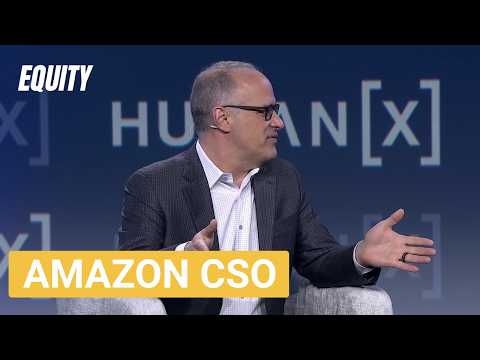
Analysis of AI's impact on cybersecurity risks, based on 'Amazon's Steve Schmidt on AI agents gone rogue (Live at HumanX)' | TechCrunch.
OPEN SOURCEAI is significantly altering the threat landscape, enabling both skilled and less experienced threat actors to execute sophisticated attacks. The integration of AI tools allows attackers to broaden their scope and reduce the time available for organizations to respond to incidents.
Organizations face dual threats from external AI-enabled attackers and internal risks associated with unregulated AI tools, often referred to as shadow AI. This internal risk arises when employees utilize AI without proper oversight, potentially exposing sensitive data.
Amazon has developed a framework to assign unique identities to AI agents, enhancing security and regulatory compliance. This framework allows for precise tracking of actions back to human operators, which is crucial for forensic analysis and accountability.
A containerized approach for AI agents is implemented to ensure that actions are controlled and audited. Agents must breach container boundaries to access credentials, which helps prevent unauthorized actions and ensures that requests are contextually valid.
Startups are advised to maintain a structured understanding of their AI usage, including the locations and permissions of agents. Implementing strict controls and labeling data sensitivity from the outset is essential to mitigate security risks.
Collective responsibility for security among all employees is emphasized, rather than relying solely on a Chief Information Security Officer. Organizations must foster a culture of awareness regarding data sensitivity and the potential risks associated with AI.
- AI empowers less skilled threat actors to conduct sophisticated attacks
- State actors leverage AI to exploit multiple vulnerabilities simultaneously
- Unregulated AI tools expose organizations to significant internal risks
- Employees using AI without oversight can lead to data exposure
- Organizations must implement strict controls over AI agent usage
- Collective responsibility for security is essential in mitigating risks
- AI is empowering threat actors of all skill levels, enabling less experienced individuals to conduct more advanced attacks
- State actors leveraging AI can exploit multiple vulnerabilities at once, significantly shortening the response time for organizations
- Organizations are confronted with dual threats: the growing sophistication of AI-enabled attackers and the internal dangers posed by unregulated AI tools, which can expose sensitive data
- The rise of shadow AI occurs when employees use AI tools without oversight, complicating security and necessitating a thorough understanding of AI usage within companies
- Amazon prioritizes tracing every action back to a human identity to reduce risks associated with AI agents, underscoring the need for effective containment strategies
- Amazon has implemented a framework that assigns unique identities to AI agents, enabling precise tracking of their actions back to human operators, which is vital for security and regulatory compliance
- The integration of AI in cybersecurity has enhanced the capabilities of threat actors, allowing even less skilled individuals to conduct sophisticated attacks, significantly reducing defenders response times
- The rise of shadow AI occurs as employees utilize AI tools without oversight, creating security risks that necessitate effective management and understanding of these tools by security professionals
- Guardrails are critical for AI agents to prevent harmful actions, as these agents lack the contextual understanding that human operators possess, which can lead to unintended consequences
- Amazon emphasizes the need to maintain the integrity of guardrails and the underlying infrastructure to prevent adversaries from manipulating AI agents and causing major disruptions
- Amazons containerized approach for AI agents requires them to breach container boundaries to access credentials, facilitating auditing and control over their actions
- Credential retrieval is linked to specific actions, ensuring that requests are contextually valid and subject to external validation, which helps prevent agents from being misled into inappropriate actions
- Human oversight is essential in Amazons AI operations, with a contingent authorization system that mandates agreement from two individuals for significant changes, enhancing security against potential misuse
- The Midway system enforces two-factor authentication for impactful actions, acting as a safeguard against unintended deployments or harmful actions
- Startups are advised to implement similar security measures, highlighting the necessity of human oversight and structured authorization processes to reduce risks associated with AI deployment
- Startups need to assess their use of AI agents, including their locations, access permissions, and data sensitivity, to mitigate security risks
- Implementing structured data management from the beginning is vital; labeling data by sensitivity can help avoid complications later
- Organizations should restrict AI agents access to data, learning from past errors to create controlled environments for their operations
- Keeping an inventory of software and agents on devices is crucial for security, enabling informed decision-making regarding their use
- While some advocate for early hiring of a Chief Information Security Officer (CISO) in startups, Schmidt emphasizes that security should be a collective responsibility among all employees
The assumption that AI will only enhance external threats overlooks the internal vulnerabilities posed by shadow AI. Inference: The lack of oversight on AI tools can lead to significant data exposure, complicating security measures. Without a robust framework to monitor AI usage, organizations may inadvertently empower malicious actors within their own ranks.
This analysis is an original interpretation prepared by Art Argentum based on the transcript of the source video. The original video content remains the property of the respective YouTube channel. Art Argentum is not responsible for the accuracy or intent of the original material.