Microsoft's AI Strategy and OpenAI Partnership
Analysis of Microsoft's AI strategy and its partnership with OpenAI, based on 'Satya Nadella's OpenAI Concerns, Google's Next AI Model, The AI Monet Prank' | Alex Kantrowitz.
OPEN SOURCESatya Nadella raised significant concerns regarding Microsoft's partnership with OpenAI, particularly focusing on control over intellectual property and the financial risks associated with their collaboration. Internal communications reveal dissatisfaction with Microsoft's reliance on Nvidia's technology, emphasizing the need for the company to own foundational AI model intellectual property for future success.
Critics argue that Microsoft has missed opportunities to leverage its relationship with OpenAI to enhance its applications, especially in the enterprise sector. The discussion highlights the importance of risk tolerance in adapting to new AI paradigms, suggesting that Microsoft's cautious approach may have stifled innovation.
The competitive landscape in AI is intensifying, with Google and Amazon emerging as formidable rivals. Despite Azure's growth, Microsoft lags behind Google in innovation and market performance, raising questions about the sustainability of its strategy in a rapidly evolving tech landscape.
Ongoing tensions between OpenAI and its partners, including Apple, underscore significant challenges in the tech industry's collaborative environment. The limited integration of OpenAI's technology into Apple's software has led to frustrations, prompting discussions about the effectiveness of their partnership.
A recent prank involving a real Monet painting misrepresented as AI-generated highlights the growing confusion and anti-AI sentiment in society. This incident reflects broader concerns about authenticity and the potential backlash against AI technologies.
Matthew McConaughey's trademark filings signal a shift in how celebrities may seek to protect their identities in the AI era, raising important questions about monetization and rights over likenesses as AI-generated content becomes mainstream.
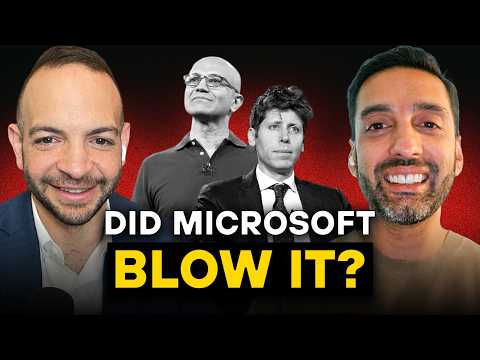
- Highlights dissatisfaction with control over intellectual property in the OpenAI partnership
- Emphasizes the need for Microsoft to own foundational AI model IP for future success
- Argue that Microsoft has squandered opportunities to leverage its relationship with OpenAI
- Ongoing tensions between OpenAI and its partners raise questions about collaboration effectiveness
- Satya Nadella raised concerns about Microsofts partnership with OpenAI, particularly regarding control over intellectual property and associated financial risks
- Internal communications from Nadella indicate dissatisfaction with Microsofts reliance on Nvidias technology, stressing the importance of owning foundational AI model intellectual property for future success
- The conversation includes insights on an upcoming Google AI model, which may compete with existing technologies like Codex, highlighting the fast-paced evolution of the AI sector
- The ongoing legal battle between Musk and Altman is revealing strategic dynamics among key players in the AI field, affecting how partnerships are formed
- Nadellas comments suggest a potential shift in Microsofts role from a partner to an investor in AI development, raising questions about the companys long-term strategy
- Satya Nadella expressed concerns about Microsofts partnership with OpenAI, particularly regarding the companys limited control over intellectual property and its reliance on Nvidias technology
- Critics believe Microsoft missed opportunities to leverage its relationship with OpenAI to enhance its applications, especially in the enterprise sector
- The significance of risk tolerance in adapting to new AI paradigms, suggesting that Microsofts cautious approach may have stifled innovation
- The hosts noted that Microsofts Bing initially benefited from OpenAIs technology but later struggled due to a lack of personality and user engagement
- Overall, the conversation critiques Microsofts strategy in the AI space, questioning whether the company has effectively capitalized on its investments and partnerships
details
- Satya Nadella highlighted the necessity for Microsoft to establish a proprietary advantage in AI, yet the company has not fully leveraged its potential, especially in integrating OpenAIs technology into its offerings
- While Azure reported a notable 40% growth, it still lags behind Googles 62% growth, underscoring Microsofts challenges in innovation within the competitive AI sector
- The discussion differentiates between AI-native products and those that simply incorporate AI into existing systems, suggesting that Google may adopt a more AI-native strategy than Microsoft
- Nadellas previous experience in transitioning Microsoft to cloud services showcases the difficulties leaders encounter in fostering organizational change while balancing immediate profits with long-term innovation
- The conversation points out missed opportunities for Microsoft to capitalize on its early AI investments, particularly regarding its partnership with OpenAI and the competitive pressure from Google
details
details
- Microsofts stock has declined nearly 10% year-to-date, contrasting with the S&P 500s rise of about 7-8%, prompting scrutiny of its AI strategy and partnership with OpenAI
- Investor Bill Ackman has acquired a significant stake in Microsoft, anticipating that the companys AI investments will eventually boost its stock performance despite current challenges
- Concerns have emerged regarding the effectiveness of Microsofts AI offerings, particularly its co-pilot products, in converting customers, which may impact its competitive standing
- Reports indicate that co-pilot integrations in Microsoft products are showing improvement and becoming more beneficial, suggesting potential for future growth
- The broader challenge of how quickly large corporations can adapt to technological advancements, with Google and Apple cited as examples of successful pivots
details
details
- The competitive landscape of AI is intensifying, with a focus on Microsofts Azure and Amazons AI initiatives, which are closely tied to their respective business models
- Meta is emerging as a potential contender in the AI space, leveraging its resources and talent to develop personalized AI solutions that may be vital for its future in the tech industry
- Googles proprietary technology and partnerships, particularly with Anthropic, provide it with a significant edge in the AI sector, making it challenging for competitors to catch up
- The integration of AI into Googles products is rapidly advancing, improving user experience and business tools, which reinforces its dominant market position
- Internal dynamics at Microsoft are noteworthy, especially with Kevin Scotts interest in joining the OpenAI board, highlighting the complexities of corporate politics in the tech sector
- OpenAIs relationship with Apple is reportedly strained, with the company considering legal action due to unmet expectations from their partnership
- The limited integration of OpenAIs technology into Apples software has led to frustrations regarding its visibility and functionality
- Critics have pointed out the absurdity of suing a partner for insufficient promotion, suggesting that OpenAI should focus on future developments instead
- The integration of OpenAIs technology into Siri has been criticized as one of the worst product experiences, raising concerns about OpenAIs reputation
- OpenAIs partnership with Apple is reportedly under strain, with potential legal action stemming from dissatisfaction over the integration of ChatGPT into Siri, which has been criticized as a poor product experience
- The ongoing conflicts between OpenAI and its partners raise questions about the effectiveness of their collaborations and the broader implications of legal disputes in the tech industry
- Frustration was expressed regarding the subpar integration of ChatGPT into Siri, suggesting it may set a concerning precedent for future product integrations and legal accountability in technology
- The discussion also highlighted the launch of Claude for Small Business by Anthropic, which aims to provide tools for small enterprises, including features for bookkeeping and ad campaigns
- Anthropic has introduced Claude for Small Business, offering services tailored for small enterprises, including bookkeeping and integrations with software like QuickBooks and PayPal
- There is skepticism regarding the originality of these offerings, as they appear to repackage existing functionalities rather than provide significant innovations
- A comparison was made between Claudes new features and ChatGPTs personal finance tools, which enable users to link financial accounts for improved money management
- The upcoming Google IO is expected to reveal a new Gemini model, designed to compete with OpenAIs GPT 5.5, although it may not reach the capabilities of Anthropics Mythos
- A broader concern in the tech industry about the tendency to repackage existing technologies instead of pursuing groundbreaking advancements
- Google has faced criticism for lacking significant innovations in AI, raising questions about its future strategy despite being a major player in the tech industry
- Although Google Clouds performance has improved with the introduction of the Gemini model, it still trails behind competitors like OpenAI and Anthropic in AI lab rankings
- User feedback on Geminis integration in Gmail and Google Maps has been mixed, indicating a need for enhanced functionality and seamless integration across Googles services
- The integration of Gemini into YouTube has received positive feedback for its analytical features, primarily benefiting content creators rather than the general user base
details
- A prankster circulated a cropped image of a genuine Monet painting, falsely claiming it was AI-generated, which sparked confusion and criticism among internet users who perceived it as inferior art
- This incident underscores the growing anti-AI sentiment, as many struggle to distinguish between authentic and AI-generated content, raising concerns about a potential reality hole where authenticity is increasingly questioned
- The discussion reflects a trend of AI-generated content becoming mainstream, prompting critical conversations about creator compensation and the ethical use of likenesses in AI applications
- Matthew McConaugheys recent trademark filings, including a soundmark of his iconic phrase alright, alright, alright, highlight the rising importance of intellectual property rights in the AI era
- The evolving landscape of AI-generated content raises significant implications for creators, especially actors, as they navigate issues of monetization and rights over their likenesses
- Matthew McConaugheys trademark filings, including a soundmark of his famous phrase alright, alright, alright, indicate a shift in how celebrities may seek to protect their identities in the AI era
- A recent prank misrepresenting a genuine Monet painting as AI-generated highlights the confusion surrounding authenticity in AI outputs
- Concerns about the reality hole phenomenon emerge, as the rise of AI-generated content blurs the lines between real and artificial, complicating public perception
- The discussion suggests that celebrities like McConaughey could play pivotal roles in shaping legal frameworks regarding AI content
Nadella's concerns about Microsoft's reliance on OpenAI and Nvidia raise questions about the sustainability of their strategy. Inference: The assumption that partnerships can yield long-term control over AI development may overlook the volatility of the tech landscape and the potential for disruptive innovations from competitors. Without a clear path to owning foundational technology, Microsoft risks becoming a secondary player in a rapidly evolving market.
This analysis is an original interpretation prepared by Art Argentum based on the transcript of the source video. The original video content remains the property of the respective YouTube channel. Art Argentum is not responsible for the accuracy or intent of the original material.