Exploring AI Innovations in Healthcare and Climate Commitments
Analysis of AI applications in healthcare and climate reporting, based on 'AI+Science: Lightning Talks (Session 1)' | Stanford HAI.
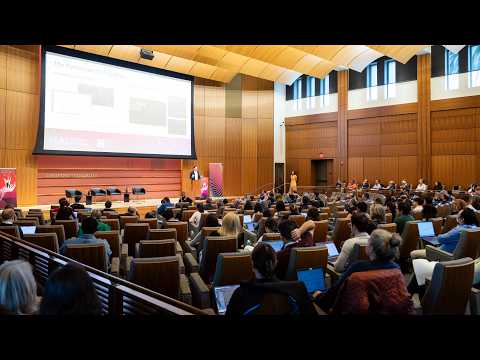
OPEN SOURCEThe session showcases the innovative work of young researchers from Stanford, highlighting the institution's vibrant energy and talent. Researchers present their findings on the applications of reinforcement learning in healthcare and causal experimentation with text data.
One researcher explores the use of reinforcement learning in healthcare, detailing how automated decision-making algorithms can enhance patient treatment outcomes. A significant challenge in applying reinforcement learning in healthcare is the need to assess policy effectiveness prior to implementation.
The researcher presents two estimators, CPGen and DRPPI, designed to improve the accuracy of policy value estimation in clinical decision-making. Another researcher introduces a pipeline for conducting causal experiments with text data, examining how elements of political speeches can affect public approval ratings.
The session focuses on estimating causal effects through modifications of text, particularly in how changes can test hypotheses about their impact on outcomes. An empirical study analyzes public comments from California city council meetings, measuring and altering the civility of comments to evaluate causal effects.
Additionally, the session presents Terminal Bench Science, a benchmark for assessing AI agents on complex scientific workflows, highlighting the importance of scientifically valid and verifiable tasks. A decade-long survey of 11,000 companies provides insights into their climate targets and progress, representing 50% of global market capitalization.
The study emphasizes the credibility of companies' climate commitments, linking detailed language in reports to greater credibility and lower emissions. The research underscores the necessity of analyzing climate reports for comprehensive plans aimed at achieving sustainability goals.
- Highlights the potential of reinforcement learning to enhance clinical decision-making
- Emphasizes the importance of reliable policy evaluation for safe automated healthcare
- Raises questions about the representativeness of synthetic data in policy evaluation
- Questions the accuracy of voluntary climate reporting by companies
- Discusses the need for specificity in climate commitments to reduce emissions
- Explores the relationship between text modifications and causal effect estimation
- The session showcases the innovative work of young researchers from Stanford, highlighting the institutions vibrant energy and talent
- One researcher explores the use of reinforcement learning in healthcare, detailing how automated decision-making algorithms can enhance patient treatment outcomes
- A significant challenge in applying reinforcement learning in healthcare is the need to assess policy effectiveness prior to implementation, which can be tackled through off-policy evaluation using both synthetic and real-world data
- The researcher presents two estimators, CPGen and DRPPI, designed to improve the accuracy of policy value estimation in clinical decision-making
- Another researcher introduces a pipeline for conducting causal experiments with text data, examining how elements of political speeches can affect public approval ratings
- This research aims to generate hypotheses from text data and develop quasi-counterfactual texts to test these hypotheses, thereby deepening the understanding of causal relationships in social science
- The session focuses on estimating causal effects through modifications of text, particularly in how changes can test hypotheses about their impact on outcomes
- An empirical study analyzes public comments from California city council meetings, measuring and altering the civility of comments to evaluate causal effects
- The proposed methodology involves creating quasi-counterfactual texts based on key features that influence outcomes, followed by randomized experiments for data collection
- A residualization technique is introduced to effectively capture causal effects, addressing confounding changes that may arise from text modifications
- Additionally, the session presents Terminal Bench Science, a benchmark for assessing AI agents on complex scientific workflows, highlighting the importance of scientifically valid and verifiable tasks
details
- A decade-long survey of 11,000 companies provides insights into their climate targets and progress, representing 50% of global market capitalization
- The study utilizes advanced language models to examine the relationship between reporting characteristics and future emissions, emphasizing the credibility of companies climate commitments
- Detailed language in climate reports is associated with greater credibility of targets, while vague language correlates with higher emissions, indicating potential greenwashing
- Specificity in climate commitments can lead to significant reductions in emissions, whereas ambiguous language may result in emissions equivalent to the output of two natural gas plants
- The research underscores the necessity of analyzing climate reports for comprehensive plans aimed at achieving sustainability goals
details
details
The reliance on synthetic data for policy evaluation raises questions about the representativeness of the data and its applicability in real-world scenarios. Inference: The effectiveness of reinforcement learning algorithms in healthcare may be overstated if the underlying assumptions about data quality and coverage are not rigorously tested.
This analysis is an original interpretation prepared by Art Argentum based on the transcript of the source video. The original video content remains the property of the respective YouTube channel. Art Argentum is not responsible for the accuracy or intent of the original material.