AI and Science: Accelerating Discovery
Analysis of AI's impact on scientific discovery, based on "AI+Science: Welcome from the Institute Director and Faculty Organizers" | Stanford HAI.
OPEN SOURCEThe AI Plus Science conference at Stanford University focuses on the transformative role of AI in scientific discovery across various disciplines. Stanford President Jonathan Leven emphasized the need to address major societal issues while integrating AI into research with a human-centered approach.
Interdisciplinary collaboration is highlighted as essential for advancing AI and science, with presentations from diverse fields. A new institute has been formed by merging Stanford's Human Centered AI Institute and Stanford Data Science to enhance integration across disciplines.
The institute commits to open science, team science, and global responsibility, emphasizing transparency and collaboration in AI research. It aims to address significant scientific questions and public interest applications that may not be commercially viable.
AI is revolutionizing science by enabling the analysis of complex patterns in large data sets that traditional methods struggle to interpret. The relationship between AI and science is reciprocal; while AI enhances scientific discovery, the challenges of scientific applications will further advance AI technology.
The Vera Rubin Observatory will conduct a decade-long survey of the Southern sky, generating 20 terabytes of data each night for astrophysical research. AI is being explored to analyze complex datasets, emphasizing the need for effective modeling and human creativity in scientific inquiry.
The integration of AI into scientific practice is rapidly evolving, necessitating new methodologies to maximize benefits for both science and society. Today's discussion will address foundational shifts in scientific inquiry and the institutional frameworks required to support these changes.
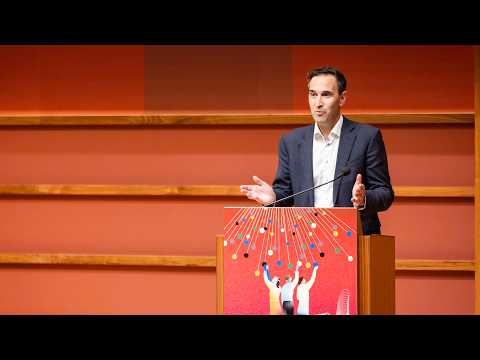
- AI enhances scientific discovery by analyzing complex data sets
- Interdisciplinary collaboration is essential for advancing AI applications
- AIs role in science is evolving and requires new methodologies
- Human creativity remains central to scientific inquiry despite AI advancements
- The AI Plus Science conference, co-hosted by the Stanford Institute for Human AI and Stanford Data Science, focuses on the impact of AI on scientific discovery across multiple disciplines
- Stanford University President Jonathan Leven noted the swift changes in scientific discovery and pointed out that AI was initially overlooked in discussions about national science priorities
- Leven stressed the need to tackle major issues like public health, climate change, and technological leadership, while acknowledging AIs increasing role in facilitating new discoveries
- The creation of the Human Centered AI Institute and Stanford Data Science demonstrates a commitment to incorporating AI into research with a focus on human-centered values
- The conference highlights the significance of interdisciplinary collaboration in AI and science, featuring presentations from diverse fields including physics, biology, and engineering
- Stanfords Human Centered AI Institute and Stanford Data Science have unified to form a new institute focused on integrating AI and data science across various disciplines
- The institutes founding vision aims to ensure AIs influence spans all fields and professions, drawing on a wide range of perspectives from humanists to scientists
- The rapid advancement of AI technology requires a reevaluation of the institutes role to address contemporary challenges in scientific discovery
- The new institute will act as a central hub for AI and data science at Stanford, promoting collaboration and inquiry across all academic areas
- The institutes future will focus on three key commitments: open science, team science, and global responsibility, highlighting the importance of transparency and collaboration in AI research
- Open science is essential for making knowledge accessible, contrasting with industry practices that often keep data proprietary
- Team science will address significant scientific questions and public interest applications that may not be commercially viable, necessitating larger, well-funded teams and shared resources
- The institute aims to collaborate with global institutions to address urgent challenges in health, climate, education, and governance, recognizing their cross-border nature
- The conference serves as a platform to discuss how AI can transform academic discovery, emphasizing the need for human understanding over machine comprehension
- Artificial intelligence (AI) is revolutionizing science by enabling the analysis of complex patterns in large data sets that traditional methods struggle to interpret
- The relationship between AI and science is reciprocal; while AI enhances scientific discovery, the challenges of scientific applications will further advance AI technology
- The conference will investigate how AI intersects with various scientific fields, such as life sciences, earth sciences, and cosmology, showcasing its potential to provide fundamental insights and model intricate processes
- AI applications in science differ from consumer-focused AI, necessitating systems that are explainable, trustworthy, and capable of managing uncertainty and causal reasoning
- Neuroscience examples demonstrate AIs potential, including the development of digital brain twins to decode neural activity and influence brain functions, which raises significant questions about consciousness and self-awareness
details
- The Vera Rubin Observatory in Chile will conduct a decade-long survey of the Southern sky, utilizing the worlds largest digital camera to generate 20 terabytes of data each night for astrophysical research
- AI is being investigated as a means to analyze extensive and complex datasets in astrophysics, particularly focusing on uncertainty quantification and the combination of theoretical and data-driven methodologies
- A key challenge is to develop modeling and inference tools that can effectively derive meaningful physics from the data, highlighting the importance of human creativity and decision-making in scientific research
- The event will include panels discussing various applications of AI in science, addressing the significance of human understanding and the broader implications of AI on scientific processes and institutional frameworks
- The integration of new methodologies in scientific practice is essential for maximizing both scientific and societal benefits
- Exploring the implications of AI in research is crucial, especially in balancing human creativity with machine efficiency
- Todays discussion will focus on the foundational shifts in scientific inquiry and the necessary institutional frameworks to support these changes
The absence of AI in initial national science priorities suggests a significant oversight in understanding its potential impact. Inference: This oversight may hinder timely advancements in addressing critical issues like public health and climate change, as the integration of AI could accelerate solutions. The lack of a robust framework to evaluate AI's contributions raises questions about accountability and the effectiveness of current scientific practices.
This analysis is an original interpretation prepared by Art Argentum based on the transcript of the source video. The original video content remains the property of the respective YouTube channel. Art Argentum is not responsible for the accuracy or intent of the original material.