Intel / North America
Real-time monitoring of security incidents, escalation signals and threat indicators across global hotspots, focusing on rapid alerts and emerging risk developments. Topic: North-America. Updated briefs and structured summaries from curated sources.
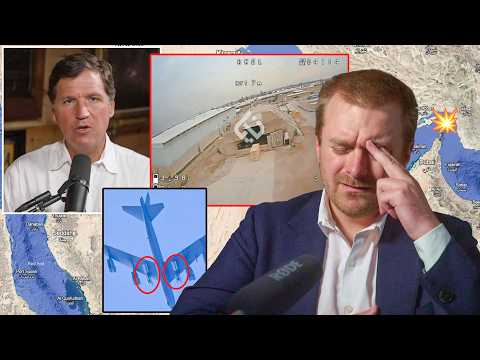
US/Israel-Iran War: This Should Scare EVERY Military - Demands, Contradictions & Blinding Hypocrisy
Summary
Geopolitical tensions are driving up oil prices, with military operations in the region becoming increasingly complex. The use of FPV drones by Iraqi militias represents a significant shift in military tactics, posing new challenges for conventional forces.
Tucker Carlson's extensive international contacts raise questions about the authenticity of the narratives he promotes, with allegations of foreign influence complicating his media presence. The discourse surrounding these allegations often lacks concrete evidence, leading to potential character assassination.
Drones are becoming more effective in military operations, but their integration with conventional systems is crucial to mitigate risks. The US is repositioning defense systems in response to evolving threats, particularly from Iranian missile capabilities.
A global shortage of air defense interceptors complicates military operations for Ukraine and Israel, affecting their ability to counter Iranian threats. This scarcity raises concerns about the adequacy of current defense measures.
Perspectives
Analysis of military and geopolitical dynamics in the context of the US/Israel-Iran conflict.
Pro-Iran Narrative
- Claims Irans military strength is exaggerated through disinformation
- Highlights the potential for Iran to leverage media capabilities
- Questions the narrative of total defeat of Irans military
Anti-Iran Narrative
- Argues Irans military is significantly degraded
- Claims that operational capabilities are largely fabricated
Neutral / Shared
- Notes the complexities of asymmetric warfare
- Acknowledges the evolving nature of military operations
- Recognizes the role of media in shaping public perception
Metrics
loss
just over 40 soldiers units
Australian military losses in Afghanistan
This highlights the potential impact of new military technologies on casualty rates.
Australia. In Afghanistan lost just over 40 soldiers.
other
several very large accounts
accounts sharing a similar timeline of events
The influence of large accounts can shape public narratives significantly.
several, very large accounts all sharing a very similar timeline of events
other
the war being launched
context of Carlson's narrative
The timing of events can impact the interpretation of media narratives.
in the days previous to then the war being launched
other
the Epstein Comptomat operation
comparison to Carlson's situation
Highlighting selective outrage can reveal biases in media coverage.
the Epstein Comptomat operation that appears to be a foreign run intelligence operation
interceptors
critically low
Israel's interceptor stock status
Low interceptor stocks increase vulnerability to missile threats.
Israel is running critically on interceptors from US officials.
missiles
10 or 20
Potential number of missiles from clustering munitions
Increased missile numbers complicate interception efforts.
This could split into, say, 10 or 20 that you're intercepting.
other
limited number of air defense interceptors
global air defense capabilities
This limitation impacts military readiness and response capabilities.
There is an absolute limited number of air defense interceptors in the Western world.
military capability
100%
Iran's military capability
This claim impacts perceptions of Iran's threat level.
We've already destroyed 100% of Iran's military capability.
Key entities
Timeline highlights
00:00–05:00
Oil prices are increasing due to geopolitical tensions, with a humorous anecdote about a sailing mishap. The use of FPV drones by Iraqi militias marks a significant change in military operations.
- Oil prices are rising due to geopolitical tensions, humorously linked to a sailing mishap
- FPV drones used by Iraqi militias signify a major shift in military operations
- Australias military losses in Afghanistan could have been much higher with FPV drones
- The US Navy is increasingly requested to escort ships through the dangerous Strait of Hormuz
- Tucker Carlson claims the CIA has monitored his communications, raising media integrity concerns
- Critics label Carlson a foreign agent while participating in state-sponsored trips, revealing hypocrisy
05:00–10:00
Tucker Carlson's extensive international contacts raise concerns about the authenticity of the narratives he promotes. The use of FPV drones by Iraqi militias signifies a shift in military operations, impacting conventional strategies.
- Tucker Carlsons extensive international contacts raise doubts about the narratives he promotes. This highlights the risks of compromised media integrity
10:00–15:00
Drones are becoming increasingly effective in military operations, but they must be integrated with conventional systems to mitigate risks. The US is repositioning defense systems in response to the evolving threat landscape, particularly concerning Iranian missile capabilities.
- Drones are effective but must integrate with conventional systems to mitigate risks from various actors
- The US B52 bomber carrying JASSM missiles indicates a strategic shift, despite degraded Iranian air defenses
- Israels low interceptor stocks raise concerns about its defense against Iranian missile threats
- Irans clustering munitions complicate interception, increasing potential damage
- The US is repositioning Patriot and THAAD systems from South Korea, highlighting urgent defense needs
- The Israeli foreign ministers denial of interceptor shortages contrasts with US assessments, creating uncertainty
15:00–20:00
There is a global shortage of air defense interceptors, complicating military operations for Ukraine and Israel against Iranian threats. This scarcity is affecting the ability of European states to provide necessary support to Ukraine.
- A global shortage of air defense interceptors complicates military operations, particularly for Ukraine and Israel against Iranian threats
20:00–25:00
The Trump administration is planning a coalition to escort ships through the Strait of Hormuz, although commitments from other countries remain uncertain. Despite claims of neutralizing Iran's military, it still possesses operational drones and missiles.
- The Trump administration plans a coalition to escort ships through the Strait of Hormuz to counter Irans threats
- Many countries may send warships with the US, but commitments remain uncertain
- Despite claims of neutralizing Irans military, it still has operational drones and missiles
- The US seeks support from allies like Japan and France to secure the Strait of Hormuz
- Americas motivations for war are driven by power dynamics, not humanitarian concerns
- China is willing to mediate while the US continues military operations, complicating the situation
25:00–30:00
Iran's military strength is portrayed as exaggerated, with claims of operational capabilities being largely fabricated through AI and disinformation. The narrative suggests that while Iran may appear powerful, it is actually facing significant military degradation.
- Irans claims of military strength are largely fabricated, with AI and disinformation shaping false narratives