Intel / North America
Real-time monitoring of security incidents, escalation signals and threat indicators across global hotspots, focusing on rapid alerts and emerging risk developments. Topic: North-America. Updated briefs and structured summaries from curated sources.
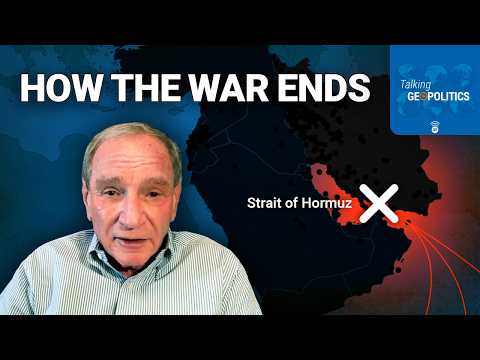
Avoiding Crisis in Iran: George Friedman on the Path to Negotiation
Summary
The ongoing conflict in the Middle East, particularly the war involving Iran, has led to significant economic concerns, especially due to the closure of the Strait of Hormuz. Experts warn that the situation could escalate into a crisis worse than previous economic downturns, with Iran facing severe weapon shortages and suffering among its population. Negotiations are underway, but the involvement of various actors complicates the potential for resolution.
The U.S. strategy focuses on economically isolating Iran, betting that the Iranian regime will struggle to endure the pressure. However, the effectiveness of this approach is questionable, as historical precedents show that regimes can adapt to sanctions. The complexities of international diplomacy, particularly with nations like China and Pakistan, further complicate the situation.
Internally, Iran faces significant strain due to economic hardships and high casualties from the ongoing war. While the Islamic Revolutionary Guard Corps remains a strong military entity, the potential for internal dissent exists, which could threaten the regime's stability. Both sides are aware of the risks of prolonged conflict, leading to ongoing negotiations.
The rise of drone warfare has fundamentally altered military strategies, complicating traditional approaches to securing the Strait of Hormuz. The decentralized command structure of Iran's drone operations poses significant challenges for U.S. military efforts, making it difficult to neutralize these threats effectively.
Perspectives
Analysis of the ongoing conflict and negotiations between the U.S. and Iran.
United States and Allies
- Focuses on economically isolating Iran to weaken its regime
- Seeks to prevent Iran from becoming a nuclear power
- Recognizes the need to avoid a prolonged conflict due to domestic opposition
Iran
- Maintains its nuclear ambitions despite external pressures
- Relies on ideological commitment to resist U.S. and Israeli actions
- Faces internal unrest but remains capable of military resistance
Neutral / Shared
- Both sides are aware of the potential for internal unrest affecting their stability
- Negotiations are ongoing, with various international actors involved
Metrics
impact
worse than the COVID pandemic or the 1970s oil crisis
economic impact of the Strait of Hormuz closure
This comparison highlights the severity of the current economic situation.
the talk of an impact worse than the COVID pandemic or the 1970s oil crisis
duration
second month of war
duration of the ongoing conflict
Indicates the prolonged nature of the conflict and its potential for escalation.
the second month of war in the Middle East
military_action
US and Israel are still bombing Iran
current military actions
Demonstrates the ongoing military engagement and its implications for regional stability.
the US and Israel are still bombing Iran
military_action
Iran is still bombing the region
Iran's military response
Highlights the reciprocal nature of military actions in the conflict.
Iran is still bombing the region
nuclear_material
Iran still has its nuclear material
Iran's nuclear capabilities
Indicates the ongoing threat perceived by the US and its allies.
Iran still has its nuclear material
troops
10,000 units
number of troops considered for potential deployment
This number highlights the inadequacy of troop levels for a successful invasion of Iran.
10,000 men are nothing for that terrain.
troops
750,000 units
number of troops during Desert Storm
This comparison underscores the significant reduction in troop levels available for current military operations.
the US had something like 750,000 troops during the invasion of Iraq in 2003.
casualties
7,000, 10,000, 10s of thousands units
number of people killed in the protests in January
High casualties can lead to increased public dissent against the regime.
depending on the number that you're looking at 7,000, 10,000, 10s of thousands of people killed in the protests in January
Key entities
Timeline highlights
00:00–05:00
The ongoing conflict in the Middle East is causing significant economic anxiety, particularly due to the closure of the Strait of Hormuz. Experts warn that this situation could lead to a crisis more severe than previous economic downturns.
- The conflict in the Middle East is triggering severe economic anxiety, with experts warning that the closure of the Strait of Hormuz could lead to a crisis worse than previous ones
- Irans military resources are dwindling, and its citizens are bearing the brunt of the war, raising doubts about the effectiveness of ongoing negotiations
- There is a growing belief, particularly outside the U.S, that the conflict is becoming detrimental to American interests, exacerbated by the closure of the Strait of Hormuz and Irans nuclear ambitions
- The wars resolution is uncertain, but it will likely end through either military victory or negotiations, significantly affecting future international relations in the region
- The U.S. initiated the conflict to prevent Iran from developing nuclear weapons, which are seen as a direct threat to national security, especially given Irans connections to terrorist groups
- Current negotiations are critical in determining whether Iran will abandon its nuclear program, as failure to reach an agreement could escalate tensions and instability
05:00–10:00
The U.S. is focusing on economically isolating Iran, anticipating that the Iranian regime will struggle to withstand the pressure.
- Executing a ground attack on Iran poses significant challenges due to its size and defensive capabilities, making a successful commando operation unlikely
- The U.S. is focusing on economically isolating Iran, anticipating that the Iranian regime will struggle to withstand the pressure longer than the global community
- Ongoing negotiations involve key players like Pakistan and China, reflecting a complex diplomatic situation heightened by the global demand for Iranian oil
- The military resources required for a full occupation of Iran are vast, far surpassing current troop levels, highlighting the impracticality of a large-scale invasion
- Advancements in technology, such as drones, have transformed modern warfare, necessitating a cautious approach to military engagement as traditional tactics may be ineffective
- Historical military engagements, like Desert Storm, illustrate the difficulties of contemporary warfare, suggesting that ground invasions may not achieve intended results
10:00–15:00
The Iranian regime faces significant internal strain due to economic hardships and high casualties from the ongoing war, which could threaten its stability. Despite speculation about political instability, the Islamic Revolutionary Guard Corps remains a strong military entity, capable of resisting external pressures due to its ideological commitment.
- The Iranian regime is under significant internal strain due to economic hardships and high casualties from the ongoing war, which could threaten its stability and ability to continue the conflict
- While rising oil prices may not affect U.S. and Israeli strategies, the Iranian publics tolerance for the war could diminish, potentially leading to domestic unrest in the regime
- Despite speculation about political instability, the Islamic Revolutionary Guard Corps remains a strong military entity, capable of resisting external pressures due to its ideological commitment
- Modern warfare has evolved, rendering traditional military strategies less effective, which requires a more cautious approach to military deployments
- Ongoing negotiations aim to resolve the conflict favorably for both sides, with external players like Pakistan and China showing interest in the geopolitical implications
- The risk of internal unrest in Iran is a crucial factor that could challenge the regimes authority and its capacity to sustain the war effort
15:00–20:00
Both the U.S. and Iran are aware of the potential for internal unrest, which may lead them to seek negotiations rather than total victory.
- Both the U.S. and Iran recognize the potential for internal unrest, which may drive them toward negotiations instead of pursuing total victory, as the costs of a prolonged conflict are too high
- The Iranian regime, especially the IRGC, remains determined and capable, but its governance may falter if the war escalates and casualties increase
- The conflict threatens essential goods like food and fertilizer, with a fertilizer shortage in the northern hemisphere potentially leading to severe food supply issues globally
- Attempts to open the Strait of Hormuz through military action face challenges due to the complexities of modern warfare and the risk of significant casualties
- The ongoing war tests the endurance of both populations, with prolonged conflict increasing the likelihood of domestic discontent and unrest
- Drones play a critical role in the conflict, posing a significant threat to military operations, and the ability of the U.S. and Israel to neutralize them will be crucial for the wars outcome
20:00–25:00
The rise of drones has fundamentally altered military strategies in securing the Strait of Hormuz, complicating safe passage for vessels. Iran's decentralized command structure for drone operations poses significant challenges for U.S.
- Traditional military strategies for securing the Strait of Hormuz are outdated due to the rise of drones, complicating safe passage for vessels in conflict zones
- Drones have evolved into primary weapons, requiring new defense and attack strategies in modern warfare
- Irans military has implemented a decentralized command structure, enabling local commanders to operate drones independently, which could maintain their operational effectiveness despite disruptions to higher command
- The success of Irans drone strategy relies on their ability to consistently produce and deploy drones, which poses an ongoing threat
- The U.S. faces significant challenges in neutralizing Iranian drone capabilities, as these assets are dispersed across various locations, complicating targeting efforts
- The potential for a drawn-out conflict hinges on both sides capacity to sustain military operations and address domestic pressures, making the balance of power and resources critical
25:00–30:00
The conflict's outcome is heavily influenced by Iran's drone capabilities, including their production rate and underground storage, complicating neutralization efforts. The evolution of warfare, as seen in Ukraine, highlights the obsolescence of traditional troop movements and the necessity for adaptive military strategies.
- The conflicts outcome depends on Irans drone capabilities, including their quantity and production rate, which are key to forecasting the wars direction
- Underground weapon storage complicates neutralization efforts, presenting challenges not seen in earlier conflicts
- The war in Ukraine shares similarities with Irans situation, especially in drone usage, highlighting the evolution of modern warfare and the risks of traditional troop movements
- Drones have transformed combat dynamics, rendering mass infantry assaults costly and ineffective, making strategies from past wars obsolete
- The U.S. military is adapting its strategies based on lessons learned from the Ukraine conflict, which may impact its approach in Iran
- Current fighting in Ukraine focuses on tactical engagements rather than strategic victories, illustrating the difficulties of achieving decisive outcomes in contemporary warfare