Intel / North America
Real-time monitoring of security incidents, escalation signals and threat indicators across global hotspots, focusing on rapid alerts and emerging risk developments. Topic: North-America. Updated briefs and structured summaries from curated sources.
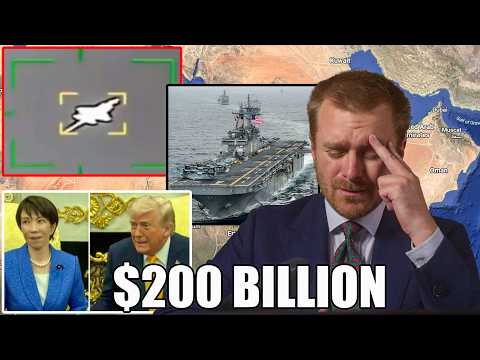
US/Israel-Iran War: Energy 'Armageddon Scenario', F-35 Struck - Why This Matters? & Marines Inbound
Summary
The conflict in Iran is escalating, with significant developments expected in the coming days. Recent attacks on Iran's gas infrastructure and potential U.S. military involvement are raising concerns about regional stability and energy security.
An F-35 aircraft was damaged by suspected Iranian fire, indicating a higher capability of Iranian air defenses than previously assessed. The ongoing conflict is straining U.S. credibility and partnerships, as military actions may provoke further retaliation from Iran.
The U.S. may respond aggressively if Iran continues to target gas facilities in Qatar, potentially leading to significant damage. This situation is exacerbating global energy supply issues, particularly affecting LNG exports and driving up prices in Europe.
China is reassessing its military ambitions regarding Taiwan due to the U.S.'s actions in the Middle East, particularly the Iran conflict. This shift reflects Beijing's concern over reputational damage and a preference for a peaceful approach to Taiwan's integration.
Perspectives
Analysis of the Iran conflict and its implications for global energy and military strategy.
Pro-U.S. Military Action
- Highlights the need for a ground component in military operations
- Argues that increased funding is necessary for effective military engagement
- Claims that U.S. military presence is essential to counter Iranian aggression
- Proposes that military action can deter further Iranian attacks on energy infrastructure
- Warns of the consequences of inaction in the face of Iranian threats
Anti-U.S. Military Action
- Questions the effectiveness of military interventions in achieving long-term stability
- Denies that increased military presence will resolve underlying geopolitical tensions
- Critiques the potential for civilian casualties and humanitarian crises resulting from military actions
- Rejects the notion that military action will improve U.S. credibility on the global stage
- Accuses the U.S. of exacerbating regional instability through aggressive military posturing
Neutral / Shared
- Observes the rising energy prices due to the conflict
- Notes the complex geopolitical implications of the Iran conflict
- Acknowledges the challenges faced by journalists in conflict zones
- Recognizes the shifting dynamics in international relations as a result of the conflict
Metrics
financial_support
$200 billion USD
financial support requested for military operations
This amount indicates significant U.S. commitment to military involvement.
$200 billion
other
hundreds of these planes units
total number of F-35 aircraft
indicates the scale of U.S. military assets at risk.
I have hundreds of these planes.
loss
20 billion USD
annual revenue loss due to damaged LNG facilities
This significant financial loss impacts global energy markets and supply stability.
they've knocked out about 70% of their LNG export capacity, 20 billion lost revenue per year
price_increase
30 %
increase in gas prices in Europe since the start of the war
Rising prices could lead to economic strain and shifts in energy policy across Europe.
Gas prices in Europe have risen 30% since markets reopened
price_per_barrel
119 USD
current oil price per barrel due to fears of supply disruptions
High oil prices can exacerbate inflation and economic instability globally.
All price have risen to 10%, nearly 119 per barrel
funding
$200 billion USD
additional funds requested for the Iran conflict
This substantial funding indicates a serious commitment to military operations.
$200 billion
troop_deployment
1,000 Marines units
Marines deployed to the Middle East
The deployment reflects increased military readiness amid rising tensions.
1,000 Marines
refinery_capacity
two thirds of Israel's refining fuel capacity %
impact of strikes on Israel's fuel refining
Disruption of this capacity could severely impact Israel's military operations.
two thirds of Israel's refining fuel capacity
Key entities
Timeline highlights
00:00–05:00
The conflict in Iran is escalating, with significant developments expected in the coming days. Recent attacks on Iran's gas infrastructure and potential U.S.
- The conflict in Iran is intensifying, with a strategic update on its developments expected soon. This update will cover the wars evolution over the last three weeks
- Recent strikes on Irans gas infrastructure have raised alarms about energy security. These attacks could have significant repercussions for global energy markets
- Chinas shifting stance amid the conflict may bolster its global influence while undermining the U.S.s position. This realignment complicates the geopolitical landscape
- There are signs that U.S. ground forces might be deployed, as amphibious units are being moved and financial support is being sought
- An Iranian missile reportedly struck an F-35 aircraft, prompting scrutiny of U.S. military technologys reliability
- The investigation into Joe Kent, a former counterterrorism director, highlights issues of accountability in government. It also underscores the challenges faced by whistleblowers regarding civil liberties
05:00–10:00
An F-35 aircraft was damaged by suspected Iranian fire, indicating a higher capability of Iranian air defenses than previously assessed. The ongoing conflict is straining U.S.
- An F-35 aircraft was damaged by suspected Iranian fire, necessitating an emergency landing and revealing the underestimated capabilities of Iranian air defenses
- Irans ability to target advanced stealth aircraft raises alarms about the safety of other U.S. military assets in the region
- The ongoing conflict is straining U.S. finances and damaging its international credibility and partnerships
- The resignation of figures like Joe Kent indicates rising apprehension among military and political leaders regarding the wars implications
- The attack on the Southern Pass gas field in Iran has led to accusations of hypocrisy against Israel, complicating Middle Eastern relations
- Speculation surrounds Irans potential introduction of advanced military systems, which could escalate the conflict and alter the power dynamics, especially with support from nations like China or Russia
10:00–15:00
The U.S. may respond aggressively if Iran continues to target gas facilities in Qatar, potentially leading to significant damage.
- The U.S. may respond forcefully if Iran continues to target gas facilities in Qatar, risking extensive damage
- Former President Trump reportedly supported military strikes against Iran to influence the Strait of Hormuz, which could heighten tensions and disrupt global energy supplies
- Rising fuel prices in Australia, now around $2.40 per liter, illustrate the conflicts impact on energy markets, likely worsening conditions for consumers and economies worldwide
- Israels desire to maintain instability in Iran could lead to increased regional chaos, with concerns about potential false flag operations escalating violence and U.S. involvement
- European leaders have criticized Iranian attacks while overlooking previous Israeli actions, revealing a double standard that undermines Western credibility in conflict resolution
- Public discontent with the ongoing war may restrict the U.S. governments capacity to escalate its military involvement
15:00–20:00
The conflict in Iran is disrupting global energy supplies, particularly affecting LNG exports from Qatar. This situation is leading to increased gas prices in Europe and potential shifts in geopolitical alliances.
- The conflict in Iran is disrupting global energy supplies, threatening international peace and security due to the closure of key shipping routes from military actions
- Recent attacks on gas facilities in Qatar have significantly reduced LNG export capacity, leading to financial losses and jeopardizing energy supplies to Europe and Asia, which may result in prolonged global fuel price increases
- The involvement of the U.S. and Israel in the region raises the potential for military escalation, as their differing strategic goals could lead to false flag operations that complicate the conflict further
- Gas prices in Europe have surged since the war began, driven by fears of supply disruptions, which may compel European nations to seek alternative energy sources and alter geopolitical alliances
- China is using its energy resources as leverage in its relationship with Taiwan, offering stable supplies in exchange for political union, indicating its growing influence in regional power dynamics
- Russia and China are closely observing the Middle East situation, potentially benefiting from the resulting chaos and instability, which could prompt a reevaluation of sanctions and international relations
20:00–25:00
China is reassessing its military ambitions regarding Taiwan due to the U.S.'s actions in the Middle East, particularly the Iran conflict. This shift reflects Beijing's concern over reputational damage and a preference for a peaceful approach to Taiwan's integration.
- China is reassessing its military ambitions regarding Taiwan in light of the USs actions in the Middle East, particularly the fallout from the Iran conflict. This shift indicates Beijings concern over potential reputational damage similar to what the US faces
- The Chinese government favors a peaceful approach to Taiwans integration, understanding the risks of military action, including high casualties and global backlash. This reflects a strategic recalibration in Chinas military calculations
- Chinas historical strategy involves allowing other nations to engage in conflicts while it consolidates its own power. This tactic enables China to enhance its influence without direct military engagement
- Japans right-wing government is increasingly skeptical of US diplomatic maneuvers, recalling past surprises like Pearl Harbor. Cultural sensitivities in Japan mean that any perceived communication failures from the US could harm their alliance
- Israeli Prime Minister Netanyahu is advocating for a ground component in military operations, signaling a possible escalation in the conflict. This move could significantly affect regional stability and international relations
- Taiwan continues to reject Chinas reunification proposals, emphasizing its right to self-determination. This ongoing resistance underscores the complexities of cross-strait relations and the potential for increased pressure from China
25:00–30:00
The U.S. is preparing for a significant military presence in the Iran conflict, requesting an additional $200 billion for operations.
- Achieving regime change requires ground forces, as air support alone is insufficient. This complexity highlights the need for a comprehensive military strategy
- Consideration is being given to various ground forces, including local militias and troops from Israel or the U.S. Their involvement could significantly shift the conflict dynamics in Iran
- The U.S. is preparing for a major ground presence, requesting an additional $200 billion for the Iran conflict
- The deployment of 1,000 Marines to the Middle East reflects heightened U.S. military readiness amid rising tensions with Iran
- Recent attacks on critical infrastructure in Northern Israel, especially in Haifa, underscore the areas strategic significance. Disrupting fuel refining capabilities could severely impact Israels military operations
- Footage of strikes on Iranian Navy ships in the Caspian Sea challenges claims of their complete incapacitation. This suggests ongoing military activity and the potential for further escalation