Intel / North America
Real-time monitoring of security incidents, escalation signals and threat indicators across global hotspots, focusing on rapid alerts and emerging risk developments. Topic: North-America. Updated briefs and structured summaries from curated sources.
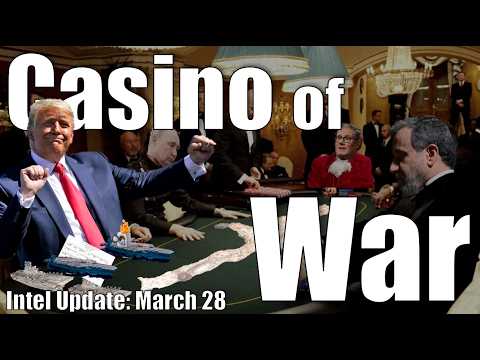
Intel Update - March 28 - Casino of War
Summary
The Gulf War has escalated significantly, with no resolution in sight. Major conflicts are occurring in the Middle East, particularly involving Iran and Israel, with drone and missile attacks causing substantial damage.
The U.S. military's strategy is facing challenges, as evidenced by recent airstrikes targeting construction vehicles rather than key military assets. This indicates diminishing returns in military effectiveness and raises concerns about the overall strategy.
The initial decision to eliminate a key Iranian figure has complicated ground operations, leading to a disconnect between high-level military decisions and the realities faced by personnel on the ground.
Diplomatic efforts are hindered by a lack of trust, as both the U.S. and Iranian statements have proven unreliable. The potential for peace negotiations is complicated by ongoing military actions and the fear of Israeli strikes.
Perspectives
short
U.S. Military Strategy
- Critiques military strategy for targeting construction vehicles, indicating diminishing returns
- Highlights the disconnect between high-level decisions and ground realities
- Questions the effectiveness of airstrikes without ground forces
Iranian Resilience
- Points out that Iranian responses are often reciprocal, complicating peace negotiations
Neutral / Shared
- Acknowledges the complexity of the geopolitical landscape with multiple ongoing conflicts
- Recognizes the importance of off-grid communication for preparedness
Metrics
other
60,000 units
number of days into the Gulf War
This indicates the prolonged nature of the conflict.
Well, we are officially one month into the Gulf War
other
the largest wildfire in state history
significance of the moral fire in Nebraska
This highlights the severity of environmental impacts on agriculture.
the moral fire being the largest wildfire in state history
other
diminishing returns
U.S. military efforts in the Gulf War
This suggests a strategic shift may be necessary.
I want to stress two words above all else diminishing returns
other
at least two construction vehicles
targets of recent airstrikes
This reflects a troubling trend in target selection.
this video shows airstrikes of at least two construction vehicles
bombs_dropped
10,000 units
total bombs dropped during the war
This figure indicates the scale of military engagement and the challenges in finding effective targets.
the Pentagon has indeed run 10,000 sorries so far during this war
other
a religious leader and his wife and children
casualties from the initial military action
This highlights the immediate human cost of military decisions.
right at the start we killed a religious leader and his wife and children
other
2000 units
impact craters plotted on maps
This indicates extensive military engagement and potential violations of warfare norms.
I have plotted almost 2000 impact craters on my maps
troops
up to 10,000 more troops units
potential troop deployment by the Pentagon
This indicates a significant escalation in U.S. military involvement.
the Pentagon has slated up to 10,000 more troops regular army to deploy
Key entities
Timeline highlights
00:00–05:00
The Gulf War is escalating with no resolution in sight, indicating a complex geopolitical landscape that may lead to further instability. Iran's missile strikes have significantly weakened Israel's defenses, raising security concerns due to the destruction of early warning systems.
- The Gulf War is escalating with no resolution in sight, indicating a complex geopolitical landscape that may lead to further instability
- Irans missile strikes have significantly weakened Israels defenses, raising security concerns due to the destruction of early warning systems
- Turkeys involvement in the conflict is increasing, especially after an attack on a tanker in its waters, potentially linked to Iran or Israel
- The war in Ukraine is escalating, with Ukrainian forces targeting oil terminals in St. Petersburg, highlighting the global implications of modern warfare
- Wildfires in Nebraska are severely impacting the agricultural sector, particularly cattle production, which poses risks to food security
- Destruction of critical infrastructure in conflict zones is likely to have lasting effects on global markets, particularly in fertilizer and energy sectors
05:00–10:00
The Gulf War is leading to diminishing returns for U.S. military efforts, as recent airstrikes target construction vehicles rather than key military assets.
- The Gulf War is causing diminishing returns for U.S. military efforts, as recent airstrikes focus on construction vehicles instead of key military targets
- Recent shadow warfare incidents in the U.S. underscore the threats from foreign actors, particularly following the indictment of two Chinese nationals for an attempted military base attack
- Wildfires in Nebraska highlight the link between local and global crises, impacting food production and supply chains with potential long-term economic effects
- The risk of false flag operations is increasing, as various groups may attempt to take advantage of chaos within the U.S
- The Middle East situation is dynamic, with ongoing military actions that could escalate conflicts and affect regional stability and international relations
- As the war continues, the demand for precise intelligence and analysis grows, necessitating thorough information gathering to understand the evolving threat landscape
10:00–15:00
The Pentagon's military strategy in Iran is struggling to identify effective bombing targets, raising concerns about a prolonged conflict. The trajectory of the war suggests that negotiated settlements are more likely than unconditional surrenders, complicating diplomatic efforts.
- The Pentagons military strategy in Iran is facing challenges as it struggles to identify effective bombing targets, raising concerns about the potential for a prolonged conflict
- Despite extensive airstrikes, the ability to significantly weaken Irans military remains uncertain, as history shows that air campaigns alone cannot achieve total submission without ground forces
- President Trumps inconsistent ultimatums regarding Iran complicate diplomatic negotiations, while ongoing Israeli strikes against Iranian targets further reduce the chances of a peaceful resolution
- The current military approach may weaken U.S. leverage in future negotiations, as aggressive tactics typically reserved for the end of a conflict could hinder favorable settlements
- The trajectory of the war suggests that negotiated settlements are more likely than unconditional surrenders, as most conflicts historically conclude through negotiation rather than total annihilation
- The complex and volatile situation in the region, marked by ongoing military actions and diplomatic efforts, indicates a high potential for escalation, necessitating careful monitoring
15:00–20:00
The U.S. military's initial decision to eliminate a religious leader has created significant complications for ground operations, leaving junior personnel to navigate the fallout.
- The decision to eliminate a prominent religious leader at the conflicts onset has had serious repercussions, effectively trapping U.S. forces in a difficult position
- While U.S. officials publicly advocate for diplomacy, they have been covertly pursuing military action, undermining peace efforts
- The conflicts initiation has complicated ground operations, leaving junior military personnel to deal with the consequences of higher-level decisions without adequate direction
- Concerns are rising that military leaders are prioritizing destruction over ethical conduct, jeopardizing the moral integrity of military operations
- As the conflict intensifies, especially with potential ground troop deployments, the lack of moral justification for air campaigns could complicate future military engagements
- Military rhetoric increasingly emphasizes violence, overshadowing core values of honor and integrity, which could negatively impact U.S. military conduct
20:00–25:00
The current military approach is criticized for lacking integrity and honor, leading to unnecessary civilian casualties and complicating diplomatic efforts. This disregard for ethical conduct risks alienating both allies and adversaries, undermining the U.S.'s moral standing.
- The current military approach lacks the integrity and honor that should guide warfare, leading to unnecessary civilian casualties. This disregard for ethical conduct risks alienating both allies and adversaries, complicating future diplomatic efforts
- Respecting the enemy is crucial not only morally but also strategically, as it prevents hubris from clouding judgment. The failure to acknowledge the adversarys capabilities can lead to disastrous operational decisions
- The Pentagons aggressive propaganda reflects a lack of strategic direction, resulting in a kill everything mentality. This approach is counterproductive and may turn global opinion against the United States
- The U.S. leadership has compromised its moral standing by engaging in deceptive diplomacy, which has eroded trust with potential negotiating partners
- Current military operations are increasingly violating established norms, such as targeting civilian infrastructure, which undermines the principles of warfare. Such actions could lead to severe repercussions, including loss of moral authority and increased hostility
- The use of indiscriminate weapons like land mines poses a grave risk to civilians and could result in long-term consequences for U.S. military operations
25:00–30:00
The Iranian regime is expected to prolong the conflict due to their leverage and fear of Israeli attacks, complicating peace negotiations. U.S.
- The Iranian regime is likely to prolong the conflict due to their significant leverage and fear of Israeli attacks, which hampers peace negotiations
- False statements from American officials have damaged trust in U.S. diplomatic efforts
- Irans media presence is limited and often lacks credibility, focusing more on survival than propaganda, which provides them a strategic edge
- The U.S. is not pursuing de-escalation and is instead preparing for a lengthy military engagement
- Despite claims of a ceasefire, U.S. actions indicate a willingness to escalate military operations
- One month into the conflict, the Iranian regime remains stable and resilient, suggesting a protracted confrontation ahead