Intel / North America
Real-time monitoring of security incidents, escalation signals and threat indicators across global hotspots, focusing on rapid alerts and emerging risk developments. Topic: North-America. Updated briefs and structured summaries from curated sources.
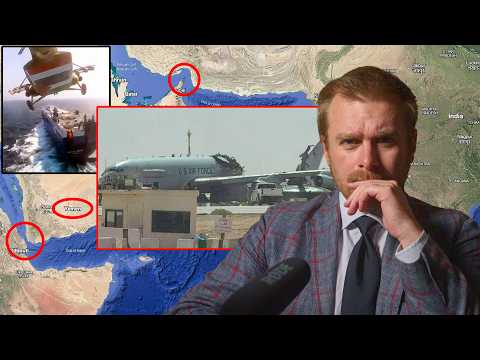
AWACS Lost - The Real Problem Is Bigger, Houthis Enter the War & Hard Truths - Iran War Update
Summary
The ongoing conflict in Iran has seen significant developments, particularly with the recent loss of an E3 Century aircraft, which underscores Iran's military capabilities. This incident raises concerns about the effectiveness of U.S. air operations in the region, especially as Iran continues to demonstrate its ability to strike critical U.S. assets.
The destruction of the E3 Century aircraft highlights the persistent threat posed by Iran, despite U.S. claims of operational superiority. The situation is further complicated by the actions of Israel, which has faced backlash for its military operations that have resulted in civilian casualties, leading to a shift in global perceptions.
The Houthis have officially entered the conflict, launching missiles at Israel, which escalates regional tensions and threatens global shipping routes. The interconnectedness of these conflicts suggests that U.S. military involvement may be necessary to address the broader implications of these developments.
Discussions around U.S. troop deployments indicate a potential shift towards ground operations, which could lead to a prolonged military engagement. Historical precedents warn against underestimating the complexities of such operations, particularly in light of Iran's advanced drone capabilities.
Perspectives
Analysis of the Iran conflict and U.S. military involvement.
Pro-Iran
- Highlights Irans military capabilities demonstrated by the E3 Century aircraft loss
- Questions the effectiveness of U.S. air operations in the region
- Notes the Houthis missile launches as a significant escalation
- Critiques Israels military actions leading to negative global perceptions
- Warns against underestimating the complexities of ground operations
Pro-Israel
- Claims that U.S. air operations can still maintain superiority despite losses
- Argues that Israels actions are necessary for national security
- Poses that the U.S. must support Israel to counter Iranian threats
- Emphasizes the need for a strong military presence to deter Iran
Neutral / Shared
- Acknowledges the interconnectedness of regional conflicts
- Notes the potential impact of U.S. troop deployments on global trade
- Recognizes the historical context of military engagements in the region
Metrics
loss
one units
E3 Century aircraft lost
This loss indicates a shift in regional military dynamics.
the largest air loss that America has occurred during this war with the loss of an E3 century
aircraft
16 units
total E3 Century aircraft operated by the US Air Force
Losing one aircraft significantly impacts operational capabilities.
This is 16 that the US Air Force operates.
loss
E3 Century aircraft
destruction of a significant military asset
This loss underscores vulnerabilities in U.S. military operations.
this is completely gone. XX will never fly again.
deaths
more journalists have been killed in the past years in his world wars than in the great wars in Afghanistan and Iraq com
journalist casualties in conflict zones
This statistic highlights the severe risks faced by journalists in war-torn areas.
more journalists have been killed in the past years in his world wars than in the great wars in Afghanistan and Iraq combined.
other
18 to 25 years
age group expressing views on Israel
Understanding this demographic's perspective is crucial for assessing future support dynamics.
there is this belief this is what I am seeing is the Jews have gone from the victims of the Nazis to becoming and carrying out actions of then the Nazis
other
two choke points locations
key maritime chokepoints affecting global trade
Closure of these chokepoints could severely disrupt global trade.
if both of these at once get limited or closed this will have a massive impact on global trade
troops
15,000 units
potential increase of U.S. troops in the Middle East
This increase indicates a shift towards more direct military involvement.
maybe another 15,000 more realistically
duration
weeks or months time
expected duration of potential missions
This suggests a long-term commitment that could strain resources and public support.
possible missions could last weeks not months
Key entities
Timeline highlights
00:00–05:00
The loss of an E3 Century aircraft highlights Iran's ongoing military capabilities, raising concerns about U.S. effectiveness in the region.
- The recent loss of an E3 Century aircraft underscores Irans military capabilities, raising questions about U.S. effectiveness in the region
- The deaths of journalists in Lebanon due to Israeli actions have shifted global views, with many now seeing Israel as a perpetrator of collective punishment
- The Houthis entry into the conflict signals a potential escalation in regional tensions, which could involve more international players
- The current U.S. administration seems to prioritize public opinion over military advice, risking impulsive troop deployment decisions
- Critics highlight that those lacking military experience often underestimate the complexities and toll of combat, which is vital for informed public discourse
- The destruction of key military assets like the E3 Century indicates a shift in regional power dynamics, potentially impacting U.S. operational capabilities
05:00–10:00
The destruction of a U.S. E3 Century aircraft highlights Iran's military capabilities, indicating a sustained threat to U.S.
- The recent destruction of a U.S. E3 Century aircraft underscores Irans military capabilities, indicating a sustained threat to U.S
- Irans ongoing strikes reveal their capacity to target critical military assets, posing a persistent risk to U.S. operations
- The Israeli Defense Forces are under scrutiny for their actions against journalists, raising ethical concerns about targeting media personnel in conflict zones
- Public perception of Israel has shifted, with many now viewing it as a perpetrator of injustices, which could affect its international relations
- The Israeli governments actions have fueled animosity towards the state, potentially increasing support for extremist groups and complicating peace efforts
- There is a critical need for the Jewish community to reflect on current issues, as addressing these may help improve dialogue and perceptions
10:00–15:00
The Israeli government's actions are reshaping global perceptions, leading to increased scrutiny and potential pressure on its international standing. The Houthis' missile launches at Israel have escalated regional tensions, highlighting the interconnectedness of conflicts in the area.
- The Israeli governments actions have shifted global perceptions, with many now viewing Israel as a perpetrator, which could put pressure on its international standing and security
- Younger generations increasingly see Israels actions as reminiscent of historical oppressors, fostering perceptions of collective punishment and censorship that may boost support for extremist groups
- The Houthis have escalated the conflict by launching missiles at Israel, significantly heightening regional tensions and instability
- Potential closures of key maritime chokepoints like the Strait of Hormuz could disrupt global trade, emphasizing the strategic importance of these areas
- The U.S. might find ground operations in Yemen more feasible than in Iran due to the complexities involved in the latter
- Increased military activity across Lebanon, Iraq, and Palestine indicates a coordinated response from various resistance groups, highlighting the interconnectedness of regional conflicts
15:00–20:00
The Houthis' control over vital shipping routes poses a significant risk to global trade, potentially escalating tensions in the region. The U.S.
- The Houthis involvement in the conflict is likely to escalate tensions, particularly due to their control over vital shipping routes, which could disrupt global trade
- The potential increase of U.S. troops in the Middle East indicates a move towards more direct military involvement
- Limited military actions could quickly escalate into a broader conflict, as seen in previous U.S. interventions
- Irans drone capabilities present a significant risk to U.S. forces, especially with potential backing from allies like Russia or China
- The Pentagon is preparing for various operational scenarios, reflecting a serious commitment to the situation, though deploying ground forces may lead to economic and political backlash for the U.S
- Military officials expect that any missions could extend for weeks or months, emphasizing the complexity and long-term implications of U.S. involvement
20:00–25:00
Achieving military objectives in Iran typically necessitates the deployment of ground troops, as airstrikes alone have proven insufficient historically. The urgency for U.S.
- Historical evidence suggests that achieving objectives in Iran often requires ground troops, contrary to claims by Trump and Rubio that airstrikes alone are sufficient
- Joe Kent raises alarms about Iran potentially supplying dirty bombs to militant groups, highlighting the urgency for U.S. military action
- Israel is determined to prevent any resolution that allows the current Iranian regime to remain in power, as this could destabilize the region
- Mark Levins role in military discussions raises concerns about prioritizing public opinion over the insights of experienced military professionals, which may lead to flawed strategies
- The complexity of securing and holding territory in Iran emphasizes the necessity of ground troops, as current technology cannot fully replace them
- Russias offer to help the U.S. extract enriched uranium from Iran suggests a possible diplomatic solution amid escalating tensions
25:00–30:00
Iran's potential to develop a dirty bomb using enriched uranium poses a serious threat to regional stability. The U.S.
- Irans potential to develop a dirty bomb using enriched uranium poses a serious threat, as such weapons could be handed to extremist groups, increasing regional instability
- Media figures appear to influence Trumps administration, acting as intermediaries between Israeli interests and U.S. policy decisions
- The emphasis on specialized military units for operations in Iran indicates a move away from large troop deployments, yet the challenges of securing enriched uranium remain significant
- Retrieving uranium involves navigating hostile terrain and defenses, raising concerns about the feasibility of these missions without incurring heavy casualties
- Russias offer to assist in uranium extraction suggests possible diplomatic solutions, but the influence of certain political commentators may obstruct constructive engagement
- Trumps rhetoric regarding Australias role in U.S. military actions reflects growing tensions in international relations