Intel / North America
Real-time monitoring of security incidents, escalation signals and threat indicators across global hotspots, focusing on rapid alerts and emerging risk developments. Topic: North-America. Updated briefs and structured summaries from curated sources.
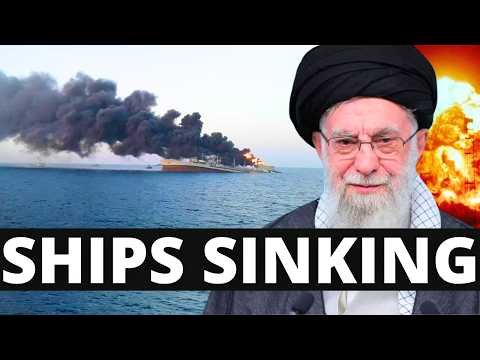
US Submarine SINKS Iranian Warship, HUGE Iranian Losses In Strait of Hormuz | The Enforcer News
Summary
The US Navy confirmed the sinking of the Iranian frigate IRIS Dena near Sri Lanka, resulting in significant casualties among the crew. Reports indicate that 87 sailors were confirmed dead, with many others missing, highlighting the severe impact on Iran's naval capabilities.
The incident marks a notable escalation in US-Iran military tensions, with the US conducting ongoing strikes against Iranian military assets. The loss of the IRIS Dena is part of a broader pattern of US military operations that have reportedly resulted in at least 19 Iranian ships being lost.
Insurance costs for maritime transit through the Strait of Hormuz have surged due to heightened risks, complicating global oil supply chains. The ongoing conflict has led to significant economic repercussions, including a sharp decline in the South Korean stock market.
The US Department of Defense has acknowledged challenges posed by Iran's drone capabilities, indicating a need for reevaluation of air defense strategies. Current missile-based systems are proving inefficient against these evolving threats.
Perspectives
short
United States
- Confirms sinking of IRIS Dena, resulting in significant Iranian naval losses
- Conducts ongoing strikes against Iranian military assets, impacting regional stability
- Acknowledges challenges posed by Iranian drones, indicating a need for improved air defense strategies
- Reports significant economic fallout from military actions, affecting global markets
Iran
- Suffers major losses in naval capabilities due to US military actions
- Reports ongoing military engagement with the US and its allies
- Declares intent to continue military operations despite significant losses
Neutral / Shared
- Insurance costs for maritime transit have increased due to heightened risks in the Strait of Hormuz
- Russian Federation increases military personnel, indicating potential for larger conflict
Metrics
casualties
87 people
confirmed deaths from the sinking of IRIS Dena
This highlights the human cost of military engagements.
87 Iranian sailors have been confirmed dead
torpedo_type
Mark 48
type of torpedo used in the attack
Identifying the weaponry used provides insight into military capabilities.
a US Mark 48 torpedo exploding
insurance
skyrocketing
insurance costs for ships in the Strait of Hormuz
Increased costs reflect the high risk of maritime transit in the region.
the insurance is also skyrocketing as well for a large amount of ships
other
missile interceptors are already running low
US missile interceptor stock status
This shortage could limit the US's defensive capabilities.
air defense stocks for missile interceptors are already running low
other
damage was nearly absolute
destruction of an IRGC base
Significant damage to Iranian military infrastructure could impact their operational capabilities.
the damage was nearly absolute
other
heavy strikes have continued in multiple waves over the course of about the past 12 hours
US and Israeli airstrikes in Tehran
Sustained airstrikes indicate a prolonged military campaign.
heavy strikes have continued in multiple waves over the course of about the past 12 hours
personnel
2.4 million units
authorized strength of the armed forces
This increase indicates a significant shift in military strategy.
the authorized strength of the armed forces of the Russian federation at 2.4 million units
personnel
1.5 million military personnel units
military personnel within the armed forces
This number reflects a substantial increase in military capacity.
including 1.5 million military personnel
Key entities
Timeline highlights
00:00–05:00
The United States Navy confirmed the sinking of the Iranian frigate IRIS Dena near Sri Lanka, resulting in 87 confirmed deaths and many missing from a crew of 180. The Sri Lankan Coast Guard has recovered approximately 38 crew members from the water following the incident.
- The United States Navys nuclear attack submarine has confirmed the sinking of the IRIS Dena, an Iranian frigate, near Sri Lanka, resulting in the deaths of 87 sailors from a crew of 180, with many still missing. The Sri Lankan Coast Guard has recovered approximately 38 crew members from the water after responding to a distress call from the sinking vessel
- Video footage released by the United States Navy shows the IRIS Dena being struck by a Mark 48 torpedo, causing significant damage and visibly splitting the ship into two pieces. The U.S. Air Force has conducted extensive strikes against Iranian military capabilities, with reports of two vessels on fire and sinking after U.S. strikes
- Israel has intensified its air strikes against Tehran, achieving the first air-to-air kill for the F-35 series by shooting down an Iranian Yak-130 over the city. Meanwhile, the Russian Federation has announced plans to increase the size of its armed forces to between 2.4 and 2.5 million personnel amid escalating tensions
05:00–10:00
The US Navy confirmed the sinking of the Iranian frigate IRIS Dena, resulting in approximately 80 crew member deaths and only 32 recoveries. This incident significantly impacts Iran's naval capabilities, with at least 19 Iranian ships lost due to US actions.
- The US Navy has confirmed the sinking of the IRIS Dena, an Iranian frigate, resulting in the deaths of approximately 80 crew members, with only 32 recovered. This incident marks a significant blow to Irans naval capabilities, as the IRIS Dena was one of their largest ships
- In addition to the IRIS Dena, another Iranian vessel, the Shahid Syad Shirazi, is reported to be sinking after a US strike, bringing the total number of Iranian ships lost to US actions to at least 19
- Tanker traffic through the Strait of Hormuz has decreased by 92% due to US military actions, leading to the highest domestic gasoline prices in two decades and highlighting the broader economic impact of the conflict
10:00–15:00
Insurance costs for ships in the Strait of Hormuz are increasing due to heightened risks associated with transit through the area. The ongoing destruction of Iranian air defense systems indicates significant vulnerabilities in Iran's military capabilities.
- Insurance costs for ships in the Strait of Hormuz are skyrocketing, indicating the high risk associated with passage through the area. Many companies are likely to avoid transit until protection can be guaranteed by the United States Navy or other forces
- Significant damage continues to be inflicted on Iranian air defense systems and missile launchers, with reports of a transport launcher being hit near Shiraz. The destruction of these systems indicates vulnerabilities in Irans defense capabilities against US strikes
15:00–20:00
The US Department of Defense has acknowledged the significant challenge posed by Iran's Shahed-style attack drones, indicating a need for reevaluation of air defense strategies. Current missile-based systems are inefficient against these drones, highlighting a gap in military readiness.
- The US Department of Defense has acknowledged that Irans Shahed-style attack drones present a significant challenge, highlighting the evolving nature of drone warfare during a closed-door briefing with lawmakers. This recognition indicates a need for a reevaluation of air defense strategies, as current systems are ill-equipped to handle the drone threat
- US air defense systems in the Middle East are primarily designed to counter conventional threats, but the cost disparity between intercepting drones and the drones themselves creates an inefficient defense strategy. Despite the growing threat, the US has not prioritized the development of anti-drone defenses, leaving a significant gap in military readiness
20:00–25:00
The US government is facing a critical shortage of missile interceptors, leading to prioritization in targeting drones and missiles. Despite these challenges, US and Israeli forces continue to inflict significant damage on Iranian military capabilities, including airstrikes on IRGC positions in Tehran.
- The US government faces a critical shortage of missile interceptors, necessitating prioritization of which drones and missiles to engage due to dwindling stocks. Despite this, the US continues to inflict significant damage on Iranian military capabilities, as evidenced by the destruction of an IRGC base near Morocco. Heavy airstrikes by US and Israeli forces have also targeted IRGC positions in Tehran, indicating a sustained campaign against Iranian military infrastructure
25:00–30:00
The US Navy has successfully targeted and sunk the IRIS Dena, resulting in significant losses for Iran's naval capabilities. This incident underscores the ongoing effectiveness of US military operations in the region.
- The US Navy has sunk the IRIS Dena, an Iranian frigate, resulting in significant losses for Iran. Only 32 of the 180 crew members have been recovered, with most presumed lost. This incident highlights the ongoing effectiveness of US military operations against Iranian naval forces