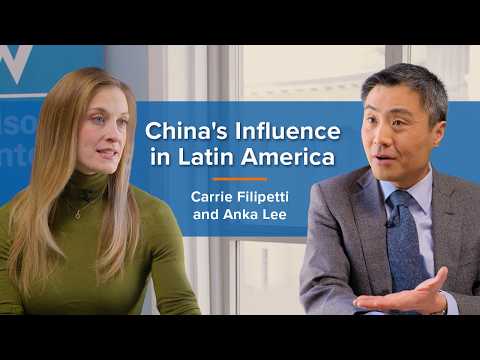
China's Influence in Latin America
China has significantly invested in Venezuela, providing over $100 billion to support the Maduro regime through military and technological aid. This investment has enabled the regime's repression apparatus, including surveillance technology and military support, which has resulted in numerous political prisoners.
OPEN SOURCEChina has significantly invested in Venezuela, providing over $100 billion to support the Maduro regime through military and technological aid. This investment has enabled the regime's repression apparatus, including surveillance technology and military support, which has resulted in numerous political prisoners.
The trade relationship between China and Latin America is heavily imbalanced, with Latin America primarily exporting raw materials while importing electronics from China. Chinese influence is evident in educational institutions like Confucius Institutes, which promote China's narrative and policies in the region.
Many Latin Americans express a preference for partnerships with the United States over China, viewing the latter's involvement as extractive and one-sided. This sentiment highlights the need for the U.S. to provide viable alternatives to strengthen its influence in the region.
China aims to shape regional narratives and agendas through multilateral engagements, focusing on governance, development, and security. The Chinese Communist Party has increased its presence in international organizations, influencing discussions and policies to favor its interests.
U.S. policy should emphasize soft power and countering authoritarian narratives propagated by China. Strengthening ties with Taiwan and showcasing its contributions to Latin American development can enhance U.S. influence and demonstrate the benefits of democratic partnerships.
- Highlights preference for U.S. partnerships over Chinese influence
- Proposes strengthening ties with Taiwan to enhance regional development
- Claims China has invested heavily in Venezuela, supporting the Maduro regime
- Argues that Chinese technology has empowered the regimes repression apparatus
- Acknowledges the complexity of U.S.-Latin America relations
- Recognizes the varying political contexts across Latin American countries
- China has invested over $100 billion in Venezuela, raising concerns about unpaid debts and future investments
- Chinese support has bolstered the Maduro regime, enhancing repression through technology and military aid
- Venezuela is the largest buyer of Chinese military technology in the Western hemisphere, deepening Chinas regional influence
- Chinas resource-driven interest in Latin America has led to over $600 billion in outbound investments over 20 years
- The trade relationship is imbalanced, with Latin America exporting mainly raw materials while importing electronics from China
- China has established 40 Confucius Institutes in Latin America to shape public perception and promote its narrative
- Many Latin Americans view the relationship with China as extractive, favoring partnerships with the U.S. instead
- The U.S. struggles to offer viable alternatives to counter Chinas influence in Latin America
details
details
details
- Most Latin Americans prefer U.S. partnerships over Chinas, seeking alternative alliances
- China aims to dominate the narrative in Latin America, focusing on governance and the Belt and Road Initiative
- Chinese influence at the UN surged, with an 85% increase in Chinese nationals from 2019 to 2021
- The Chinese Communist Party prioritizes economic rights, challenging U.S. democracy and human rights efforts
- The U.S. must enhance soft power to counter Chinas information operations and authoritarian narratives
- Sanctions are crucial for the U.S. to strengthen ties in Latin America and push back against China
- Taiwans donation of 30 electric buses to Paraguay fosters local job creation and economic development
- Collaboration with Taiwan can showcase its contributions, earning political capital for the U.S
- A positive narrative about democracy and U.S. partnerships is vital to counter Chinas influence
details
details
The reliance on Chinese investments in Venezuela raises questions about the sustainability of such support, especially given the unpaid debts and the potential for future instability. Inference: The assumption that China can maintain its influence without addressing the growing discontent among Latin Americans could lead to a miscalculation in their regional strategy.
This analysis is an original interpretation prepared by Art Argentum based on the transcript of the source video. The original video content remains the property of the respective YouTube channel. Art Argentum is not responsible for the accuracy or intent of the original material.