Geopolitic / North America
Faith and Global Challenges
A significant portion of the global population identifies with faith, making engagement with these communities essential for addressing global challenges such as finance, climate change, and technology. The Global Future Council on Faith in Action emphasizes the need to incorporate faith perspectives into economic and social dialogues for more effective solutions.
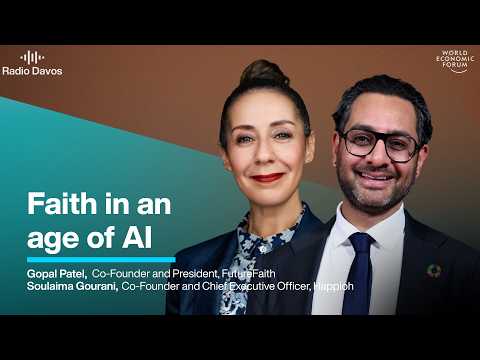
Source material: What's God got to do with it? The case for faith in an age of AI
Summary
A significant portion of the global population identifies with faith, making engagement with these communities essential for addressing global challenges such as finance, climate change, and technology. The Global Future Council on Faith in Action emphasizes the need to incorporate faith perspectives into economic and social dialogues for more effective solutions.
Future Faith aims to connect faith leaders with the private sector to enhance initiatives in environmental conservation and technology ethics. The council seeks to normalize the idea of faith as a positive influence in global discussions, countering the notion that religion inherently divides people.
Discussions within the council focus on how faith can inform economic systems, advocating for a moral economy that prioritizes community well-being over wealth accumulation. The integration of faith perspectives is seen as crucial for addressing issues of wealth inequality and environmental degradation.
The council is also exploring the implications of artificial intelligence on society, emphasizing the need for ethical considerations in its development. Faith traditions are positioned to contribute valuable insights into the human aspects of AI, particularly regarding job loss and civil unrest.
Perspectives
Analysis of faith's role in addressing global challenges.
Pro-Faith Engagement
- Emphasizes the importance of faith communities in addressing global challenges
- Advocates for integrating faith perspectives into economic and social dialogues
- Highlights the potential of faith to unite people rather than divide them
- Calls for a moral economy that prioritizes community well-being
- Stresses the need for ethical considerations in AI development
- Encourages adapting climate change messaging to resonate with diverse audiences
Skeptical of Faith's Role
- Questions the effectiveness of faith communities in influencing secular governance
- Notes the complexities of diverse belief systems in addressing global issues
- Highlights the potential for faith-based initiatives to overlook practical realities
- Warns against assuming uniformity in ethical perspectives within faith traditions
- Critiques the reliance on faith to navigate technological advancements
- Points out the risk of oversimplifying challenges posed by AI
Neutral / Shared
- Recognizes the historical interlinking of commerce and faith
- Acknowledges the need for dialogue among diverse stakeholders
- Notes the potential for AI to revolutionize healthcare and other sectors
Metrics
population_association
80-85%
percentage of the world's population that associates with a faith
This statistic underscores the significant role faith plays in global societal dynamics.
80-85% of the world's population associate themselves in one way or another to have a faith or associate with a religion.
leadership_duration
25 years
duration of faith communities' leadership on climate and environmental challenges
This highlights the long-standing commitment of faith communities to environmental issues.
Over the past 25 years, faith communities around the world have shown remarkable leadership on climate and nature.
impact
impact can be scaled significantly
collaboration between faith and other stakeholders
Scaling impact can enhance the effectiveness of environmental initiatives.
impact can be scaled significantly
other
a year years
time spent in an ashram in India
This experience highlights the speaker's deep commitment to their faith tradition.
I lived there for about a year.
other
lots of religions
the number of religions that have similar views on wealth
This indicates a shared belief across various faiths regarding the relationship between morality and wealth.
lots of religions have that.
other
three or four decades years
duration of faith groups' work on climate and nature
This highlights the long-standing engagement of faith groups in environmental issues.
there's a significant body of work stretching over three or four decades at that intersection.
accessibility
only one, two percent of the world's population could afford a lawyer %
affordability of legal services
This highlights the disparity in access to legal representation.
only one, two percent of the world's population could afford a lawyer
job_loss
major job losses because AI just taking people's jobs
impact of AI on employment
Understanding job displacement is crucial for addressing societal unrest.
there's going to be major job losses because AI just taking people's jobs
Key entities
Timeline highlights
00:00–05:00
Approximately 80-85% of the global population adheres to a faith, highlighting the importance of engaging with these communities to address global challenges. The Global Future Council on Faith in Action emphasizes the need to incorporate faith perspectives into economic and social dialogues for more effective solutions.
- Approximately 80-85% of the global population adheres to a faith, making engagement with these communities crucial for tackling issues in finance, climate, and technology
- Historically, commerce and faith have influenced each other, but their growing disconnection may impede collaborative efforts to solve urgent global challenges
- The Global Future Council on Faith in Action advocates for incorporating faith perspectives into economic and social dialogues, potentially leading to more comprehensive solutions
- Over the last 25 years, faith communities have taken a leading role in addressing climate and environmental challenges, which is essential for keeping public attention on these issues amid increasing polarization
- The Faith in Action podcast explores how faith intersects with global challenges, aiming to highlight its positive contributions to societal issues and promote cooperation
- Recognizing faiths role in public discourse is essential for fostering effective communication and collaboration, as neglecting this aspect could lead to lost opportunities for unity in addressing global issues
05:00–10:00
A significant portion of the global population identifies with faith or value-based traditions, making their engagement essential for addressing global challenges. Future Faith aims to connect faith leaders with the private sector to enhance initiatives in environmental conservation and technology ethics.
- Faith is vital for addressing global challenges, as a large segment of the population identifies with religious or value-based traditions. Engaging these communities is crucial for effective collaboration in finance, climate, and technology
- Future Faith seeks to connect faith leaders with the private sector to address environmental issues. This collaboration can significantly boost initiatives focused on ocean conservation, land restoration, and biodiversity
- Tech leaders are focused on artificial intelligence to create positive societal impacts. Improved communication with faith communities is necessary to ensure AI development aligns with ethical values
- Personal faith can complicate identity and create divisions, yet many individuals share common aspirations. This suggests that faith can also act as a unifying force
- The speakers diverse religious background demonstrates how faith can promote understanding across cultures. This perspective challenges the idea that religion inherently divides people, highlighting shared goals
- The discussion emphasizes faiths dual potential to unite or divide. By concentrating on common values, it is possible to navigate the complexities of faith to foster collaboration
10:00–15:00
The speaker discusses their journey within the Hindu faith and emphasizes the importance of integrating faith into economic discussions. They argue that money should serve equitable distribution rather than being an ultimate goal, advocating for a moral economy that prioritizes community well-being.
- The speakers exploration of their Hindu faith, including time spent in ashrams, has strengthened their commitment to the tradition. This journey highlights the personal connection to spirituality and its significance in their life
- While religion can create divisions, it also has the potential to be a force for good when approached positively. Extremist interpretations often misuse faith, leading to conflict and separation
- There is a pressing need for faith communities to engage in discussions about the economy, emphasizing that money should serve as a tool for equitable distribution rather than an ultimate goal. This perspective is crucial for fostering social justice
- Criticism of the current economic system points to its failure to meet the needs of the majority, resulting in environmental degradation and social divides. Advocating for a moral economy prioritizes community well-being over wealth accumulation
- Collaboration among various faiths is essential to tackle financial inequalities and enhance access to banking services. This approach ensures that everyone has the necessary resources for a decent quality of life
- The conversation underscores the importance of integrating faith into public discourse and decision-making. Normalizing faith can help address societal challenges instead of contributing to division
15:00–20:00
Faith communities are being engaged to reshape economic systems towards fairness and equity, emphasizing the need for commerce to serve the common good. The Global Future Council on Faith in Action is developing recommendations to align diverse faith perspectives with actionable policies to address climate change.
- Faith can help reshape economic systems to prioritize fairness and equity, ensuring that commerce serves the common good. This shift is vital for creating a more just society
- Translating moral and faith-based discussions into effective policies is challenging due to regional differences. A set of recommendations is being developed to align diverse faith perspectives with actionable decisions
- The council seeks to foster dialogue about moral economies, encouraging participation from various stakeholders who recognize the need for economic change. This inclusive approach aims to generate innovative solutions
- Improving economic systems is essential for addressing climate change, as current inefficiencies contribute to environmental harm. The council is committed to driving action over the next two decades to combat the climate crisis
- Engaging faith communities is crucial for raising awareness about climate change, particularly in areas where denial is prevalent. This engagement is necessary to build a shared understanding of the urgency of the issue
- The council emphasizes the importance of dialogue with diverse faith groups to confront the climate crisis. Achieving consensus on the reality of climate change is a key step toward collective action
20:00–25:00
The climate discourse must adapt its messaging to resonate with people's values, as the term 'climate change' has become politicized. Integrating faith perspectives into discussions about technology and AI is essential to address ethical concerns and align development with human values.
- The climate discourse needs to shift its messaging to connect with peoples values, as the term climate change has become politicized. This change can help engage a wider audience in recognizing the urgency of the crisis
- Every religion emphasizes harmony with nature, but translating this ancient wisdom into modern urban contexts is challenging. Many people today are disconnected from the natural world
- The rapid evolution of artificial intelligence adds to doubts about human relationships, including those with AI. While AI can offer companionship, it lacks true human emotions, complicating its societal role
- AI has the potential to make services like legal advice and healthcare more accessible to broader populations. However, forming emotional attachments to AI may lead to increased feelings of loneliness
- Integrating faith perspectives into discussions about technology is essential as society navigates the implications of AI. This approach can help address ethical concerns and ensure AI development aligns with human values
- The future may involve a blend of human and AI relationships, which could redefine social interactions. This evolution presents both opportunities and challenges that require careful consideration
25:00–30:00
Faith traditions are positioned to contribute valuable insights into the implications of artificial intelligence on society, particularly regarding job loss and civil unrest. The evolving relationship between spirituality and technology raises existential questions about the necessity of divine presence in the face of advanced AI capabilities.
- Faith traditions offer valuable insights for tackling global issues, particularly in the context of artificial intelligence. Their historical resilience makes them essential contributors to discussions about technologys future impact on society
- The emergence of AI raises fears of job loss and potential civil unrest, highlighting the need for faith communities to provide support during these transitions. Their guidance can help individuals navigate the challenges of unemployment
- AIs advancement prompts existential inquiries regarding knowledge and divinity, challenging conventional beliefs about faith. As AI becomes more adept at answering questions, it questions the necessity of a divine presence
- A personal and non-transactional relationship with God fosters spiritual growth, which AI cannot replicate. This suggests that human spirituality is nuanced and evolving, beyond what technology can offer
- Agnostics and atheists contribute valuable perspectives to the discourse on faith and technology. The lines between spirituality and organized religion are increasingly blurred, reflecting the complexity of belief systems
- AI has the potential to create connections but also risks increasing loneliness among individuals. The effect of AI on human relationships will depend on its societal integration and its ability to enhance genuine interactions