Geopolitic / North America
Ceasefire and Ongoing Conflict in the Middle East
A ceasefire announced by President Trump has led to a complex situation involving Israel, Iran, and the U.S. Despite the ceasefire, military actions continue, particularly in Lebanon, raising questions about the effectiveness of the agreement. Negotiations mediated by Pakistan, which excludes Israel, further complicate the dynamics as conflicting interests emerge.
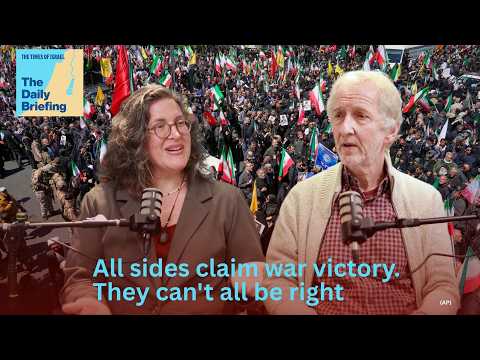
Source material: All sides claim war victory. They can't all be right
Summary
A ceasefire announced by President Trump has led to a complex situation involving Israel, Iran, and the U.S. Despite the ceasefire, military actions continue, particularly in Lebanon, raising questions about the effectiveness of the agreement. Negotiations mediated by Pakistan, which excludes Israel, further complicate the dynamics as conflicting interests emerge.
Israel's Prime Minister Netanyahu has indicated that the ceasefire does not apply to Lebanon, where fighting persists. Confusion regarding Iran's representation in negotiations adds to the uncertainty, with various factions within Iran claiming different terms and objectives. The ongoing conflict in Lebanon highlights the challenges of achieving a unified agreement.
Both Iran and the U.S. claim victory despite the ongoing hostilities, which raises doubts about the validity of their assertions. The Iranian regime remains in power, and its nuclear program continues to pose a threat, undermining claims of strategic success by the U.S. and Israel. The lack of a cohesive strategy to address Iran's military capabilities complicates the situation further.
The Iranian public's response to the conflict remains ambiguous, with reports suggesting a potential alignment with the regime despite significant losses. The regime's control over strategic waterways and its ability to generate revenue may reinforce its position, complicating any efforts for regime change. The narrative of victory from both sides may mask deeper failures in achieving their strategic objectives.
Perspectives
Analysis of the ceasefire and ongoing conflict dynamics.
Israel and the U.S.
- Claim victory despite ongoing military actions
- Assert that Irans nuclear program remains a significant threat
- Highlight the need for a cohesive strategy to address Irans military capabilities
- Indicate that the ceasefire does not apply to Lebanon, where fighting continues
- Express concerns about Irans control over strategic waterways
Iran
- Claim victory despite significant losses
- Maintain that the regime remains in power and resilient
- Emphasize control over the Strait of Hormuz as a strategic advantage
- Assert that the Iranian public supports the regime amidst the conflict
- Publish conflicting terms for negotiations, indicating internal divisions
Neutral / Shared
- Negotiations mediated by Pakistan complicate the situation
- Confusion regarding Irans representation in talks raises uncertainty
- Both sides express a desire to end the conflict for different reasons
Metrics
military_operations
the attacks has also been carrying in Lebanon in the last few hours units
escalation of military operations in Lebanon
This indicates a significant increase in hostilities despite the ceasefire.
the attacks has also been carrying in Lebanon in the last few hours
military_readiness
our fingers on the trigger, we're ready to resume this war at any moment units
Israel's military readiness
This highlights Israel's commitment to its military objectives despite the ceasefire.
our fingers on the trigger, we're ready to resume this war at any moment
casualties
20 Israelis or four nationals died here and four Palestinians in the West Bank people
total casualties reported
This highlights the human cost of the ongoing conflict.
20 Israelis or four nationals died here and four Palestinians in the West Bank.
uranium_stockpile
450 kilos
Iran's uranium stockpile
This stockpile is close to weapons-grade enrichment, posing a significant threat.
the uranium stockpile that is maybe inaccessible, somewhere in the Isfahan area, or maybe not totally inaccessible, but as far as we know, it's still there, 450 kilos
enrichment_level
60%
Level of uranium enrichment
This level is very close to weapons-grade, indicating a potential for nuclear weapon development.
they had been able to enrich 60% level, which is very close to weapons grade
casualties
5,000 units
estimated Iranian soldiers killed
This number highlights the significant human cost of the conflict.
the estimates that we've heard are 5,000 Iranian soldiers were killed
public sentiment
14 million units
Iranians willing to die for the country
This figure indicates a strong nationalistic sentiment that may support the regime.
14 million, I believe you said, Iranians are willing to die for the country
other
semi-invincible
perception of the Iranian regime's strength
This perception could influence regional stability and U.S. foreign policy.
this regime will be semi-invincible
Key entities
Timeline highlights
00:00–05:00
The ceasefire announced by President Trump has led to uncertainty in the ongoing conflict involving Israel, Iran, and the US, as military actions persist despite the pause. Negotiations mediated by Pakistan, excluding Israel, raise concerns about the country's interests being overlooked amidst chaotic diplomatic efforts.
- The ceasefire announced by President Trump has led to uncertainty in the conflict involving Israel, Iran, and the US, as military actions continue despite the pause
- Israel experienced a brief return to normalcy with children back in school after 40 days of conflict, but the effectiveness of the ceasefire remains uncertain
- Irans immediate missile attacks following the ceasefire announcement indicate a lack of compliance, raising doubts about the agreements sincerity
- Negotiations in Pakistan, with the country mediating between the US and Iran, exclude Israel, raising concerns about its interests being neglected
- Both Iran and the US seek to end the conflict for different reasons, which could facilitate a resolution, though the risk of renewed hostilities is significant
- The chaotic negotiations and conflicting narratives from leaders suggest a lack of transparency, potentially undermining trust in future diplomatic efforts
05:00–10:00
The ceasefire announced by President Trump does not apply to Lebanon, where military operations are escalating. Confusion regarding Iran's representation in negotiations complicates the potential for a unified agreement.
- The ceasefire announced by President Trump does not apply to Lebanon, where fighting persists, raising doubts about the ceasefires effectiveness
- Prime Minister Netanyahu has stated that military operations in Lebanon are escalating, indicating Israels unwillingness to cease its objectives
- There is confusion regarding Irans representation in the negotiations, complicating the potential for a unified agreement
- Pakistans mediation role is under scrutiny as it suggests the ceasefire should include Lebanon, a claim disputed by Israel
- Contradictory terms from Iran and the U.S. in the negotiations could erode trust and impede progress
- President Trumps threats of severe consequences for Irans non-compliance heighten the urgency of the negotiations and the risk of conflict escalation
10:00–15:00
The Iranian regime claims victory despite ongoing conflict, indicating ideological rigidity that complicates U.S. negotiations.
- The Iranian regime, led by hardliners, claims victory despite ongoing conflict, reflecting its ideological rigidity that complicates U.S. negotiations
- Both Iran and the U.S. seem to share an interest in ending the war, even while publicly asserting their victories
- Israels military actions have significantly damaged Iranian leadership and infrastructure, potentially shifting the regional power balance
- The Israeli opposition criticizes Prime Minister Netanyahu for perceived diplomatic failures, which may influence Israels future strategic decisions
- While the U.S. reports tactical successes, its broader strategic objectives remain unmet, raising concerns about policy effectiveness
- The conflict in Lebanon complicates ceasefire efforts, as Israel continues military operations, highlighting the precarious nature of peace initiatives
15:00–20:00
Hezbollah's operational capabilities have diminished, granting Israel air superiority in the region. Despite military actions, Iran's nuclear program remains largely intact, posing a continuous threat.
- Hezbollahs operational capabilities have been significantly weakened, allowing Israel to maintain air superiority in the region. This shift provides Israel with a strategic advantage in the ongoing conflict
- Despite military actions, Irans nuclear program remains largely intact, with significant uranium stockpiles still available. This situation poses a continuous threat as the program could progress towards weapons-grade enrichment
- The Iranian regime has demonstrated resilience by surviving a major military assault, allowing it to assert a strategic victory. This undermines U.S
- Irans control over the Strait of Hormuz has heightened global energy market volatility, emphasizing its geopolitical importance. This complicates U.S
- The Iranian regime continues to hold power without facing a public uprising, challenging the narrative of U.S. success in the region
- The inability to dismantle Irans ballistic missile program raises concerns about the current military strategys effectiveness. Without addressing these critical issues, the risk of future conflicts remains elevated
20:00–25:00
The ceasefire announcement indicates a desire for resolution but exposes vulnerabilities in the negotiation process. Iran's president claims millions are ready to sacrifice for their country, suggesting a strong nationalistic sentiment that complicates U.S.
- The ceasefire announcement reflects a desire for resolution but also reveals vulnerabilities in the negotiation process, potentially leading to previously unacceptable concessions
- Irans president asserts that millions are ready to sacrifice for their country, indicating a strong nationalistic sentiment that may align the public more closely with the regime after significant losses
- The absence of public dissent in Iran following the ceasefire suggests that conditions for an uprising are lacking, or that the devastation has fostered solidarity with the regime
- Trumps remarks imply he believes the Iranian public seeks U.S. intervention for support, which may misinterpret the current sentiment in Iran
- Despite ongoing military actions, evidence shows that the Iranian populace has not turned against the regime, complicating the narrative of U.S. success in the region
- The conflict has escalated to a level where the Iranian regime has retained its power despite external pressures, indicating a potential miscalculation by the U.S
25:00–30:00
The Iranian public's disappointment with international support may reinforce the regime's position as the only source of stability. Iran's strategic influence in the region has reportedly grown, enabling control over key waterways and revenue generation.
- The Iranian publics disappointment with international support may reinforce the regimes position as the only source of stability. This perception could hinder any potential for significant dissent against the government
- Irans strategic influence in the region has reportedly grown, enabling control over key waterways and revenue generation. This development may embolden the regime and reduce the likelihood of popular uprisings
- The lack of effective external support for Iranian opposition groups indicates poor strategic planning. Without unified leadership, the prospects for a successful uprising remain low
- The regimes ability to maintain control despite external pressures suggests minimal internal challenges. This stability raises concerns about Irans potential pursuit of nuclear capabilities without facing significant opposition
- If the ceasefire results in an agreement that allows Iran to keep its military capabilities, it could encourage the regime to develop nuclear weapons. Such a scenario would pose a direct threat to regional stability, especially for Israel
- Irans strengthened position could lead to a shift in regional power dynamics. If the regime successfully capitalizes on its control over strategic resources, it may further entrench its power and weaken U.S