Geopolitic / North America
Track North America geopolitics, strategic competition, security developments and regional risk signals through structured summaries.
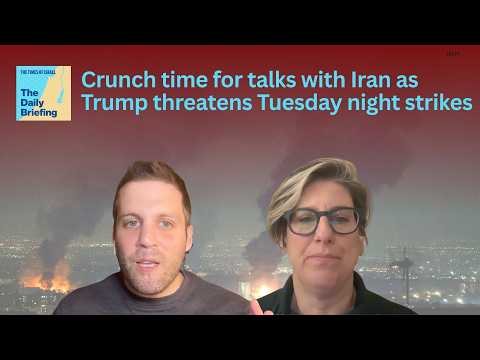
Crunch time for talks with Iran as Trump threatens Tuesday night strikes
Summary
Tensions escalated in the region following an Iranian missile attack on southern Israel, prompting a response from the IDF. A successful rescue operation retrieved a downed US airman in Iran, but uncertainty remains regarding a second airman. President Trump celebrated the operation while emphasizing the importance of not leaving personnel behind.
Media leaks regarding the rescue operation have drawn criticism from President Trump, who claimed they jeopardized the mission and led to a bounty being placed on the airman's head. The operation showcased unique U.S. military capabilities, including sabotage efforts to mislead Iranian forces.
Negotiations with Iran have reached a critical juncture, with President Trump issuing a final deadline for compliance with U.S. proposals. The U.S. has been mediating with various countries to find a resolution, but skepticism remains regarding Iran's willingness to accept the terms.
Israeli Prime Minister Netanyahu faces the challenge of balancing military objectives with the economic toll of the ongoing conflict. The Israeli government is cautious about any ceasefire that lacks substantial guarantees, while also recognizing the need to address the economic impact of the war.
Perspectives
short
U.S. and Israel
- Celebrate the successful rescue operation of a downed airman
- Criticize media leaks for jeopardizing military operations
- Issue a final deadline for Iran to comply with U.S. proposals
- Emphasize the importance of not leaving personnel behind
- Balance military objectives with economic considerations
- Advocate for a phased disarmament plan for Hamas
Iran and Hamas
- Reject U.S. proposals that do not address previous violations
- Express concerns about the economic impact of ongoing conflict
- Demand guarantees before agreeing to disarmament terms
- Highlight the need for a more comprehensive ceasefire agreement
Neutral / Shared
- Acknowledge the complexities of military operations in hostile territories
- Recognize the role of mediating countries in negotiations
- Note the potential for escalation in Gaza amid ongoing tensions
Metrics
other
12 hour law hours
duration of the law mentioned
This timeframe indicates the urgency of the situation.
after 12 hour law
other
24 hours
time without contact from the second airman
This duration raises concerns about the airman's status.
around 24 hours or so
time
48 hours
duration the airman survived alone
This highlights the resilience and survival skills of military personnel in hostile environments.
this pilot at survive or this air minute survive for basically 48 hours on his own
deadline
Tuesday night
final deadline for Iran's compliance
A missed deadline could lead to military action.
this is the last deadline he's going to be giving
ceasefire_duration
45 days
proposed temporary ceasefire
A ceasefire could provide a framework for longer negotiations.
this proposal for a 45 day temporary ceasefire
duration
six weeks
duration of the ongoing conflict
The prolonged conflict impacts both military strategy and economic stability.
this time it's already been six weeks
duration
twelve days
duration of the previous conflict
Comparison highlights the escalating nature of the current conflict.
unlike the 12 day war in June
aid deliveries
600 units
daily aid trucks required in Gaza
Meeting this number is crucial for humanitarian support amidst ongoing conflict.
it's supposed to be 600 a day
Key entities
Timeline highlights
00:00–05:00
An Iranian missile attack on southern Israel has escalated regional tensions, prompting a response from the IDF. A successful rescue operation retrieved a downed US airman in Iran, but uncertainty remains regarding a second airman.
- An Iranian missile attack on southern Israel prompted a response from the IDF, indicating escalating regional tensions
- President Trump threatened to destroy critical Iranian infrastructure if negotiations do not succeed, highlighting the high stakes of the talks
- A challenging rescue operation successfully retrieved a downed US airman in Iran, raising concerns about the safety of the rescuers involved
- Internal military debates occurred regarding the rescue mission, with some advisors urging caution, but Trump chose to proceed to ensure no personnel were left behind
- While the first pilot was successfully rescued, uncertainty surrounded the fate of a second airman, complicating military and diplomatic efforts
- A media leak concerning the second airman led Trump to promise accountability for the source, underscoring the sensitive nature of military operations
05:00–10:00
President Trump criticized media leaks regarding the rescue of a downed airman, claiming they jeopardized the mission and led to a bounty being placed on the airman's head. The successful rescue operation showcased U.S.
- President Trump criticized media leaks about the rescue of a downed airman, claiming they endangered the mission and led Iran to place a bounty on the airmans head
- Despite severe injuries, the airman successfully communicated his location to U.S. forces, aiding in the rescue efforts
- U.S. forces conducted sabotage operations to mislead Iranian troops and safeguard the airmans position during the rescue
- The operation required on-site assembly of helicopters after initial extraction attempts faced logistical issues, demonstrating U.S. adaptability
- Trump emphasized the commitment to not leave American soldiers behind, referencing past hostage situations to highlight the importance of military personnel safety
- The successful rescue operation, despite numerous obstacles, was hailed by Trump as a significant achievement for U.S. military efforts
10:00–15:00
Negotiations with Iran have reached a critical juncture, with President Trump issuing a final deadline for compliance with U.S. proposals.
- Negotiations with Iran are at a critical point, with Trump setting a final deadline for acceptance of a US proposal, threatening military action if Iran does not comply. This ultimatum underscores rising tensions and the risk of conflict in the region
- Despite previous delays, Trump insists this is Irans last opportunity to agree to terms, including reopening the Strait of Hormuz, reflecting the urgency of the situation
- Mediation attempts by Egypt, Pakistan, and Turkey have not yielded positive results, as US officials view Irans recent proposal as inadequate, indicating a deadlock in talks
- Trumps rhetoric has escalated, suggesting that targeting civilian sites could be warranted to prevent Iran from developing nuclear weapons, raising concerns about potential humanitarian crises
- Irans hesitation to meet US demands stems from its need to retain leverage over the Strait of Hormuz, complicating the chances for a temporary ceasefire and highlighting regional dynamics
- The current situation resembles past conflicts, such as the Gaza ceasefire negotiations, where parties were reluctant to agree due to fears of renewed hostilities, illustrating the difficulties in reaching a lasting resolution
15:00–20:00
President Trump has issued a firm deadline for Iran, warning of potential military action if compliance is not met. Israeli Prime Minister Netanyahu is balancing military objectives with the economic toll of the ongoing conflict, complicating the government's stance.
- President Trump has set a firm deadline for Iran, warning that failure to comply could result in significant military action, escalating the urgency of negotiations
- Israeli Prime Minister Netanyahu opposes any agreement with Iran, stressing the importance of ongoing military operations, while the conflicts toll on the Israeli economy complicates the governments stance
- As the war continues, Israel faces economic challenges that may affect decision-making, with Netanyahus administration balancing military objectives against the need for stability
- The U.S. is caught between escalating military actions against Iran and the possibility of negotiating a ceasefire that may involve concessions
- Iran is responding to U.S. and Israeli strikes with calculated attacks, demonstrating its commitment to a prolonged conflict
- If negotiations resume, Iran is expected to seek stronger guarantees against future U.S. strikes, potentially involving mediation from China and Russia
20:00–25:00
The Board of Peace is advocating for a phased disarmament plan for Hamas, which includes a timeline for surrendering heavy weaponry and providing maps of tunnel networks. The proposal faces challenges due to Hamas's concerns about Israeli violations of previous agreements and the political climate in Israel.
- The Board of Peace is pushing a phased disarmament plan for Hamas, which includes a timeline for surrendering heavy weaponry and providing maps of tunnel networks. This proposal is challenging for Hamas to accept due to its stringent conditions
- Nikolai Mladenov, the High Representative for Gaza, has issued an ultimatum to Hamas, demanding a response by Friday. The urgency reflects the Board of Peaces frustration with Hamass slow progress in negotiations
- Hamas has not outright rejected the proposal but has raised concerns about Israeli violations of previous agreements, particularly regarding aid and border operations. These grievances complicate the negotiation process and may hinder acceptance of the disarmament plan
- Israel has responded to some of Hamass concerns by allowing more aid trucks into Gaza, aiming to meet the required daily aid numbers. This move indicates a potential willingness to negotiate but also highlights the ongoing tensions in the region
- Arab diplomats express skepticism about Hamas agreeing to the proposal, fearing extensive conditions will accompany any acceptance. The political climate in Israel, especially with upcoming elections, makes significant concessions unlikely
- The ultimatum from the Board of Peace may back Hamas into a corner, forcing a decision that could escalate tensions if their response is unsatisfactory. This situation underscores the precarious balance of power and the challenges of achieving a lasting resolution
25:00–30:00
The focus on Iran is intensifying, raising concerns about a potential escalation in Gaza. Ongoing tensions could lead to increased violence in the region as Israel navigates conflicts on multiple fronts.
- The focus on Iran is intensifying, raising concerns about a potential escalation in Gaza. This situation complicates Israels military strategy as it navigates conflicts on multiple fronts
- Jacob Magid notes that while Israel has been conducting daily strikes in Gaza, a full-scale resumption of war is not imminent. However, the ongoing tensions could lead to increased violence in the region
- A meeting is scheduled for today in Cairo with Nikolai Mladenov and various Palestinian factions. This could be a pivotal moment for negotiations, potentially influencing the future of the conflict
- The looming deadlines for both Iran and Hamas create a sense of urgency in diplomatic efforts. Failure to meet these deadlines could exacerbate tensions and lead to further military actions
- The ongoing discussions highlight the precarious balance Israel must maintain between addressing threats from Iran and managing the situation in Gaza. Any misstep could escalate conflicts in both areas
- The episode concludes with a reminder of the importance of staying informed and engaged with the ongoing developments. The implications of these discussions could have far-reaching effects on regional stability