Ethics of AI in Estate Agency
Analysis of the ethics of AI in estate agency, based on "The ethics of AI in Estate Agency" | Christopher Watkin.
OPEN SOURCEAI is transforming the estate and letting agency landscape by taking on complex roles, such as tenant selection, beyond merely generating property descriptions. This shift raises significant ethical concerns regarding bias and the potential loss of human judgment in decision-making processes.
Alto, a CRM provider, emphasizes the importance of ethical considerations in AI applications, striving to balance efficiency with fairness in client interactions. The reliance on data-driven scoring systems can perpetuate biases, particularly affecting individuals from lower socio-economic backgrounds or those with poor credit histories.
As AI begins to automate critical tasks like tenant referencing and property management, the need for human oversight becomes increasingly vital. Ethical governance frameworks are essential to ensure that AI-driven processes do not compromise fairness and equity in housing access.
The integration of AI into estate agencies necessitates urgent discussions about its implications for agents and client service. Alto's cautious approach to AI development reflects a commitment to creating efficiencies while safeguarding ethical standards.
The rapid evolution of AI technology in the estate agency sector highlights the importance of addressing potential biases and ensuring that data usage aligns with ethical principles. A major announcement regarding Alto's AI strategy is anticipated, showcasing their efforts to balance innovation with responsibility.
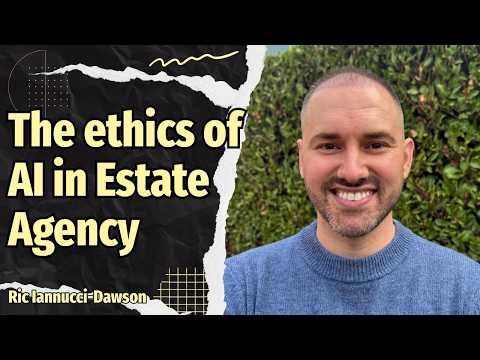
- Emphasizes the need for ethical governance frameworks in AI applications
- Highlights the importance of balancing efficiency with fairness in client interactions
- Raises concerns about the potential for AI to perpetuate biases in tenant selection
- Questions the adequacy of AI in replacing human judgment in complex decision-making
- Acknowledges the rapid evolution of AI technology in the estate agency sector
- Notes the necessity for urgent discussions about AIs implications for agents and clients
- AI is transforming estate and letting agencies by taking on more complex roles, such as tenant selection, beyond just generating property descriptions
- The reliance on data-driven scoring systems in AI can lead to biases, particularly affecting individuals from lower socio-economic backgrounds or those with poor credit histories
- Alto, a CRM provider, prioritizes ethical considerations in its AI features, striving to balance efficiency with fairness in client interactions
- The automation of tenant referencing and property management tasks through AI raises concerns about diminishing human judgment in important decision-making processes
- The rapid evolution of AI technology in estate agency necessitates urgent discussions about its implications for agents and client service
details
details
- AI is transitioning from supporting agents to taking on critical responsibilities like tenant referencing and property management, raising ethical questions about decision-making
- The use of AI in estate agency can result in biased outcomes, especially in tenant selection, as algorithms may reflect biases present in historical data
- Alto emphasizes ethical standards while enhancing efficiency for agents, highlighting the necessity of human oversight in AI-driven processes
- The company is adopting a partner-led model to improve its CRM capabilities through third-party integrations, while ensuring ethical governance remains a priority
- Alto has significantly lowered the cost of partner integrations from 75,000 to 5,000, promoting collaboration and innovation within its ecosystem
details
- The company positions itself as a trusted partner in AI, focusing on security, scalability, and data ownership within the estate agency sector
- A strong governance framework is essential for integrating AI into products, ensuring that efficiency gains do not compromise fairness and ethical standards
- The company is adopting a cautious AI strategy, prioritizing the establishment of a solid governance framework before making public announcements, unlike some competitors
- Data sharing in real estate significantly affects individuals lives, highlighting the need for careful consideration of AIs impact on customer interactions and decision-making
- A major announcement regarding the companys AI strategy is expected this year, reflecting confidence in achieving a balance between efficiency and ethical considerations
The reliance on AI for tenant selection assumes that data-driven scoring systems are inherently objective, yet they can perpetuate existing biases, particularly against marginalized groups. Inference: If AI systems are not rigorously tested for fairness, they risk entrenching socio-economic disparities in housing access. The absence of human oversight in these processes could lead to a future where decisions are made solely based on algorithmic outputs, ignoring the nuanced realities of individual circumstances.
This analysis is an original interpretation prepared by Art Argentum based on the transcript of the source video. The original video content remains the property of the respective YouTube channel. Art Argentum is not responsible for the accuracy or intent of the original material.