The Role of Heretics in Innovation and Military Success
Shyam Sankar discusses the critical role of 'heretics' in American military history, emphasizing their contributions to innovation against bureaucratic resistance. He highlights figures like Hyman Rickover, who revolutionized nuclear submarines, as examples of how unconventional thinkers can drive significant advancements.
OPEN SOURCEShyam Sankar discusses the critical role of 'heretics' in American military history, emphasizing their contributions to innovation against bureaucratic resistance. He highlights figures like Hyman Rickover, who revolutionized nuclear submarines, as examples of how unconventional thinkers can drive significant advancements.
Sankar reflects on his personal experiences and worldview shaped by his family's history of fleeing violence in Nigeria. This background instilled in him a deep appreciation for American opportunities and the importance of resilience and gratitude.
The conversation explores the need for the U.S. to re-industrialize and regain its competitive edge, particularly in defense and technology sectors. Sankar argues that the current reliance on a few defense specialists limits innovation and adaptability.
Sankar emphasizes the importance of a culture that encourages risk-taking and embraces discomfort as a pathway to growth. He advocates for a workplace environment that allows for high-stakes projects and supports individuals in discovering their strengths and weaknesses.
The discussion also touches on the challenges posed by China's long-term strategic planning and the need for the U.S. to adapt its approach to maintain its military and technological advantages. Sankar warns against complacency and the dangers of bureaucratic inertia.
Finally, Sankar reflects on the importance of kindness and mentorship in shaping future leaders, sharing a personal story about a pivotal moment in his education that underscores the impact of individual acts of support.
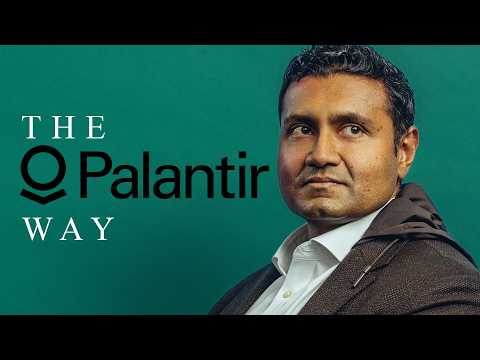
- Highlights the necessity of heretics in driving military innovation
- Emphasizes the importance of resilience and unconventional thinking
- Critiques the reliance on a few defense specialists for innovation
- Questions the effectiveness of bureaucratic processes in fostering creativity
- Discusses the historical context of military innovation
- Explores the complexities of U.S.-China relations in the context of defense
- Shyam Sankar defines heretics as crucial figures in military history who challenge bureaucracy to drive innovation, emphasizing their role in military success
- He highlights Hyman Rickover as a key heretic whose development of nuclear submarines created a lasting asymmetric advantage for the U.S
- Rickovers resilience in the face of opposition exemplifies the traits of true innovators, showcasing how humiliation can fuel motivation
- The discussion stresses the urgent need for the U.S. to re-industrialize and reclaim its manufacturing capabilities to maintain technological leadership
- Sankar argues that embracing heretical thinking is essential for future military and technological advancements, leading to breakthroughs overlooked by traditional approaches
details
details
- Hyman Rickovers focus on safety in nuclear submarines ensured zero deaths from incidents, showcasing the importance of innovation over bureaucracy
- Rickovers difficult personality exemplified the need for resilience in challenging environments, making him a structural threat to the status quo
- John Boyds military strategies significantly influenced US wars in the 1990s, highlighting the value of persistence in achieving outcomes
- Shyam Sankars disagreeableness is crucial for advocating effective solutions in government contracts, ensuring products meet operational needs
- Palantirs Forward Deployed Engineering model prioritizes delivering effective products, even at the cost of upsetting stakeholders
- Gamma ray moments unlock talent and innovation, representing high-stakes opportunities for breakthroughs
- A culture of rebellion is essential for long-term survival, driving necessary change and innovation within organizations
- A strong personal worldview empowers individuals to navigate challenges and advocate for effective solutions
- Palantirs engineering approach relies on continuous feedback and adaptation to maintain relevance in a changing environment
details
details
details
- Shyam Sankars worldview, shaped by his familys escape from violence in Nigeria, fosters gratitude and resilience in facing challenges
- Growing up in optimistic 80s and 90s Orlando instilled his belief in technology as a force for good
- Sankar admires heretics as builders of empirical innovations, contributing to significant successes like those in Gulf War I
- He asserts the U.S. as the greatest force for good, highlighting the need for a culture that promotes human flourishing
- Sankar contrasts the U.S. with Europe, noting Europes lack of companies worth over 100 billion euros in the last 50 years
- He identifies exceptionalism and morale as key to Americas military success
- Sankar emphasizes Americas cultural plasticity, where openness to change drives progress
- His fathers kindness profoundly influenced his values and commitment to helping others
- Sankar believes the U.S. offers unique opportunities for success not found elsewhere
- He sees personal experience and cultural context as vital in shaping a commitment to American interests
details
details
- A culture of learning drives progress, enabling adaptation and innovation unlike static European cultures
- Greatness requires aspirations beyond oneself, fostering investment in institutions for a better future
- Alex Karp exemplifies talent management, shaping the company as an artist colony to enhance individual growth
- Unlocking talent involves recognizing and embracing effortless strengths for maximum contributions
- Kryptonite signifies weaknesses to avoid, leading to greater effectiveness when accepted
- A supportive environment allows individuals to identify kryptonite without fear, turning mistakes into learning opportunities
- Honesty fosters a supportive workplace; Shyams transparency about mistakes with Alex exemplifies this
- Identifying superpowers is crucial; Shyams lies at the intersection of forward deployed engineering and product management
- High-stakes projects drive personal growth; a Palantir employee thrived despite daunting challenges
- Encouraging help-seeking contrasts with traditional structured progressions, facilitating real growth
- False security from structured paths hinders development; true learning occurs outside comfort zones
- Tackling unqualified problems leads to transformative experiences; Shyams gamma ray moment exemplifies this
- Minimizing pain in challenges hinders growth; embracing discomfort is essential for learning
- True potential emerges in high-pressure situations that test limits; Shyams experiences highlight this
details
- Personal growth opportunities depend on others willingness to take chances, as shown by Kevin Hart hiring a Stanford grad student
- Candidates must assess if potential employers will support their eccentricities or stifle them
- Identifying talent involves recognizing early signs of initiative and creativity that lead to significant outcomes
- Palantirs culture allows new hires to take on substantial responsibilities, regardless of experience
- A flexible quantum org structure adapts to evolving challenges, essential for effectiveness
- Companies resisting reorganization risk ineffectiveness due to misaligned structures
- Many Palantir employees face a turning point around three years, questioning the companys chaotic nature
- The success of Palantirs forward deployed engineering model has influenced other companies, though it may not suit all
- A stronger feedback loop for software value comes from assessing field outcomes with end users, not just sales
- Adapting organizational structures is crucial for maintaining value creation in a rapidly changing environment
details
details
details
- Forward Deployed Engineering builds software through direct user engagement, ensuring impactful solutions. This contrasts with traditional methods that rely on sales feedback
details
details
- Palantirs enterprise operating system enhances decision-making by integrating data to reflect human problem-solving, moving beyond traditional data management
details
- Palantir enhances military efficiency by automating processes and addressing non-conformities on the assembly line, crucial for production ramp-up
- The aerospace ontology improves quality management by focusing on parts and defect rates, evolving into a key data resource for production planning
- Military customers face unique challenges due to the separation of supply and demand, complicating operations compared to commercial sectors
- Despite bureaucratic hurdles, US military talent is exceptional, yet recent conflicts raise concerns about its deterrence capabilities
- The militarys failure to prevent aggressions like Crimea and Ukraine underscores the need for improved deterrence strategies
- Recent operations showcase US military strength, but consistent application against peer adversaries remains a challenge
details
details
details
- The U.S. has started to regain deterrence, crucial for national security
- The defense industrial base has shifted, with 86% of major weapon systems now from specialists, reducing competition
- The consolidation of defense contractors has stifled innovation and led to a conformist industrial environment
- The U.S. must connect freedom and prosperity to a robust industrial base for security
- Current military capabilities require continuous innovation to address emerging threats
details
details
details
details
- The U.S. must re-industrialize to regain its competitive edge and address the risks of outsourcing
details
- The U.S. faces a manufacturing emergency, with 80% of generic drugs sourced from China, threatening health and security
- Supply chain vulnerabilities in critical areas like pharmaceuticals must be addressed urgently
- A $2 billion investment could have mitigated the rare earths issue known for over 15 years
- Increasing domestic production by 10% could significantly shift the balance of power against adversaries
- American naivety has allowed China to integrate into global supply chains, undermining U.S. interests
- The CCP views American failure as key to its success, complicating cooperation
- Chinas deceptive conflict strategies contrast with Americas kinetic war perspective, necessitating a nuanced understanding
- The U.S. must establish deterrence to prevent provocation into conflict
- Identifying asymmetries in military capabilities is essential for national security
details
details
details
- Chinas long-term planning gives it an asymmetric advantage over U.S. military technology since 1991
- The unpredictability of the U.S. economy, driven by heretics, contrasts with Chinas bureaucratic predictability
- Fostering heretics in defense requires recognition and financial incentives due to low profit margins
- Cost-plus contracting stifles innovation by limiting profits and discouraging risk-taking
- Historical innovations, like the Higgins boat, stem from heretical ideas challenging military norms
- New companies like Andral absorb risk and set specifications, potentially advancing defense technology
- Optimism in defense is rising with hundreds of founders backed by over $100 billion in investments
- The Pentagon now views new entrants as primary options for innovation, not just backups
- Revitalizing U.S. pharmaceutical production requires redeveloping a skilled workforce for national security
details
details
details
- To re-industrialize America, adjust patent lengths for domestic drug production to boost local investment
details
- Effective communication is crucial during rapid pivots to avoid confusion and maintain team alignment
- Enduring pain in business is essential for outperforming competitors and achieving success
- Its vital to assess if pain leads to results or stagnation without direction
- Change should be implemented incrementally to build momentum within the organization
- Celebrating successes and allowing dissent fosters a culture of rebellion and innovation
- Institutionalizing revolt periods encourages new ideas and challenges the status quo
- A truth-seeking culture is key for adopting the best ideas and driving innovation
- AI presents opportunities and challenges, requiring proactive self-disruption
- Younger employees drive innovation with AI, emphasizing the need for fresh perspectives
- Self-disruption is necessary to remain competitive and pursue new opportunities
- AI value will accrue at both the chips and ontology layers, necessitating solutions around commoditized models
- Palantirs 20-year development of its AI infrastructure enhances its competitive edge
- Palantirs delivery speed has improved from eight weeks to one week, showcasing significant efficiency gains
- Shyam Sankars public presence addresses urgent defense challenges, highlighting the need for immediate action
- The U.S. has lost deterrence and its industrial base since World War II, threatening national security
- Military innovation success hinges on key individuals, not just bureaucratic processes
- Historical military advancements often arise from individuals recognizing the need for change
- The Sidewinder missiles rogue development illustrates how unconventional methods drive military innovation, emphasizing the need for creativity in defense tech
- Bill Perry prioritized impactful projects like GPS over bureaucratic fixes, highlighting the importance of focusing on critical initiatives
- The call for latent heretics in defense tech signals a pivotal moment for innovative thinking against systemic challenges
- Palantir sees itself as a software company, not a defense firm, which is crucial for understanding its approach to institutional legitimacy
- Palantir addresses institutional legitimacy to restore public trust and operational effectiveness, preventing nihilism and disillusionment
- The disconnect between leadership and operational staff hampers governance, necessitating reassertion of control to restore public confidence
- New employees grapple with Palantirs surveillance perception, reflecting broader challenges in public perception of defense technology
- John Boyds philosophy contrasts being part of the system with making meaningful contributions, emphasizing the value of impactful work
- The speakers fathers selflessness profoundly shaped his values, highlighting the importance of role models
- Fatherhood inspires family improvement, reflecting the selflessness of the speakers father
- Miss Ethel Danhoffs kindness in allowing a late admission test opened transformative educational opportunities
- Education is a pathway to prosperity, a value instilled by the speakers father
- Profound acts of kindness can significantly alter life trajectories
- The contrast between meaningful actions and the pursuit of recognition is highlighted
- The speaker aims to set a positive example for his children, mirroring his fathers influence
- Kindness is essential for transformative change in lives
details
hinges on the assumption that heretical thinking is the sole driver of innovation, overlooking the collaborative efforts often necessary in military advancements. Inference: The narrative implies that without heretics, progress would stagnate, yet it fails to account for the systemic support required for such innovations to thrive. Additionally, the focus on individual stories may obscure broader institutional factors that contribute to success or failure in military contexts.
This analysis is an original interpretation prepared by Art Argentum based on the transcript of the source video. The original video content remains the property of the respective YouTube channel. Art Argentum is not responsible for the accuracy or intent of the original material.