Politics / United States
U.S.-Iran Ceasefire and Military Operations
Recent military operations have significantly degraded Iran's military capabilities, leading to a ceasefire agreement. The U.S. has achieved its military objectives, dismantling key components of Iran's defense and offensive capabilities. The new Iranian regime, recognizing its weakened position, has agreed to terms that prevent it from acquiring nuclear weapons. This shift in dynamics reflects a broader strategy by the U.S. to compel Iran to negotiate from a position of strength.
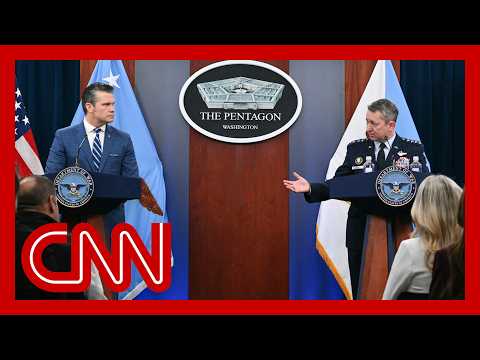
Source material: Live: Defense Secretary Hegseth and General Caine hold Pentagon briefing
Summary
Recent military operations have significantly degraded Iran's military capabilities, leading to a ceasefire agreement. The U.S. has achieved its military objectives, dismantling key components of Iran's defense and offensive capabilities. The new Iranian regime, recognizing its weakened position, has agreed to terms that prevent it from acquiring nuclear weapons. This shift in dynamics reflects a broader strategy by the U.S. to compel Iran to negotiate from a position of strength.
Operation Epic Fury has been characterized by overwhelming military success, with extensive strikes against Iranian military assets. The U.S. military's readiness and operational effectiveness have been highlighted as crucial factors in achieving these objectives. Despite the current ceasefire, the U.S. remains vigilant and prepared to respond to any violations by Iran, emphasizing a commitment to regional stability and security.
The U.S. has demonstrated its capability to monitor Iranian activities closely, particularly regarding nuclear materials. However, the complexities of geopolitical dynamics and the potential for Iran to adapt its military strategies pose ongoing challenges. The situation remains fluid, with the U.S. prepared to take necessary actions to ensure compliance with the ceasefire and prevent any resurgence of Iranian military threats.
Perspectives
short
U.S. Government
- Claims military operations have decimated Irans military capabilities
- Highlights the successful execution of Operation Epic Fury
- Proclaims that Irans nuclear ambitions will be thwarted under the new regime
- Emphasizes the importance of U.S. military readiness and operational success
- Affirms commitment to monitoring Irans nuclear activities closely
- States that the ceasefire is a result of U.S. military pressure
Iranian Regime
- Denies the extent of military defeat claimed by the U.S
- Accuses the U.S. of using military force to impose its will
- Questions the legitimacy of the ceasefire agreement
- Claims to maintain operational capabilities despite U.S. strikes
- Rejects the notion that the new regime will comply with U.S. demands
- Warns against underestimating Irans resilience and ability to adapt
Neutral / Shared
- Acknowledges the ongoing ceasefire as a temporary measure
- Recognizes the potential for future negotiations between the U.S. and Iran
- Notes the importance of regional allies in supporting U.S. operations
Metrics
military_effectiveness
combat ineffective for years to come
Iran's military capability
This indicates a significant shift in regional military balance.
Epic Fury decimated Iran's military and rendered it combat ineffective for years to come.
military_strikes
more than 800 strikes
total military strikes conducted
This showcases the scale of military operations against Iran.
in last night's wave of more than 800 strikes
combat_power_usage
less than 10 percent of America's total combat power %
percentage of U.S. combat power used
This suggests a strategic restraint in military engagement.
using less than 10 percent of America's total combat power
military_operations
13 members of our American joint force who were killed in action thus far during this operation units
casualties during Operation Epic Fury
This highlights the human cost of military operations and the sacrifices made by service members.
I want to start this morning by honoring the 13 members of our American joint force who were killed in action thus far during this operation.
military_operations
zero American casualties units
casualties during the rescue operation
This indicates the effectiveness of the operation and the strategic planning involved.
Zero American casualties.
targets_struck
more than 13,000 units
total targets struck during Operation Epic Fury
This indicates the scale of military engagement and operational intensity.
the United States Joint Force has struck more than 13,000 targets
naval_fleet_destruction
more than 90 percent %
percentage of the Iranian Navy's fleet destroyed
This significantly alters the balance of naval power in the region.
we assess that we've sunk more than 90 percent of their regular fleet
air_defense_systems_destroyed
approximately 80 percent %
percentage of Iran's air defense systems destroyed
This reduces Iran's ability to defend against aerial threats.
Sent-com forces destroyed approximately 80 percent of Iran's air defense systems
Key entities
Timeline highlights
00:00–05:00
Recent military actions have rendered Iran's military ineffective for years, leading to a ceasefire to avoid further destruction. The U.S.
- Recent military actions have severely diminished Irans military effectiveness, likely leaving it unable to engage in combat for years. This outcome highlights the success of U.S
- Irans efforts to counter U.S. military actions have been unsuccessful, as shown by their ineffective missile attacks on American targets
- The U.S. military, working alongside Israeli forces, successfully met all operational goals, resulting in the dismantling of Irans naval and air capabilities
- Under intense military pressure, the Iranian government chose to pursue a ceasefire to prevent further destruction, indicating their awareness of the severe consequences of continued conflict
- The previous Iranian leadership faced significant repercussions, with many high-ranking officials removed during the conflict. This serves as a cautionary tale for the current regime regarding the risks of ongoing hostility
- The U.S. had the ability to cause even more extensive damage to Irans infrastructure but opted for restraint by agreeing to a ceasefire
05:00–10:00
The new Iranian regime has agreed to a ceasefire, ensuring they will not possess nuclear weapons and allowing for the removal of nuclear materials. Operation Epic Fury has significantly degraded Iran's military strength, demonstrating U.S.
- The new Iranian regime agreed to a ceasefire under military pressure, ensuring they will not possess nuclear weapons and allowing for the removal and monitoring of nuclear materials
- Operation Epic Fury has significantly degraded Irans military strength, showcasing U.S. firepower and serving as retribution for previous Iranian assaults on American forces
- The U.S. military demonstrated operational effectiveness by successfully recovering downed pilots during the operation
- The sacrifices of American service members are honored, emphasizing the serious stakes in U.S.-Iran relations
- The Secretary of Defense reaffirmed U.S. commitment to enforcing ceasefire compliance, highlighting the importance of maintaining peace
- The briefing concluded with a reminder for U.S. forces to remain vigilant as the situation continues to evolve
10:00–15:00
The joint force successfully dismantled Iran's missile and naval capabilities, achieving the military objectives set by the President. The ongoing ceasefire indicates a temporary halt in hostilities, but the joint force remains prepared for potential renewed combat operations.
- The joint force met the Presidents military objectives by dismantling Irans missile and naval capabilities, crucial for limiting Irans regional influence
- While the ceasefire is in effect, the joint force remains ready to resume combat operations, highlighting the ongoing risks of renewed conflict
- Leadership from U.S. Central Command and military branches was essential for the operations success
- The U.S. has significantly weakened Irans military by targeting over 13,000 sites, which is expected to reduce Irans threat to U.S
- The Iranian Navy has faced severe losses, with estimates indicating that over 90 percent of its fleet has been destroyed, shifting the regional power dynamics
- Effective command and control systems enabled the joint force to respond quickly to threats, which is vital for maintaining operational dominance
15:00–20:00
The U.S. has significantly degraded Iran's military capabilities by destroying over 90 percent of its naval mines and a large portion of its defense industry.
- The U.S. has severely weakened Irans military by destroying over 90 percent of its naval mines and a large part of its defense industry, limiting Irans future military capabilities
- The Joint Force conducted over 13,000 strikes, focusing on key missile and drone facilities, which emphasizes the scale of U.S. military engagement
- Operation Epic Fury involved the deployment of more than 50,000 American service members, showcasing the operations extensive scale and commitment to U.S. security
- The successful rescue of an Air Force fighter crew demonstrates the courage and teamwork of American forces, reflecting their dedication to mission success
- Logistical advancements enabled the Joint Force to execute unprecedented missions, including long-range bomber operations, highlighting U.S. operational flexibility
- Despite the ceasefire, the U.S. is prepared to resume combat operations if the situation demands
20:00–25:00
The joint force has demonstrated readiness and mutual trust, which have been crucial for operational success. The U.S.
- The joint forces readiness and mutual trust have been essential for success in operations, enabling effective responses to threats and protection of lives
- The recent rescue operation underscores the professionalism and adaptability of U.S. military personnel in overcoming challenges
- The U.S. military will continue its regional presence to ensure adherence to the ceasefire and prepare for potential actions against Iran
- The Secretary reaffirmed the U.S. commitment to preventing Iran from developing nuclear capabilities, particularly regarding uranium enrichment
- Operational success is bolstered by collaboration across intelligence and civilian leadership, which is crucial for achieving strategic goals
- The Secretary honored the sacrifices of service members and their families, emphasizing the importance of recognizing contributions to maintain morale
25:00–30:00
The Iranian regime has adopted a more flexible stance in ceasefire negotiations with the U.S. due to the recognition that achieving nuclear capabilities is unlikely.
- The Iranian regime recognizes that achieving nuclear capabilities is unlikely, which has led to a more flexible stance in ceasefire negotiations with the U.S
- Irans assurance of safe passage through the Strait of Hormuz depends on coordination with its military, raising concerns about their true intentions
- The U.S. has developed military responses to any ceasefire violations by Iran, highlighting its readiness to take action if needed
- U.S. surveillance of Iranian military movements is intensifying, as any repositioning could expose their forces to potential strikes
- The U.S. insists that any future agreements with Iran must require the complete surrender of enriched uranium
- The Presidents firm stance on military options has been instrumental in prompting Iran to engage in negotiations