Politics / Israel
Israel-Lebanon Negotiations and Regional Security
Israel and Lebanon have initiated unprecedented direct negotiations mediated by the U.S. Secretary of State, focusing on disarmament and regional stability. The Lebanese government is calling for a ceasefire, while Israel insists on Hezbollah's disarmament as a precondition for peace.
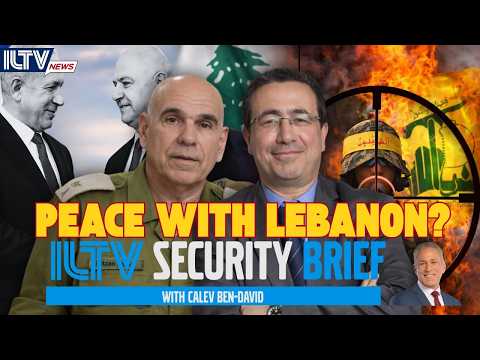
Source material: ILTV Security Brief | Can Israel Make Peace With Lebanon?
Summary
Israel and Lebanon have initiated unprecedented direct negotiations mediated by the U.S. Secretary of State, focusing on disarmament and regional stability. The Lebanese government is calling for a ceasefire, while Israel insists on Hezbollah's disarmament as a precondition for peace.
Ongoing military operations against Hezbollah are viewed as essential by Israel to maintain pressure on the group. The complexity of the situation is heightened by the need for Syria's involvement in resolving border disputes, which is critical for a comprehensive peace agreement.
The U.S. has implemented a naval blockade of Iranian ports in response to escalating tensions, aiming to weaken Iran's support for Hezbollah. This blockade is seen as a necessary measure to influence negotiations regarding Iran's nuclear program.
Ambassador Michael Harari emphasizes the importance of integrating military and political strategies to effectively counter Hezbollah. He notes that relying solely on military action will not dismantle the group, highlighting the need for a long-term diplomatic approach.
Perspectives
Analysis of Israel-Lebanon negotiations and regional security dynamics.
Israel
- Insists on Hezbollahs disarmament as a precondition for peace
- Maintains military operations to counter Hezbollahs influence
Lebanon
- Calls for an immediate ceasefire to facilitate political progress
- Lacks the military capability to dismantle Hezbollah independently
Neutral / Shared
- Both sides are engaged in negotiations despite ongoing tensions
Metrics
other
21 IDF soldiers units
Casualties from an anti-tank missile attack
Highlights the ongoing violence and its impact on military personnel
part of a cell that killed 21 IDF soldiers with an anti-tank missile
other
83 units
historical context of peace treaty with Lebanon
This highlights the fragility of peace agreements in the region
83 we had a full peace treaty with Lebanon that collapse
other
95%
percentage of threats coming from northern the Latani
Understanding the source of threats is crucial for effective military strategy
Most of it 95% of it are coming northern the Latani and mainly from the Baka Valley.
Key entities
Timeline highlights
00:00–05:00
The U.S. has initiated a naval blockade of Iranian ports amid rising tensions in the Strait of Hormuz.
- The U.S. has established a naval blockade of Iranian ports due to escalating tensions in the Strait of Hormuz
- Israels ambassador to the U.S. is participating in direct negotiations with Lebanon, facilitated by Secretary of State Mark Arubio
- Lebanon is calling for a ceasefire, while Israel demands Hezbollahs disarmament, highlighting the intricate nature of the talks. Both sides are likely to persist in discussions despite Hezbollahs ongoing threats
- The Israeli military has ramped up operations against Hezbollah, focusing on its infrastructure and personnel in Lebanon. This military strategy is viewed as essential to support the ongoing political negotiations
- Ambassador Michael Harari stresses the need for a political framework to complement military efforts against Hezbollah. He acknowledges that dismantling the group will require a long-term approach, given the current Lebanese governments limitations
- Clashes in Gaza and the actions of Israeli forces against armed terrorists illustrate the precarious security situation in the region. These events complicate diplomatic efforts and underscore the urgent need for conflict resolution
05:00–10:00
The Lebanese government is calling for an Israeli ceasefire, citing ongoing hostilities as a barrier to political progress. Israel maintains that military operations against Hezbollah are necessary to ensure the Lebanese military can dismantle the group's influence.
- The Lebanese government claims that ongoing hostilities hinder political progress and is calling for an Israeli ceasefire, while Israel insists that military operations against Hezbollah must continue
- Israel acknowledges the necessity of dialogue with Lebanon but believes that sustained military pressure on Hezbollah is essential for the Lebanese military to gradually dismantle the groups influence
- The situation is complicated by the need for Syrias involvement in resolving border disputes, which must be addressed for a comprehensive peace agreement to be possible
- Israel aims to strengthen the Lebanese government to diminish Hezbollahs power, but a ceasefire could unintentionally enhance Hezbollahs position, complicating Israels strategy
- It is crucial for the Israeli public to understand the long-term strategy against Hezbollah to maintain support, despite the challenges of conveying the complexities of military actions
- General Nureel raises concerns about the ambiguity of Israels military strategy in Lebanon, questioning whether a full occupation is being considered to achieve its objectives
10:00–15:00
Israel is considering military benchmarks to counter Hezbollah's influence and ensure security for its villages. Ongoing negotiations in Washington present Lebanon with an opportunity to strengthen its government and address Hezbollah's role in regional stability.
- The public demands clear benchmarks for military actions against Hezbollah to ensure security and prevent attacks on Israeli villages. Establishing these benchmarks is vital for maintaining safety in the region
- Israels primary objective is to secure a significant area to reduce the threat from Hezbollah, potentially necessitating ground maneuvers deeper into Lebanon if the Lebanese military fails to counter the group effectively
- General Nitzan recommends that Lebanon consider changing its military leadership to improve its effectiveness against Hezbollah, which could empower the government to take stronger actions and enhance regional stability
- The possibility of involving French troops in operations against Hezbollah contrasts with Israels reluctance for foreign military involvement, highlighting the complexities of international cooperation in Lebanons security challenges
- Ambassador Harari stresses that a successful strategy against Hezbollah must integrate both military and political efforts, as relying solely on military action will not dismantle the group
- Current negotiations in Washington offer Lebanon a crucial chance to strengthen its government and address Hezbollahs influence, which is essential for achieving lasting peace and security in the region
15:00–20:00
The disarmament of Hezbollah is complicated by the ongoing support from Iran, which continues to back the group financially. Achieving a reduction in Hezbollah's influence requires a combination of military and diplomatic efforts to diminish Iran's role.
- The disarmament of Hezbollah may be complicated by the ongoing strength of the Iranian regime, which continues to support the group. This situation raises concerns about whether Hezbollah can be weakened while Iran remains a significant backer
- A reduction in Iranian financial support could shift Hezbollahs position, potentially leading them to recognize a change in their strategic environment. Achieving this requires a combination of military and diplomatic efforts to diminish Irans influence
- The current ceasefire in the Iran-U.S. conflict is precarious, with the potential for collapse at any moment
- Recent developments indicate that the U.S. is considering extending the ceasefire, reflecting a desire to continue diplomatic efforts
- Ambassador Harari emphasizes the importance of patience in the diplomatic process, as both the U.S. and Iran appear willing to explore negotiations
- The Israeli government supports the U.S. strategy of a naval blockade against Iran, viewing it as a necessary measure to counteract Iranian aggression
20:00–25:00
Israel is considering a maritime blockade against Iran to influence nuclear negotiations, but the effectiveness of such a strategy remains uncertain. The complexity of achieving regime change in Iran complicates future agreements and regional stability.
- The maritime blockade against Iran is viewed as a potentially effective strategy to influence nuclear negotiations, with economic pressure possibly prompting Iran to alter its position on enriched uranium
- Delays in the blockades implementation raise concerns about U.S. strategic choices at the conflicts outset
- Achieving regime change in Iran is complex and uncertain, making any future agreements difficult without a shift in leadership
- The U.S. may have initially refrained from the blockade to keep energy prices stable, indicating broader economic priorities
- President Trumps willingness to engage with the current Iranian regime could limit Israels operational freedom, necessitating caution
- The situation highlights the diverse U.S. interests in the region, which go beyond just Israel
25:00–30:00
Israel is engaging in diplomatic negotiations with Lebanon while considering military strategies to counter Hezbollah's influence. The sustainability of the ceasefire remains uncertain as both the U.S.
- The sustainability of the ceasefire remains questionable, as both the U.S. and Iran seem to support it for their political agendas
- The U.S. blockade of Iranian ports is considered a critical action that should have been enacted earlier in the conflict
- President Trump and Prime Minister Netanyahu need to commit to long-term strategies that integrate military and diplomatic efforts to effectively counter threats from Iran and its proxies
- Forming an international coalition to bolster the Lebanese government and enhance its military strength is essential for countering Hezbollah and stabilizing the region
- Recent military operations against Hezbollah indicate that the U.S. and Israel are prepared to use force when necessary