Politics / Israel
Israel-Lebanon Diplomatic Talks and Military Operations
Historic diplomatic talks between Israel and Lebanon have commenced in Washington, marking the first such meeting in over 40 years. These discussions occur amid ongoing military conflict, highlighting the complexities of achieving peace in the region.
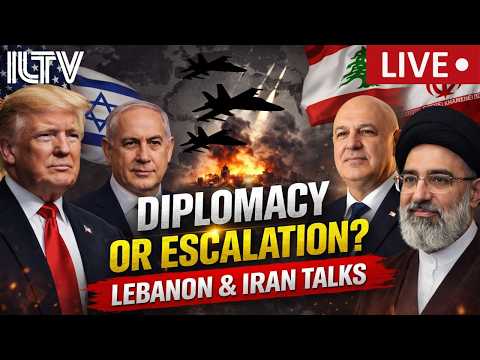
Source material: On The Hour – April 15, 2026 | Israel–Lebanon Historic Talks | Iran Blockade & US Deal Push
Summary
Historic diplomatic talks between Israel and Lebanon have commenced in Washington, marking the first such meeting in over 40 years. These discussions occur amid ongoing military conflict, highlighting the complexities of achieving peace in the region.
U.S. Secretary of State Marco Rubio emphasized the goal of establishing lasting peace that ensures security and prosperity for both nations. Lebanese President Joseph Aoun expressed hope that the talks could alleviate suffering in Lebanon.
The Israeli military has intensified operations in southern Lebanon to weaken Hezbollah, demonstrating Israel's commitment to national security while pursuing diplomatic dialogue. Significant military actions have been reported, including the encirclement of key towns and destruction of Hezbollah infrastructure.
The U.S. has enacted a maritime blockade of Iran, aiming to restrict its oil exports and military supplies. This blockade is part of a broader strategy to pressure Iran into negotiations regarding its nuclear program and regional influence.
Perspectives
Analysis of the complex geopolitical situation involving Israel, Lebanon, and Iran.
Israel
- Emphasizes military operations to weaken Hezbollah and ensure national security
- Seeks to establish a lasting peace through diplomatic negotiations
Lebanon
- Calls for the Lebanese army to be empowered to manage security and stability
- Expresses hope for a ceasefire and improved relations with Israel
Neutral / Shared
- Ongoing military actions complicate the potential for successful negotiations
Metrics
other
130 rockets
rockets launched from a specific village
This indicates the scale of ongoing military engagement and the threat level in the region
some 130 rockets have been launched from that village since the start of the operation
other
more than 10,000 troops units
US military involvement in the blockade of Iran
This significant troop presence indicates a strong commitment to enforcing the blockade
The US military says more than 10,000 troops, along with warships and aircrafts, are taking part in the blockade of Iran.
other
more than 700,000 people
displaced population in southern Lebanon
Understanding the scale of displacement is crucial for assessing the humanitarian impact of the conflict
the population of, I think, more than 700,000 people
other
15 trips to the line units
Deni Avdija's performance in a recent NBA game
High foul shot attempts indicate an aggressive playing style, which can attract both praise and criticism
he had like 15 trips to the line last night
Key entities
Timeline highlights
00:00–05:00
Historic diplomatic talks between Israel and Lebanon have commenced in Washington, marking the first such meeting in over 40 years. Concurrently, military operations continue along the northern border as both nations navigate ongoing conflict and the U.S.
- Diplomatic talks between Israel and Lebanon have begun in Washington, the first such meeting in over 40 years, amid ongoing military conflict that underscores the need for peace
- U.S. Secretary of State Marco Rubio highlighted the aim of achieving lasting peace that guarantees security and prosperity for both Israel and Lebanon
- Lebanese President Joseph Aoun expressed optimism that the talks could reduce suffering in Lebanon and called for the Lebanese armys deployment along the international border, indicating a potential change in military strategy
- The Israeli military has escalated operations in southern Lebanon to weaken Hezbollah, demonstrating Israels commitment to national security while pursuing diplomatic dialogue
- The IDF reported significant military actions, including encircling key towns and destroying Hezbollah infrastructure, reflecting the ongoing threat from Hezbollah and Israels resolve to address it
- The U.S. has fully enacted a maritime blockade of Iran, claiming maritime superiority in critical regional waterways
05:00–10:00
Historic diplomatic talks between Israel and Lebanon are taking place in Washington, marking a significant moment in their relations. Concurrently, military operations continue along the northern border, complicating the potential for peace.
- The U.S. has implemented a maritime blockade of Iran, aiming to restrict its oil exports and military supplies
- President Trump indicated that diplomatic talks with Iran could resume soon, potentially within days. This suggests a willingness to engage in negotiations despite ongoing tensions
- The U.S. is pushing for a long-term freeze on Irans nuclear enrichment, while Iran has proposed a shorter limit
- Vice President Fance emphasized the need for Iran to act as a normal country to receive economic benefits. This reflects a broader strategy to integrate Iran into the global economy while preventing nuclear proliferation
- There is a possibility of a ceasefire in Lebanon, contingent on U.S. pressure
- The ongoing talks between Israel and Lebanon are historic, marking a potential turning point in their relations. However, their immediate impact on the ground remains uncertain, indicating a complex path ahead
10:00–15:00
Historic diplomatic talks between Israel and Lebanon are taking place in Washington, marking a significant moment in their relations. However, ongoing military operations complicate the potential for peace.
- Negotiations between Israel and Lebanon present a historic chance for peace, but Hezbollahs influence poses a significant challenge. Addressing Irans role in the region is crucial for the talks success
- Lebanon is struggling with governance and violence, complicating the negotiation process with Israel. This instability undermines the potential for effective peace efforts
- The Lebanese government is open to negotiating mutual recognition with Israel, marking a significant shift. However, their lack of control over Hezbollah remains a major obstacle to lasting peace
- A dual strategy is needed that combines military action against Hezbollah with diplomatic efforts to strengthen Lebanon. Empowering the Lebanese army is essential for effectively countering Hezbollah
- The timeline for withdrawing Israeli forces from southern Lebanon may exceed a year, depending on the weakening of Hezbollah. A gradual approach is necessary to ensure the Lebanese army can maintain security
- Addressing Irans support for Hezbollah and other proxies is vital for stabilizing Lebanon. Weakening Iran is seen as a key factor in facilitating a peace agreement
15:00–20:00
Historic diplomatic talks between Israel and Lebanon are taking place in Washington, marking a significant moment in their relations. However, ongoing military operations complicate the potential for peace.
- The Lebanese armys inability to effectively confront Hezbollah complicates Israels military strategy and raises doubts about achieving a ceasefire and withdrawal
- While there is potential for a ceasefire, the Lebanese governments limited power undermines optimism; strengthening it could enhance legitimacy and shift the balance against Hezbollah
- Introducing an international force to replace UNIFIL has been suggested to stabilize the region, but its success depends on diminishing Hezbollahs influence
- Israels past negative experiences with international forces in Lebanon foster skepticism about their effectiveness, suggesting that intervention would only be feasible if Hezbollah is significantly weakened
- Maintaining control over southern Lebanon is crucial for Israel to leverage against Hezbollah and manage the return of displaced populations while pressuring the Lebanese government
- The timeline for a potential withdrawal from southern Lebanon remains uncertain, with estimates ranging from six months to a year, requiring careful planning for a credible international force and ceasefire
20:00–25:00
Historic diplomatic talks between Israel and Lebanon are taking place in Washington, marking a significant moment in their relations. However, ongoing military operations complicate the potential for peace.
- The situation in Lebanon shows that an international force cannot effectively counter Hezbollah, emphasizing Israels need to maintain territorial control and weaken Hezbollahs power
- Skepticism surrounds the Lebanese Armys ability to confront Hezbollah, indicating that Israel must take proactive security measures in the region for the foreseeable future
- A NATO-led international force is proposed for the future, contingent on a significant reduction of Hezbollahs strength, reflecting caution based on past failures with UNIFIL
- The U.S. maritime blockade on Iran is viewed as a necessary action that should have been implemented sooner
- Reports suggest a possible extension of the ceasefire between the U.S. and Iran, which could complicate Israels strategic planning
- The blockade is part of a larger negotiation strategy, indicating that military actions will continue alongside diplomatic efforts
25:00–30:00
Historic diplomatic talks between Israel and Lebanon are taking place in Washington, marking a significant moment in their relations. Ongoing military operations complicate the potential for peace.
- President Trump is using the U.S. maritime blockade on Iran to exert pressure on both Iran and China, given Chinas dependence on Iranian oil
- The potential extension of the ceasefire is a bargaining chip for negotiations, but Trump is unlikely to agree to terms without securing critical concessions on Irans nuclear program. His goal is to prevent Iran from enriching uranium for at least a decade, diverging from past agreements
- Trumps objective includes preventing Iran from controlling vital maritime routes, which could have serious implications for regional stability. This approach reflects a broader strategy to curtail Irans influence and military capabilities
- Despite a stated preference for diplomacy, Trump is ready to escalate military action if negotiations do not yield results. This readiness indicates a willingness to intensify conflict should Iran fail to comply with U.S
- Any potential nuclear agreement with Iran may leave unresolved issues, particularly regarding its ballistic missile program and support for militant groups. This raises significant security concerns for Israel in the post-conflict landscape
- The evolving dynamics of U.S.-Iran relations highlight the complexity of regional conflicts. The outcomes of current negotiations will have enduring effects on stability in the Middle East