Politics / Indonesia
Iran-US Negotiations and Regional Stability
Negotiations between Iran and the United States in Islamabad have stalled, raising concerns about Middle Eastern stability. The 21-hour talks ended without breakthroughs, highlighting the complexities of resolving international issues. Both parties engaged in mutual blame, reflecting deep-seated tensions surrounding Iran's nuclear ambitions and regional security.
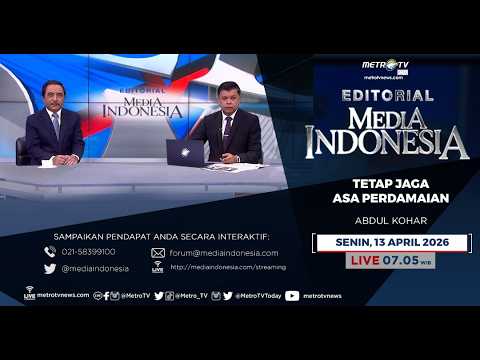
Source material: Tetap Jaga Asa Perdamaian | Bedah Editorial MI
Summary
Negotiations between Iran and the United States in Islamabad have stalled, raising concerns about Middle Eastern stability. The 21-hour talks ended without breakthroughs, highlighting the complexities of resolving international issues. Both parties engaged in mutual blame, reflecting deep-seated tensions surrounding Iran's nuclear ambitions and regional security.
The ongoing conflict has created deep-seated issues complicating negotiation efforts. Indonesia is urged to adopt proactive measures to mitigate risks associated with regional instability and energy price fluctuations. The assumption that Indonesia can effectively navigate the geopolitical landscape relies on untested premises regarding its diplomatic efforts.
Negotiations between the U.S. and Iran have stalled, raising alarms about potential regional instability. The reliance on Pakistan's influence may be misguided, as it fails to account for broader geopolitical dynamics and the potential for escalation if negotiations continue to falter.
The situation remains precarious, with entrenched historical animosities and a lack of trust between the parties. The potential for renewed tensions is significant, particularly given the critical role of the Strait of Hormuz in global energy supply, which remains unaddressed in current negotiations.
Perspectives
short
Iran
- Accuses the U.S. of aggression and unrealistic demands
- Maintains a firm stance on nuclear ambitions
- Seeks recognition of its sovereignty and regional influence
United States
- Claims Iran has not shown flexibility in negotiations
- Emphasizes the need for a strong stance against nuclear proliferation
- Accuses Iran of destabilizing the region
Neutral / Shared
- Highlights the role of Pakistan as a mediator
- Notes the ongoing concerns about global energy distribution
- Acknowledges the complexity of the geopolitical landscape
Metrics
duration
21 hours
length of the negotiations
The duration indicates the seriousness of the discussions despite the lack of outcomes.
the biggest expectation is that it is not wrong. Because, the reason for the war is still there.
Key entities
Timeline highlights
00:00–05:00
Negotiations between Iran and the United States in Islamabad have stalled, raising concerns about Middle Eastern stability. The 21-hour talks ended without breakthroughs, highlighting the complexities of resolving international issues.
- The negotiations in Islamabad between Iran and the United States have stalled, raising global concerns about Middle Eastern stability
- This meeting is notable as it marks the first direct engagement between Iran and the U.S. since the Iranian Revolution, suggesting a potential shift in diplomatic relations
- The 21-hour talks concluded without any breakthroughs, resulting in mutual blame, which underscores the difficulties of resolving complex international issues quickly
- Key issues persist around Irans nuclear ambitions and control of the Strait of Hormuz, both of which are vital for regional security and could influence global energy markets
- Despite the deadlock, both parties recognize that diplomatic avenues remain open, emphasizing the importance of continued dialogue to avoid conflict
- Indonesia is encouraged to adopt proactive strategies in light of the negotiation failures, as rising energy prices and inflation could put pressure on its economic stability
05:00–10:00
The ongoing conflict has created deep-seated issues complicating negotiation efforts. Indonesia is urged to adopt proactive measures to mitigate risks associated with regional instability and energy price fluctuations.
- The ongoing conflict has created deep-seated issues like suspicion and trauma, complicating negotiation efforts and indicating that setbacks should not be seen as total failures
- The current deadlock carries significant risks, as renewed tensions could disrupt regional stability and global energy distribution, directly impacting energy prices worldwide
- Indonesia must adopt proactive measures in this geopolitical context, as uncertainty in the Middle East could lead to domestic energy price spikes and inflation
- This situation offers Indonesia a chance to advance its energy independence agenda, aligning with President Prabowo Subiantos vision to reduce reliance on external energy supplies
- Indonesia is urged to take a constructive diplomatic role, using its active foreign policy to promote de-escalation and reinforce the necessity of peace on a global scale
- Effective diplomacy requires flexibility and realism, as rigid stances can prolong stalemates, while rational compromises are essential for achieving sustainable solutions
10:00–15:00
Negotiations between the U.S. and Iran have stalled, raising alarms about potential regional instability.
- Negotiations between the U.S. and Iran have stalled, raising alarms about the potential for increased regional instability
- Pakistans mediation is vital due to its strong relationships with both the U.S. and Iran, which could facilitate dialogue
- Historical animosities between the U.S. and Iran complicate negotiations, as past conflicts have created lasting distrust
- Indonesia must take proactive steps to protect its energy security, as instability in the Middle East could lead to rising energy prices and inflation
- The current geopolitical situation emphasizes the need for Indonesia to pursue energy independence through diversification and strategic reserves
- A collaborative international approach is essential for peace, and Indonesia should engage actively in multilateral discussions to prioritize global stability
15:00–20:00
Negotiations between the U.S. and Iran in Islamabad ended without a breakthrough, highlighting ongoing tensions.
- Negotiations in Islamabad between the U.S. and Iran ended without a breakthrough, underscoring persistent tensions
- Both parties acknowledge that diplomatic avenues remain open, especially with Pakistans mediation, indicating that war is not a feasible option
- The international community views the failure of these talks as a minor setback rather than a definitive end to peace efforts, given the extensive humanitarian and economic fallout from U.S. actions
- Deep-rooted suspicions and traumas complicate negotiations, and a single failure should not be seen as a total diplomatic collapse
- The potential for renewed tensions poses significant risks, particularly for regional stability and global energy supply, with the Strait of Hormuz being a critical point
- Indonesia must proactively address uncertainties in the Middle East to prevent domestic economic repercussions, emphasizing the need for energy independence