Politics / India
India politics page with daily media monitoring across NDTV, ANI, PTI and Times of India, structured summaries of domestic political developments and a country-level press overview.
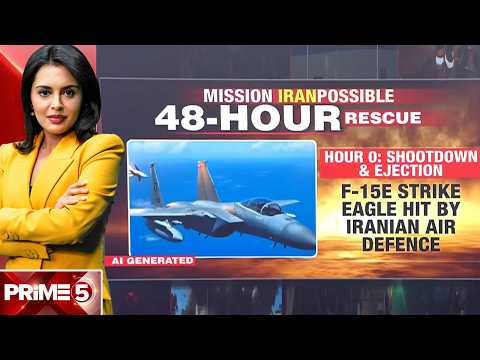
US Pilot Rescue Iran | Inside The 48-Hour US Pilot Rescue From Iran
Summary
A high-risk rescue operation was initiated after an F-15E Strike Eagle was shot down over Iran, resulting in the pilot's ejection. Emergency beacons activated automatically, allowing satellites and ISR assets to locate the pilot in the Zagros Mountains.
Within the first hour, H-60 helicopters and MC-130 aircraft were deployed, successfully extracting the pilot. However, the weapon system operator remained missing, prompting Iranian forces to launch a massive search operation.
During the next phase, American fighters navigated hostile territory while the weapon system operator used terrain for cover and sent encrypted signals. Air cover was provided by MQ-9 Reaper drones, which tracked Iranian forces and conducted precision strikes.
Electronic warfare tactics were employed to disrupt Iranian search operations, creating a deceptive environment. The final extraction involved special forces operating under the cover of darkness to locate and extract the weapon system operator.
Perspectives
short
US Military Operations
- Initiates rapid rescue operation after pilot ejection
- Deploys advanced technology for location tracking
- Conducts successful extraction of the pilot within hours
- Utilizes electronic warfare to disrupt enemy operations
- Employs special forces for final extraction under cover
Iranian Forces
- Launches extensive search operations for the missing operator
- Establishes checkpoints and patrols in the region
- Attempts to counter American operations with ground forces
Neutral / Shared
- Highlights the role of emergency beacons in rescue missions
- Notes the challenges faced in hostile environments
Metrics
time
48 hours
duration of the rescue operation
The extended duration highlights the complexities of military rescue missions in hostile environments.
the 48 hour rescue of the second pilot
time
first hour hours
time taken for initial rescue success
Rapid response in the first hour was crucial for the pilot's extraction.
H-60 helicopters and MC-130 were deployed apart from that.
time
36 to 48 hours
final extraction phase
The final hours involved critical operations to ensure safe extraction.
final hour hour 36 to hour 48 this is the final extraction.
Key entities
Timeline highlights
00:00–05:00
A rescue operation was launched after an F-15E Strike Eagle was shot down over Iran, leading to the pilot's ejection and subsequent extraction. The weapon system operator remained missing, prompting intensified search efforts by Iranian forces and the use of electronic warfare tactics by American forces.
- The rescue operation was initiated after an F-15E Strike Eagle was downed over Iran, leading to the pilots ejection and a swift response to locate him in the Zagros Mountains
- Emergency beacons activated by the pilot enabled rapid satellite tracking, which was essential for launching the combat search and rescue mission
- Special forces quickly deployed HH-60 helicopters and MC-130 aircraft within the first hour, achieving a significant early success in extracting the pilot
- The weapon system operator remained missing, prompting Iranian forces to escalate their search efforts, underscoring the dangers faced by American personnel in hostile areas
- American air support, including MQ-9 Reaper drones, conducted targeted strikes to secure a safe area for the pilot, effectively reducing threats from Iranian forces
- In the missions final hours, electronic warfare tactics were used to mislead Iranian search operations, which was crucial for the safe extraction of the weapon system operator