Politics / India
Tamil Nadu Politics and Elections
Karti Chidambaram discusses the religious landscape of Tamil Nadu, emphasizing the coexistence of personal faith and political ideology. He counters the misconception that the Dravidian movement is anti-religion, asserting that Tamil Nadu is deeply religious and practices absolute religious freedom. Chidambaram highlights the DMK government's facilitation of religious ceremonies, challenging the BJP's narrative about the state's political climate.
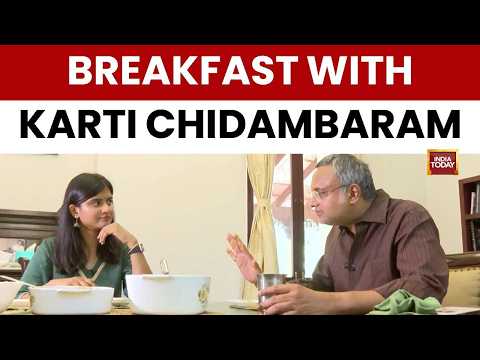
Source material: Breakfast With Karti Chidambaram | Tamil Nadu Singapenne | Akshita Nandagopal | India Today
Summary
Karti Chidambaram discusses the religious landscape of Tamil Nadu, emphasizing the coexistence of personal faith and political ideology. He counters the misconception that the Dravidian movement is anti-religion, asserting that Tamil Nadu is deeply religious and practices absolute religious freedom. Chidambaram highlights the DMK government's facilitation of religious ceremonies, challenging the BJP's narrative about the state's political climate.
Chidambaram critiques the NTK party candidate's lack of local ties, predicting his defeat due to insufficient connection with voters. He argues that the AMMK party will dissolve under the BJP's strategy of fragmenting political parties in Tamil Nadu, emphasizing the need for grounded candidates who resonate with the electorate.
The ADMK party's loss of independence to the BJP raises concerns about its future. Chidambaram warns against the imposition of a third language in education, likely Hindi, which threatens Tamil Nadu's linguistic identity. He stresses the importance of maintaining the state's two-language system, advocating for local autonomy in educational policies.
Chidambaram discusses the unique culinary traditions of Chettinad and the potential cultural conflicts arising from BJP's influence. He emphasizes the need for the Congress party to assert its identity within the DMK-led alliance while navigating complex coalition politics, highlighting the importance of projecting a relatable leader.
Perspectives
Analysis of Tamil Nadu's political landscape and the role of various parties.
Karti Chidambaram and Congress Party
- Emphasizes coexistence of personal faith and political ideology in Tamil Nadu
- Critiques the NTK candidates lack of local ties and predicts his defeat
- Warns against the imposition of Hindi as a third language in education
- Highlights the importance of local culinary traditions and cultural identity
- Stresses the need for Congress to project a relatable leader in Tamil Nadu
- Critiques the rise of celebrity politicians for lacking clear policy proposals
BJP and NTK Party
- Accused of misunderstanding Tamil Nadus cultural and religious dynamics
- Criticized for attempting to impose a third language in education
- Predicted to fragment local political parties like AMMK
- Challenged for promoting celebrity candidates without substantial policies
Neutral / Shared
- Acknowledges the complexity of Tamil Nadus political landscape
- Recognizes the challenges faced by all political parties in the region
Metrics
other
the maximum number of temples
temple density in Tamil Nadu
This highlights the state's strong religious identity.
Tamil Nadu is the most Hindu of all states. We have per kilometer the maximum number of temples.
other
the AMMK as a political party will not exist in the next election
Chidambaram's prediction about AMMK's future
This suggests a significant shift in Tamil Nadu's political landscape.
the AMMK as a political party will not exist in the next election
other
voting for the AMMK is akin to voting for the BJP
Chidambaram's warning about AMMK's alignment with BJP
This highlights the perceived risks of supporting AMMK in the upcoming elections.
voting for the AMMK is akin to voting for the BJP
other
the BJP will start making its moves, you know, breaking the party and all these things
Chidambaram's view on BJP's strategy post-election
Indicates a potential destabilization of existing political structures in Tamil Nadu.
the BJP will start making its moves, you know, breaking the party and all these things
other
they will do creeping acquisition of Tamil Nadu
Chidambaram's concern about BJP's influence
Suggests a long-term strategy that could reshape Tamil Nadu's governance.
they will do creeping acquisition of Tamil Nadu
other
the first vessel, they will cannibalize and balcanize, will be the AMMK
Chidambaram's prediction about AMMK's fate
Highlights the vulnerability of smaller parties in the face of larger political forces.
the first vessel, they will cannibalize and balcanize, will be the AMMK
other
third language will be Hindi
potential educational policy change
This could undermine Tamil Nadu's cultural heritage.
If they ever bring in a third language, that third language will be Hindi.
other
postman who can't read Tamil
impact of central services on local language
This indicates a failure in local governance and resource allocation.
we have postman who can't read Tamil now.
Key entities
Timeline highlights
00:00–05:00
Karti Chidambaram emphasizes the coexistence of personal faith and political ideology in Tamil Nadu, countering the notion that the Dravidian movement opposes religion. He asserts that the DMK government has facilitated more religious ceremonies than its predecessors, challenging the BJP's narrative about the state's political landscape.
- Karti Chidambaram highlights Tamil Nadus strong religious identity, asserting that personal faith coexists with political ideology, countering claims that the Dravidian movement opposes religion
- He points out that the DMK government has enabled more religious ceremonies than previous administrations, challenging the BJPs narrative about Tamil Nadus political climate
- Chidambaram views the upcoming election in Karaikudi as primarily a contest between the Congress candidate and the incumbent, indicating a strategic focus on consolidating support against the strongest rivals
- He dismisses NTK chief Seemans political relevance, describing his ideology as fringe Tamil nationalism and suggesting that his candidacy will not significantly affect the election results
- Chidambaram expresses confidence in the Congress partys electoral prospects, despite the presence of prominent candidates, reflecting a commitment to demonstrating political strength
- He warns that the BJPs lack of understanding of Tamil Nadus cultural and political nuances contributes to the states rejection of their influence, emphasizing the need for localized political strategies
05:00–10:00
The NTK party candidate lacks local ties, undermining his credibility with voters. Chidambaram predicts the AMMK party's dissolution due to the BJP's strategy of fragmenting political parties in Tamil Nadu.
- The candidate from the NTK party lacks genuine ties to Karaikudi, as he is not a local resident or registered voter. This disconnect undermines his credibility and ability to connect with the electorate
- Chidambaram asserts that the AMMK party will not survive the next election, predicting its dissolution due to the BJPs strategy of fragmenting political parties in Tamil Nadu. He emphasizes that voting for AMMK equates to supporting the BJP, which poses a significant risk to the states political landscape
- He warns that the BJPs influence could lead to a systematic takeover of key institutions in Tamil Nadu, affecting education and religious practices. This potential shift could drastically alter the states cultural and social fabric
- Chidambaram argues that the BJPs approach is to impose a singular ideological perspective on society, which he believes threatens the diversity and freedom of Tamil Nadu. He cautions that such a scenario could result in restrictions on religious practices and community interactions
- He highlights the importance of local candidates who are rooted in their communities, contrasting them with outsiders who lack genuine connections. This local grounding is crucial for effective representation and governance
- Chidambaram expresses confidence in his partys position, asserting that they are ahead in the electoral race. He believes that the Congress candidate, Mangodi, is well-positioned to win due to his local ties and the ongoing development in Karaikudi
10:00–15:00
The ADMK party has lost its independence and is now under the control of the BJP, raising concerns about its future. The introduction of a third language in education, likely Hindi, poses a threat to Tamil Nadu's linguistic identity and cultural heritage.
- The ADMK has lost its autonomy and is now influenced by the BJP, raising concerns about its future viability
- The BJPs reluctance to support the Tamil Nadu government has resulted in the state being deprived of essential resources
- Introducing a third language in education, likely Hindi, threatens Tamil Nadus linguistic identity and could erode its cultural heritage
- The potential arrival of Hindi teachers from other states may disrupt local education and diminish the quality of Tamil instruction
- The AMMK is perceived as a front for the BJP, which could lead to voter disillusionment and reduced support in upcoming elections
- The conversation highlights Chettinads rich cultural heritage, known for its hospitality and culinary traditions, amidst political challenges
15:00–20:00
Karti Chidambaram discusses the unique culinary traditions of Chettinad and the potential cultural conflicts arising from BJP's influence in Tamil Nadu. He emphasizes the need for the Congress party to assert its identity within the DMK-led alliance while navigating complex coalition politics.
- Karti Chidambaram highlights the unique culinary traditions of Chettinad, emphasizing that each household offers its own interpretation of traditional dishes, which is vital to local identity
- He expresses concern that the BJPs growing influence may disrupt the dietary customs of devout Hindus in Tamil Nadu, potentially leading to cultural conflicts
- Chidambaram warns that BJP interference with temple assets could institutionalize caste discrimination, raising fears of increased social division
- He acknowledges the Congress partys difficulties in negotiating seat allocations within the DMK-led alliance, stressing the need to bolster its organizational strength
- Chidambaram insists that the Congress must assert its political identity in Tamil Nadu, even while part of an alliance, indicating a strategic shift in approach
- He notes the necessity for compromise between the DMK and Congress in candidate selections, reflecting the complexities of coalition politics
20:00–25:00
The Congress party in Tamil Nadu faces challenges due to the lack of a leader perceived as a viable chief minister candidate. Strengthening its organizational structure and presenting a relatable leader are crucial for enhancing its influence in the region.
- The Congress party struggles in Tamil Nadu due to the absence of a leader seen as a viable chief minister candidate, which is essential for enhancing its influence
- Chidambaram acknowledges Congresss role as a secondary partner in the DMK-led alliance and stresses the importance of strengthening its organizational structure to demand greater influence
- He emphasizes the need for Congress to present a leader who connects with the public to elevate its status in Tamil Nadu politics
- Chidambaram argues that attributing Congresss challenges in Tamil Nadu solely to national leadership is an oversimplification, as local functioning and leadership development are crucial
- He prioritizes winning upcoming elections over internal party discussions, aiming for unity among candidates for the electoral contest
- Chidambaram believes Congress can grow in Tamil Nadu, but this requires identifying and supporting a leader with chief ministerial potential
25:00–30:00
The Congress party in Tamil Nadu needs to find a leader who resonates with the public to improve its political standing. The rise of Vijay, despite his lack of a formal party structure, complicates the electoral landscape for established parties like Congress and DMK.
- The Congress party must identify a leader who connects with the public in Tamil Nadu to enhance its political influence
- Vijays popularity presents a challenge for Congress and DMK, but his lack of a formal party structure may limit his electoral success
- The BJPs rise in Tamil Nadu is linked to alliances with caste-based groups, though this support may not ensure long-term loyalty from voters
- Vijays campaign addresses corruption concerns but lacks detailed policy proposals, raising doubts about his ability to effect real change
- Voter perceptions of candidate viability will significantly impact support, as backing may wane for those seen as unlikely to win
- The upcoming election is increasingly unpredictable with new candidates like Vijay, complicating strategies for established parties