Politics / India
Iran Ceasefire Negotiations
Negotiations regarding the ceasefire with Iran are complicated by internal regime issues and external influences, including unexpected parties like JD Vance and China. The U.S. administration emphasizes the importance of the ceasefire being contingent upon the immediate reopening of the Strait of Hormuz, which is crucial for negotiation clarity.
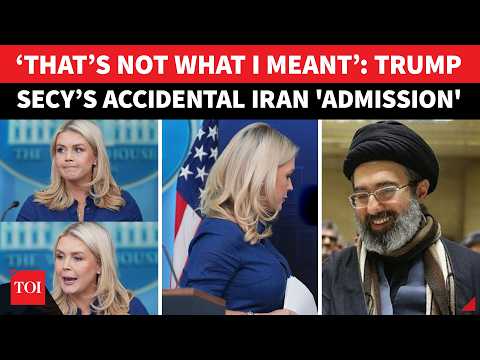
Source material: ‘Trump Got Confused & Then…’: Karoline Leavitt’s Shock Response Amid Chaos Over Iran Truce Terms
Summary
Negotiations regarding the ceasefire with Iran are complicated by internal regime issues and external influences, including unexpected parties like JD Vance and China. The U.S. administration emphasizes the importance of the ceasefire being contingent upon the immediate reopening of the Strait of Hormuz, which is crucial for negotiation clarity.
Concerns have been raised about Lebanon's role in potentially undermining the ceasefire agreement, alongside ethical questions regarding the President's rhetoric towards Iran. The President's team, led by Vice President JD Vance, is set to engage in talks in Islamabad to address ongoing tensions related to the Iran ceasefire.
The President's commitment to ensuring Iran surrenders enriched uranium remains a significant issue in ongoing negotiations. The reliance on military threats as a negotiating tool may backfire, as it could entrench Iran's position rather than facilitate a diplomatic resolution.
The assertion that military operations have decisively weakened Iran's capabilities assumes a direct correlation between military action and diplomatic outcomes, overlooking the potential for unintended consequences. The assumption that reopening the Strait of Hormuz will lead to a successful ceasefire overlooks the complexities of Iran's internal politics.
Perspectives
Analysis of the Iran ceasefire negotiations highlights the complexities and challenges faced by the U.S. administration.
U.S. Administration
- Emphasizes the need for patience regarding ceasefire implementation
- Claims military operations have significantly weakened Irans capabilities
- Highlights the importance of the Strait of Hormuz reopening without restrictions
- Affirms the Presidents commitment to holding Iran accountable for its actions
- Insists that the ceasefire is contingent upon Irans compliance with U.S. demands
Critics of U.S. Approach
- Questions the ethical implications of threatening to destroy Irans civilization
- Challenges the notion that military action equates to moral superiority
- Raises concerns about the potential for increased tensions with Lebanon
- Critiques the reliance on military threats as a negotiation strategy
- Expresses skepticism about the effectiveness of the current U.S. approach to negotiations
Neutral / Shared
- Acknowledges the complexity of the ceasefire negotiations
- Notes the involvement of unexpected parties like JD Vance and China
- Recognizes the fragility of ceasefires and the need for careful monitoring
Metrics
military_success
we completely dismantled Iran's Command and Control Center
effectiveness of military operations
This indicates a strategic advantage for the U.S. in negotiations.
we completely dismantled Iran's Command and Control Center
ceasefire_agreement
Iran publicly acknowledging last night that they have agreed or that they wanted this ceasefire
Iran's position on the ceasefire
This reflects a potential shift in Iran's willingness to negotiate.
Iran publicly acknowledging last night that they have agreed or that they wanted this ceasefire
other
the President is dispatching his negotiating team, led by the Vice President of the United States JD Vance
U.S. negotiating team for talks
This indicates a high-level commitment to resolving tensions.
the President is dispatching his negotiating team, led by the Vice President of the United States JD Vance
other
the ceasefire is subject to the safe reopening of the Shreya Pramous
Condition for the ceasefire
This highlights the complexities involved in the ceasefire agreement.
the ceasefire is subject to the safe reopening of the Shreya Pramous
other
the immediate priority of the President is the reopening of the straight without any limitations
President's negotiation focus
This highlights the administration's strategic priorities in the region.
the immediate priority of the President is the reopening of the straight without any limitations
other
the air defenses have been activated in several cities, including Isfahan
Iran's military readiness
This indicates a heightened state of alert and potential for conflict.
the air defenses have been activated in several cities, including Isfahan
other
the Pentagon had a target list that they were ready to hit go on at 8 p.m. last night
U.S. military readiness
This reflects the administration's willingness to use military force if negotiations fail.
the Pentagon had a target list that they were ready to hit go on at 8 p.m. last night
other
monitoring minute by minute, hour by hour
White House vigilance
Continuous monitoring is crucial for ensuring regional security.
we are monitoring minute by minute, hour by hour
Key entities
Timeline highlights
00:00–05:00
Negotiations regarding the ceasefire with Iran are complicated by internal regime issues and external influences, including unexpected parties like JD Vance and China. The U.S.
- Negotiations with Iran are hindered by the regimes internal issues, necessitating patience for the ceasefire to be fully realized
- Concerns persist regarding Israels commitment to the ceasefire, as Prime Minister Netanyahu has shown support for the U.S. President
- Unexpected parties like JD Vance and China have influenced the ceasefire discussions, complicating the U.S. position
- The President claims that military operations have significantly weakened Irans capabilities, potentially paving the way for lasting peace in the region
- Irans recognition of the ceasefire suggests a shift in their position, as they struggle against U.S. military pressure
- Lebanons exclusion from the ceasefire agreement underscores the complexities of the conflict and the difficulties in achieving a comprehensive peace
05:00–10:00
The President's team, led by Vice President JD Vance, is set to engage in talks in Islamabad to address ongoing tensions related to the Iran ceasefire. Concerns about Lebanon's role in potentially undermining the ceasefire agreement have been raised, alongside ethical questions regarding the President's rhetoric towards Iran.
- The Presidents team, led by Vice President JD Vance, will hold talks in Islamabad this weekend to address ongoing tensions. This proactive step aims to seek a resolution to the crisis
- Concerns linger about Lebanons role potentially jeopardizing the ceasefire agreement. The U.S
- The Presidents statements raise ethical questions about threatening an entire civilization, contrasting with historical U.S. practices
- The President asserts that his administration holds the moral high ground over Iran, citing military actions against a regime that has posed threats to the U.S. This claim is vital for supporting ongoing military and diplomatic efforts
- Prime Minister Netanyahu has reaffirmed Israels support for the President, strengthening the U.S.-Israel alliance. This commitment is crucial for maintaining a united front in the region
- Chinas participation in the ceasefire negotiations underscores the global stakes of the conflict. The Presidents relationship with President Xi is viewed as a strategic advantage in navigating U.S.-Iran relations
10:00–15:00
The President is focused on reopening the Strait of Hormuz without restrictions, emphasizing the importance of international navigation. Concerns about Iran's commitment to surrendering enriched uranium and the potential for military intervention are significant issues in ongoing negotiations.
- The President prioritizes the unrestricted reopening of the Strait of Hormuz, stressing that international navigation and trade should not face tolls or limitations
- Uncertainty surrounds Irans commitment to surrendering enriched uranium, raising the possibility of military intervention as a critical issue for future talks
- Reports of activated air defenses in Iranian cities amid explosions suggest potential military action, prompting the administration to investigate these developments for clarity
- The Vice Presidents assertive rhetoric is believed to play a key role in convincing Iran to agree to a ceasefire and facilitate the reopening of the Strait of Hormuz
- The administration criticizes NATOs recent statement on freedom of navigation in the Strait of Hormuz as inadequate, arguing that it does not provide sufficient support for U.S. interests
- The impact of regime change in Iran on the freedoms of its citizens remains unclear, with the administration hopeful for positive developments but recognizing that it is too soon to evaluate the situation
15:00–20:00
The President emphasized that the ceasefire is contingent upon the immediate reopening of the Strait of Hormuz, which is crucial for negotiation clarity. Concerns about Iran's potential tolls in the Strait and the need for clear communication to both Americans and Iranians were highlighted.
- The President stated that the ceasefire depends on the immediate reopening of the Strait of Hormuz, which is vital for setting negotiation expectations. This clarity is essential for all parties involved
- Concerns exist regarding Iran potentially imposing tolls in the Strait, a move the U.S. has historically opposed
- The spokesperson stressed the need for clear communication to both Americans and Iranians, prioritizing safety and stability as negotiations advance. This approach aims to build trust in the process
- There is a contradiction in encouraging the Iranian populace to reclaim their country while negotiating with elements of the current regime. This strategy seeks to balance immediate threats with long-term peace efforts
- The White House is actively monitoring the Strait, anticipating its reopening despite conflicting Iranian statements. This vigilance is crucial for ensuring regional security
- The administration aims to foster a stable and peaceful Middle East through negotiations with the new Iranian regime. Success in these discussions could significantly reshape the geopolitical landscape