Politics / Greece
Cultural Tradition of Barabbas
The Barabbas tradition, celebrated annually in New Kio, Argolis, showcases a unique cultural heritage linked to the region's history. This event involves the preparation and burning of a large effigy, symbolizing a connection to the past and community identity.
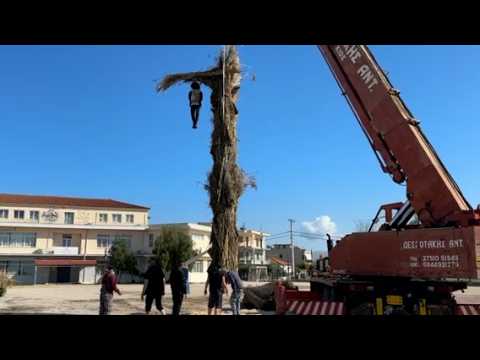
Source material: Αναβιώνει και φέτος το μικρασιατικό έθιμο του Βαραββά στη Ν. Κίο Αργολίδας
Summary
The Barabbas tradition, celebrated annually in New Kio, Argolis, showcases a unique cultural heritage linked to the region's history. This event involves the preparation and burning of a large effigy, symbolizing a connection to the past and community identity.
Local officials and volunteers meticulously create the Barabbas effigy, which is displayed on a tall scaffold before its ceremonial burning on Good Friday. The event attracts numerous spectators, highlighting its significance in the local culture.
The tradition, rooted in the practices of Asia Minor, has been maintained for generations, reflecting the community's commitment to preserving its heritage. Colorful fireworks accompany the burning, enhancing the festive atmosphere and engaging attendees of all ages.
Historical accounts indicate that the custom of burning Barabbas has existed since ancient times, emphasizing its deep cultural roots. Preparations for the event begin well in advance, showcasing the community's dedication to ensuring a grand celebration.
Perspectives
short
Supporters of the Barabbas Tradition
- Emphasize cultural heritage and community connection
- Highlight the meticulous preparation of the effigy
- Celebrate the events historical significance
- Engage the community through festive activities
- Attract large crowds, showcasing its popularity
Critics of Cultural Traditions
- Question the sustainability of such practices among younger generations
- Highlight potential diminishing significance of traditions
- Raise concerns about uniformity of community values
Neutral / Shared
- Acknowledge the historical roots of the Barabbas tradition
- Recognize the involvement of local officials and volunteers
Key entities
Timeline highlights
00:00–05:00
The Barabbas tradition emphasizes cultural heritage and community connection, particularly during Easter celebrations. This practice, rooted in Asia Minor, involves the preparation of an effigy that captivates audiences and fosters a festive atmosphere.
- The Barabbas tradition is being prepared, highlighting a unique cultural practice that emphasizes Barabbas over Judas, symbolizing a quest for justice
- This tradition, rooted in Asia Minor, connects the community to their ancestors who brought this custom from various homelands
- During the Epitaph procession, the Barabbas effigy is ignited, fostering a festive atmosphere and marking a key moment in Easter celebrations
- The effigy, built on an eight-meter metal frame, is filled with materials that create noise and spectacle, captivating the audience and enhancing the communal experience
- Preparation for the Barabbas involves careful planning and material gathering, starting as early as March, ensuring the tradition remains vibrant
- The speaker expresses a personal connection to the tradition, emphasizing the importance of cultural heritage in shaping local identity