New Technology / Robotics
AI and Robotics in the Workforce
Track robotics trends, industrial automation, machine intelligence and commercial deployment signals through curated technology summaries.
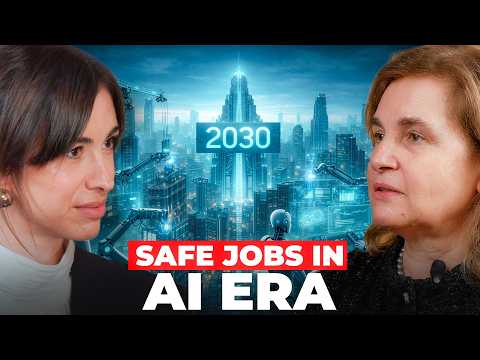
Source material: Top AI Scientist: High-Paying Jobs AI Can't Replace in 2026 (And How to Get Them) | Daniela Rus
Key insights
- For someone doing a repetitive job, they should be training in AI and robotics
- AI will support cognitive aspects of jobs, while robots will support physical aspects
- People will not lose jobs to AI, but to others who know how to use AI effectively
- It is important to keep learning and stay current with applicable tools in ones field
- The future will involve hybrid teams of humans and robots working together
- This synergy can free people from routine work, allowing focus on strategic aspects
Perspectives
Discussion on AI and robotics in the workforce, education, and elder care.
Proponents of AI and Robotics Integration
- Advocates for training in AI and robotics for repetitive job roles
- Claims AI will enhance cognitive tasks while robots will assist with physical tasks
- Highlights the potential for hybrid teams of humans and robots to improve job efficiency
- Proposes that edge AI can democratize innovation and reduce costs
- Emphasizes the need for technological literacy for all individuals
- Argues that formal education is crucial for developing critical thinking and problem-solving skills
Skeptics of AI and Robotics Impact
- Questions the accessibility of AI training and its implications for workforce inequality
- Challenges the assumption that on-device AI will be universally accessible
- Raises concerns about the long-term implications of AI on employment in creative fields
- Critiques the notion that everyone needs to be technologically literate without addressing disparities
Neutral / Shared
- Acknowledges the current limitations of humanoid robots in household tasks
- Notes the importance of curiosity and creativity alongside technological skills
Metrics
robotic_assistants
robotic tutors, robotic assistants
types of robots anticipated in homes by 2030
Suggests a future where education and assistance are increasingly automated.
Eventually we will have robotic tutors, robotic assistants.
historical_robot_development
first project in the United States was in 1995 year
timeline of self-driving car development
Provides context for the long development cycles of robotic technology.
the first project in the United States was in 1995.
historical_robot_development
first project in Europe was in 1985 year
timeline of self-driving car development
Indicates the historical context and challenges of bringing robotic technology to market.
the first project in Europe was in 1985.
time_saved
hours
time taken for editing content
This significant reduction in editing time allows creators to focus more on strategic and creative aspects.
Editing that once took days now takes hours.
video_creation_time
minutes
time taken to create short form videos
Rapid video creation can enhance content output and engagement.
Short form videos are created in minutes.
Key entities
Timeline highlights
00:00–05:00
The discussion focuses on the importance of training in AI and robotics for individuals in repetitive jobs. It emphasizes the collaboration between humans and machines, highlighting that while AI will enhance cognitive tasks, robots will assist with physical tasks.
- For someone doing a repetitive job, they should be training in AI and robotics
- AI will support cognitive aspects of jobs, while robots will support physical aspects
- People will not lose jobs to AI, but to others who know how to use AI effectively
- It is important to keep learning and stay current with applicable tools in ones field
- The future will involve hybrid teams of humans and robots working together
- This synergy can free people from routine work, allowing focus on strategic aspects
05:00–10:00
The discussion centers on the transformative potential of AI, particularly through on-device applications that could democratize innovation and reduce costs. By 2030, there is an expectation of increased integration of robots in both service industries and homes, although challenges remain for in-home robotics.
- AI is bringing most value through industrial installations that are huge and costly
- AI could democratize innovation by moving on-device, similar to the transition from mainframe computers to PCs
- On-device AI would be cheaper and more private compared to cloud interactions
- The development of AI tools could enable individuals to build startups without extensive developer support
- By 2030, there could be robots in homes, such as a robot garbage can and humanoid robots offering assistance
- The path from successful research experiments to full-blown products takes a long time
10:00–15:00
The discussion focuses on advancements in AI and robotics, particularly in content creation and audio production. It highlights the current limitations of humanoid robots in household tasks and the need for improved AI capabilities.
- Editing that once took days now takes hours
- Short form videos are created in minutes
- Scripts are written with AI support
- AI platforms handle most routine work in audio production
- labs Studio 3.0 has changed production workflow
- Voiceovers can be generated with exact emotional tone
15:00–20:00
The discussion addresses the lack of workforce support for elder care and the potential of robots like SoftMimic to assist with simple tasks. It emphasizes the necessity of technological and AI literacy for everyone, alongside fostering curiosity and critical thinking in education.
- We dont have the workforce to support the needs of aging
- There are simple tasks in elder care like getting out of bed that lack tools and equipment
- SoftMimic is a system designed to teach human walking
- The robot must handle unexpected contacts with the environment
- SoftMimic trains the robot to imitate human motions and respond to external forces
- Technological literacy, including AI literacy, is essential for everyone
20:00–25:00
The discussion emphasizes the importance of formal education in developing critical thinking and problem-solving skills, while also highlighting the role of knowledge in fostering creativity. It expresses a desire for robots to be seamlessly integrated into daily life and for breakthroughs in healthy longevity.
- I take all the tips from these podcasts and apply them to my personal life, to my investment portfolio and to my businesses
- Formal university education is very important because at university you learn how to think, solve problems, and find your way forward
- Knowing things enables us to be creative and connect seemingly disparate concepts
- Creativity is about looking at the world in different ways and connecting parts of the world that are seemingly different
- I would like to see robots integrated into the fabric of life, making them useful, capable, trustworthy, and reliable
- Advances in hardware, algorithms, and interaction with machines are continuous challenges in robotics