New Technology / New Space
Track New Space companies, commercial launches, orbital infrastructure and strategic space technology through curated summaries.
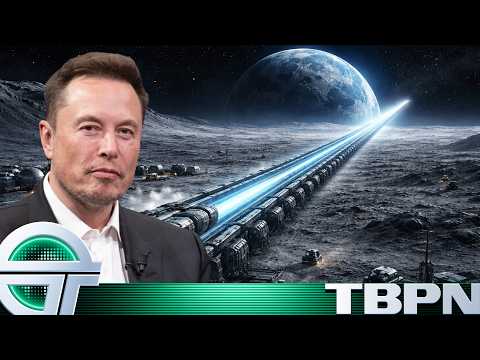
Elon's Moon Mass Driver: Here's How He'll Do It
Topic
Unclear topic
Key insights
- Elon Musk outlined a bold plan for future initiatives, including a mass driver on the Moon, showcasing his trend of addressing complex engineering challenges
- The presentation connected Musks diverse projects, such as Tesla and SpaceX, indicating a strategic vision for off-world industrial development
- Critics noted that the presentation lacked clarity and engagement, as evidenced by the audiences slow reactions, suggesting the message did not resonate well
- Musk stated a need for a thousand times more computing power, raising concerns about the practical implications and justifications for such advancements
- The mass driver concept was proposed as a remedy for chip shortages affecting Musks companies, but details on its application remain unclear and speculative
- Skepticism surrounded the feasibility of Musks proposals, with some perceiving them as a mix of visionary goals and unrealistic expectations, potentially undermining investor confidence
Perspectives
LLM output invalid; stored Stage4 blocks + metrics only.
Metrics
computing_power
a thousand times more computing power times
the computing power needed for future projects
This indicates a significant leap in technology requirements for Musk's initiatives.
he talks about needing something in the order of a thousand times more compute
chip_constraint
chip constrained by a thousand X times
the current chip shortage affecting operations
This highlights the urgency of addressing supply chain issues for Musk's companies.
we're chip constrained which is true Elon He gets it chip chip constrained by a thousand X
valuation
220 billion USD
Intel's market cap
Intel's valuation reflects its significance in the semiconductor industry.
Intel's market cap would there 220 billion dollar company now
funding
60 billion USD
funding available through the Chips Act
This funding is crucial for maintaining U.S. leadership in semiconductor manufacturing.
there was like 60 billion or something up for grabs around the chips act
funding
40 something billion USD
funding Elon was marshalling for Twitter
This amount indicates the scale of financial resources Musk was managing.
Elon was marshalling around 60 billion for to buy out Twitter something like that 40 something billion
payload
300 metric tons
potential payload capacity of the mass driver
A large payload capacity could enhance the utility of lunar operations.
I think the thing was like 300 metric tons
power_capacity
hundred kilowatt solar array kW
initial power requirement for the mass driver
This power capacity is essential for the mass driver's operation.
you need to deploy a hundred kilowatt solar array
temperature_range
negative 280 degrees Fahrenheit to positive 260 Fahrenheit degrees Fahrenheit
temperature fluctuations affecting construction materials
Extreme temperatures pose significant challenges for material integrity.
negative 280 degrees Fahrenheit during the night and then positive 260 Fahrenheit during the day
Key entities
Timeline highlights
00:00–05:00
Elon Musk presented a vision for future initiatives, including a mass driver on the Moon, linking various projects like Tesla and SpaceX. Critics highlighted a lack of clarity and engagement in the presentation, raising concerns about the feasibility of his ambitious proposals.
- Elon Musk outlined a bold plan for future initiatives, including a mass driver on the Moon, showcasing his trend of addressing complex engineering challenges
- The presentation connected Musks diverse projects, such as Tesla and SpaceX, indicating a strategic vision for off-world industrial development
- Critics noted that the presentation lacked clarity and engagement, as evidenced by the audiences slow reactions, suggesting the message did not resonate well
- Musk stated a need for a thousand times more computing power, raising concerns about the practical implications and justifications for such advancements
- The mass driver concept was proposed as a remedy for chip shortages affecting Musks companies, but details on its application remain unclear and speculative
- Skepticism surrounded the feasibility of Musks proposals, with some perceiving them as a mix of visionary goals and unrealistic expectations, potentially undermining investor confidence
05:00–10:00
Elon Musk's presentation highlighted ambitious projects like the electromagnetic mass driver on the Moon and the importance of semiconductor manufacturing. However, audience engagement was lacking, raising concerns about the feasibility and timelines of these initiatives.
- Elon Musks presentation aimed to transform ambitious ideas into reality, but his engagement with the audience fell short, raising doubts about the excitement and feasibility of his projects
- The emphasis on Terafab and advanced semiconductor manufacturing highlights their importance for future technology, yet skepticism persists regarding their practicality in the short term
- Musks plan for an electromagnetic mass driver on the Moon is presented as crucial for enhancing computational power, but it lacks a defined timeline and immediate application
- The discussion on the Chips Act reflects the urgency of maintaining U.S. leadership in semiconductor manufacturing, with Musks potential role in chip production aligning with national interests but also sparking competition concerns
- Despite the ambitious nature of Musks initiatives, there is a belief that they may prioritize hype over actual results, which could undermine investor confidence and the credibility of his tech ventures
- The audiences lukewarm response to Musks presentation indicates a gap between his vision and public perception, particularly regarding the timelines for achieving these ambitious goals
10:00–15:00
Elon Musk's proposal for a lunar mass driver faces skepticism regarding its feasibility and timeline, with estimates suggesting it could take up to a century to realize. If successful, this technology could significantly transform space logistics and enhance the economic viability of space missions.
- Elon Musks proposal for a lunar mass driver raises concerns about its feasibility and timeline, with estimates suggesting it could take up to a century to realize. However, if successful, this technology could transform space logistics significantly
- The mass driver is designed as an electromagnetic launch system powered by solar energy, which could drastically lower costs compared to conventional fuel-based launches from Earth. This innovation may enhance the economic viability of space missions
- Achieving lunar escape velocity with the mass driver is crucial, as it is significantly lower than Earths, potentially making lunar operations more practical and facilitating further exploration of space. This efficiency could open new avenues for off-world activities
- Initial payloads from the mass driver are expected to include basic materials like rocks and water, which can be utilized in various ways in space. This focus on resource utilization underscores the importance of sustainable practices in extraterrestrial environments
- The conversation surrounding the mass driver reflects a growing trend in the tech sector towards ambitious, long-term projects. While these initiatives may appear far-off, they can drive investment and spur innovation in space technology
- The absence of a unified timeline for the mass driver highlights the projects complexity, making it essential to establish clear definitions and success metrics for future progress. This clarity will be vital for advancing this ambitious vision
15:00–20:00
The mass driver on the Moon must launch at least 300 metric tons annually to establish a reliable space infrastructure. Aiming for a 95 percent success rate with a minimum of 200 launches per year is essential for its commercial viability.
- The mass driver must be capable of launching at least 300 metric tons annually to create a dependable space infrastructure. This requirement is crucial for scaling operations effectively
- Aiming for a 95 percent success rate with a minimum of 200 launches per year is essential for the mass driver to transition from prototype to a viable commercial system. High reliability will be key to its operational success
- Payloads from the Moon should have practical applications, such as delivering water or materials to other locations. This functionality is necessary to validate the investment in the mass driver
- Extracting water from lunar ice can provide drinking water and rocket fuel, which is vital for sustaining human activities on the Moon. This resource use is critical for long-term lunar missions
- The development timeline for the mass driver is estimated at 15 to 20 years, which is ambitious but feasible. This projection underscores the projects complexity and the technological advancements required
- Economic viability is essential for the mass driver, as it needs to efficiently produce valuable outputs like satellites. Success in this area could transform off-world manufacturing and resource management
20:00–25:00
The establishment of reliable heavy launch capacity for the lunar mass driver is projected to take three to five years, requiring significant infrastructure development. The overall timeline remains uncertain, with multiple phases needing careful management to avoid delays.
- Establishing reliable heavy launch capacity for the mass driver is projected to take three to five years, necessitating the development of refueling systems and regular cargo flights to the Moon
- Building the power infrastructure is crucial, as the mass driver requires substantial electricity, which will involve deploying solar arrays and energy storage systems over several years
- Robotic construction will be essential for laying the electromagnetic track, designed to endure extreme lunar temperatures, with this phase expected to last around three years
- Most components of the mass driver will be manufactured on Earth and transported to the Moon, requiring numerous dedicated cargo flights and extending the timeline by at least five years
- The integration and testing of the mass driver system will be complex and may overlap with other development milestones, making it critical to ensure the first payload reaches escape velocity safely
- The overall timeline for the mass driver project is uncertain, with each development phase needing careful management to prevent delays that could impede progress
25:00–30:00
The construction of a lunar mass driver is projected to take decades due to significant challenges in energy generation and infrastructure. The feasibility of launching satellites from the Moon hinges on local production of components, raising questions about economic viability.
- The construction of a lunar mass driver is expected to span decades due to significant challenges in energy generation and infrastructure, indicating that short-term feasibility is unlikely
- Musk envisions manufacturing solar panels on the Moon, potentially reducing costs compared to Earth production, which could transform energy capture and distribution in space but demands substantial investment
- Launching satellites from the Moon depends on the ability to produce most components locally, underscoring the need for lunar resource utilization to ensure economic viability
- There are concerns about the economic rationale for establishing space data centers on the Moon, as unclear incentives could threaten the long-term sustainability of these projects
- Estimates for the timeline of these initiatives vary widely from 20 to 70 years, reflecting differing views on technological progress and the feasibility of Musks ambitious goals
- The concept of lunar tourism, facilitated by mass drivers launching pods back to Earth, presents new market opportunities but raises safety and practicality concerns