Intel / Ukraine Russia
Real-time monitoring of security incidents, escalation signals and threat indicators across global hotspots, focusing on rapid alerts and emerging risk developments. Topic: Ukraine-Russia. Updated briefs and structured summaries from curated sources.
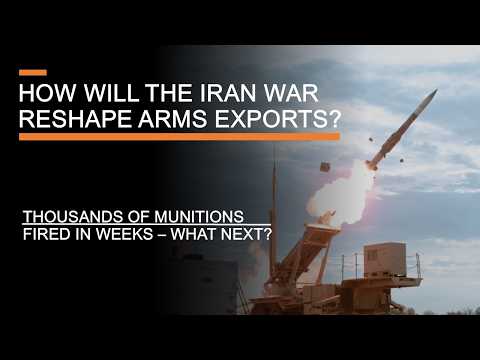
How will the Iran War Reshape Arms Exports? - Missile Consumption, Emergency Sales & the Supply Gap
Summary
The invasion of Ukraine by Russia in 2022 significantly disrupted the international arms market, leading to a surge in global demand for munitions. As major suppliers like Russia faded from the market, countries turned to the U.S. for their military needs. Recent conflicts in the Middle East have further strained supply chains, compelling nations to seek replacements for expended munitions.
The backlog for French fighter deliveries has reached nine years, prompting countries to explore alternative suppliers for immediate military needs. The U.S. has emerged as a primary arms export winner during this period, with record sales driven by geopolitical tensions and the urgent demand for advanced military systems.
Iran's military operations have led to a high consumption of missiles and drones, impacting the availability of interceptors for U.S. allies. The ongoing conflict has created a significant demand for air defense systems, with countries like the UAE making substantial investments to bolster their defenses against Iranian threats.
The U.S. defense production is shifting to meet the urgent demands of allies facing missile threats and depleted stockpiles. Emergency arms sales have been expedited to countries in the region, indicating a rapid response to the evolving security landscape.
Perspectives
Analysis of the impact of the Iran War on global arms exports and defense procurement strategies.
Pro-U.S. Arms Exports
- Highlights the surge in U.S. arms exports due to geopolitical tensions
- Claims that U.S. production is shifting to meet urgent demands from allies
- Argues that the U.S. is seen as a reliable supplier amidst global instability
Concerns Over Supply Chain and Production
- Questions the sustainability of U.S. stockpiles amidst rapid consumption
- Denies the assumption that increased demand will benefit established suppliers without addressing production challenges
Neutral / Shared
- Notes the significant backlog for French fighter deliveries
- Observes the increasing military equipment demand from U.S. allies
- Mentions the complexities of supply chain logistics affecting production capabilities
Metrics
deliveries
26 units
annual plan of refile deliveries by Tsosil
This indicates an increase in production capacity amidst rising demand.
the French manufacturer Tsosil surpassed its annual plan of 25 refile deliveries by handing over 26.
new orders
26 units
new orders for refiles in 2025
This reflects ongoing demand despite production challenges.
the country recorded new orders for about, you guessed it, 26 additional refiles.
revenue
$319 billion USD
US arms sales in fiscal year 2024
This indicates a significant increase in military spending and reliance on U.S. arms.
In fiscal year 2024, US sales reached nearly $319 billion US dollars.
launches
1,530 units
total Iranian missile launches
Indicates the scale of Iran's military capabilities.
In total, that data tracks a total of 1,530 cruise and ballistic missiles
interceptors
80%
percentage of Israel's Arrow interceptors deployed
Reflects the high demand for defensive capabilities in the conflict.
the first 16 days of the war consumed about 80% of Israel's arrow two and three interceptors
interceptors
500 units
ground-based higher tier interceptors fired
Demonstrates the scale of military engagement and resource use.
allied forces are fired nearly 500 ground-based higher tier interceptors
interceptors
2000 units
ground-based mid-tier interceptors fired
Indicates the extensive use of mid-tier defense systems.
about 2000 ground-based mid-tier interceptors
sales
$650 million USD
emergency sale to Israel
This sale indicates the U.S. commitment to supporting allies under missile threat.
$650 million worth of munitions to Israel.
Key entities
Timeline highlights
00:00–05:00
The Russian invasion of Ukraine has drastically altered the global arms market, leading to a surge in demand for munitions as major suppliers like Russia withdraw. Concurrently, recent conflicts in the Middle East have further strained the supply chain, compelling countries to seek replacements, particularly from the U.S.
- The Russian invasion of Ukraine has significantly impacted the global arms market, increasing the demand for munitions as major suppliers like Russia reduce their market presence
- Recent Middle Eastern conflicts have escalated munitions consumption, prompting countries to urgently seek replacements, especially from the U.S
- The U.S. defense industrial base is struggling to fulfill both domestic and international munitions demands
- Supply chain disruptions from the COVID-19 pandemic have already pressured the arms market, leading to slower production and higher costs in the defense sector
- Countries are reevaluating their defense strategies amid global tensions, resulting in a need for larger stockpiles and increased production to address current and future demands
- The air defense sector is under particular strain due to rising demand and limited supply, presenting an opportunity for European and Korean manufacturers to fill market gaps
05:00–10:00
The backlog for French fighter deliveries has reached nine years, prompting countries to seek alternative suppliers for immediate military needs. The U.S.
- The backlog for French fighter deliveries has reached nine years, forcing countries to seek alternative suppliers for immediate military needs
- The U.S. has become a leading arms exporter during the Ukraine and Middle East conflicts, indicating a growing dependence on American military equipment among global buyers
- Demand for specific munitions, especially ballistic missiles and drones, has surged due to the ongoing Middle Eastern conflict, reflecting a shift in warfare priorities
- The Pentagons stockpiles are being quickly depleted from high munitions consumption in the current conflict, raising concerns about future U.S. military readiness
- Countries are reassessing their defense strategies in response to recent conflicts, which is likely to intensify competition among suppliers to meet urgent demands
- The conflict presents an opportunity for suppliers like the U.S, France, and Korea to increase their market share as demand for arms escalates
10:00–15:00
Iran has launched a total of 1,530 missiles and 4,115 drones, indicating a stabilized operational tempo. The high usage of interceptors by U.S.
- Iran has launched 1,530 missiles and 4,115 drones, indicating a stabilized operational tempo that may influence regional military strategies
- In the first 16 days of the conflict, U.S. and allied forces consumed a significant amount of munitions, with nearly 80% of Israels Arrow interceptors deployed
- The high usage of interceptors by U.S. and allied forces raises concerns about the sustainability of their munitions stockpiles
- Despite a reduction in Iranian missile launches, the continued high rate of interceptor deployment suggests ongoing defensive operations, prompting a potential reassessment of military resource allocation
- While the U.S. may not deplete its munitions stockpiles rapidly, overall consumption levels remain critically high
- The conflict reveals a notable difference in munitions usage between Iran and its adversaries, with Iran launching fewer drones than Russia in Ukraine, which could affect future military engagements
15:00–20:00
The U.S. defense production is shifting to meet the urgent demands of allies facing missile threats and depleted stockpiles.
- The ongoing conflict has prompted a major shift in U.S. defense production priorities as allies contend with missile threats and dwindling stockpiles
- Emergency arms sales have surged, with the U.S. reportedly matching or exceeding its own munitions consumption through these sales
- The U.S. has initiated significant emergency sales, including a $650 million package to Israel and over $20 billion to Gulf Cooperation Council countries
- Kuwaits order for advanced missile defense systems, each costing around $1 billion, emphasizes the high stakes in regional defense. These systems are vital for bolstering air defense against potential Iranian threats
- The United Arab Emirates has made substantial purchases, including 400 advanced air-to-air missiles, signaling a shift towards more proactive defense strategies. This indicates that regional powers are preparing for prolonged military engagement
- The introduction of offensive munitions packages for the UAE raises concerns about future military intentions and potential escalation. The strategic implications of these sales could significantly alter the regional balance of power
20:00–25:00
The ongoing conflict in the Middle East has led to increased military equipment demand from U.S. allies, particularly the UAE, which is making substantial investments in advanced missile and drone systems.
- The ongoing conflict in the Middle East has significantly increased military equipment demand, particularly from U.S. allies like the UAE
- Recent UAE purchases of advanced missile and drone systems underscore the seriousness of their security concerns. Their substantial investments indicate a proactive approach to regional defense
- The U.S. military is experiencing heightened demand for munitions, which may create competition for resources between domestic needs and foreign sales
- A proposed $200 billion supplemental funding request for the U.S. military highlights the critical need to address munitions shortages caused by the conflict
- The rapid consumption of munitions in the conflict is generating unexpected demand across various nations, including NATO members. Countries like France are responding by increasing their military budgets to enhance security
- Some nations may be compelled to explore alternatives to U.S. suppliers if timely deliveries cannot be secured
25:00–30:00
The ongoing conflict in the Middle East is significantly increasing military equipment demand, particularly impacting U.S. supply chains.
- The ongoing conflict in the Middle East is driving a surge in military equipment demand, particularly affecting U.S. supply chains
- Allied nations are quickly exhausting their ammunition reserves, creating an urgent need for replacements that may lead them to consider alternatives to U.S. suppliers
- European countries are shifting their defense procurement strategies to reduce dependence on American systems, aiming to strengthen local defense industries
- Initiatives like the EUs SAFE plan require a significant portion of defense spending to be allocated to European suppliers, potentially limiting U.S. market share in Europe
- Investment in military categories such as frigates and conventional submarines is increasing among European nations, where U.S. offerings are less competitive
- Despite efforts to localize defense production, U.S. products like the F-35 continue to win contracts in various markets