Intel / Ukraine Russia
Real-time monitoring of security incidents, escalation signals and threat indicators across global hotspots, focusing on rapid alerts and emerging risk developments. Topic: Ukraine-Russia. Updated briefs and structured summaries from curated sources.
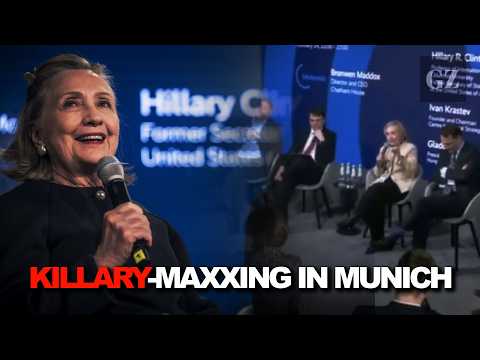
Hillary Clinton clamors for more war in Munich
Summary
Hillary Clinton's recent remarks in Munich advocate for increased military support for Ukraine, emphasizing the need to inflict damage on Russian infrastructure. Critics argue that her approach reflects a dangerous escalation of conflict, ignoring the historical consequences of such interventions. Clinton's call for violence raises concerns about the potential for further entrenchment of the ongoing war rather than facilitating negotiations.
Clinton's comments on mass migration highlight a disconnect between her policies and their real-world impacts. Critics point out that her past actions, such as supporting regime changes and military interventions, have contributed to instability and migration crises. Despite acknowledging migration as a problem, Clinton fails to recognize her role in creating the conditions that led to these issues.
The Democratic Party faces significant internal resistance to critiques of its foreign policy, with figures like Clinton maintaining a strong influence. This resistance complicates governance and stifles dissenting voices within the party. Emerging adversarial perspectives challenge the established narratives, indicating a potential shift in public sentiment.
Perspectives
short
Critics of Clinton's Policies
- Condemn calls for increased military action in Ukraine as dangerous escalation
- Highlight historical consequences of interventionist policies leading to instability
- Accuse Clinton of hypocrisy regarding her role in mass migration issues
- Point out the disconnect between Clintons comments and the realities of her policies
- Argue that her approach ignores the potential for further entrenchment of conflict
Supporters of Clinton's Approach
- Defend the need for military support to Ukraine as a means to negotiate peace
- Argue that inflicting damage on Russian infrastructure is necessary for effective negotiations
- Claim that acknowledging migration issues is a step towards addressing them
Neutral / Shared
- Acknowledge the internal resistance within the Democratic Party regarding foreign policy critiques
- Recognize the emergence of alternative voices challenging established narratives
Metrics
other
hundreds of thousands of Russian soldiers killed and injured soldiers
casualties in the Ukraine conflict
This figure underscores the human cost of the ongoing conflict.
hundreds of thousands of Russian soldiers killed and injured
other
mass migration or mass immigration has been destabilizing
Clinton's comments on migration
This statement reflects a lack of accountability for past policies that contributed to migration crises.
mass migration or mass immigration has been destabilizing
other
the coup in Haiti was destabilizing
historical context of U.S. interventions
This highlights the long-term consequences of U.S. foreign policy decisions.
the coup in Haiti was destabilizing
other
the Syrian dirty war... flooded Europe with the largest migration crisis in World War II
impact of U.S. interventions
This illustrates the unintended consequences of military actions on global migration patterns.
flooded Europe with the largest migration crisis in World War II
other
the Libya regime change war... flooded Lampedusa and the island of Lesvos with boats full of migrants
effects of military intervention
This emphasizes the direct link between military actions and subsequent migration crises.
flooded Lampedusa and the island of Lesvos with boats full of migrants
resignation
Tom Pritzker's resignation
a significant event within the Democratic Party
This resignation indicates potential shifts in party dynamics and influence.
Tom Pritzker resigning from Hyatt hotels.
Key entities
Timeline highlights
00:00–05:00
Hillary Clinton's recent comments in Munich advocate for increased U.S. military support for Ukraine while criticizing migration, despite her past policies contributing to instability.
- Hillary Clintons recent comments in Munich advocate for increased U.S. military support for Ukraine, pushing for more aggressive actions against Russia
- Clintons tenure as Secretary of State involved policies that destabilized regions and fueled mass migration, yet she now criticizes migration. This contradiction underscores her lack of accountability for the fallout of her previous decisions
- The discourse on the Ukraine conflict is dominated by elite narratives that overlook historical context and public sentiment towards leaders like Putin. This narrow perspective hinders meaningful dialogue on international relations
- Clintons advocacy for military measures, such as deploying Tomahawk missiles, aligns with a trend of interventionist policies that are increasingly unpopular among Americans. This disconnect may have aided the rise of candidates like Trump, who opposed such interventions
- The Democratic Partys failure to articulate a clear critique of interventionism creates a political void that populist figures could exploit. Without a strategic shift, the party risks alienating voters concerned about military involvement
- Clintons statements reflect a prevailing attitude among political elites that favors military solutions over diplomatic efforts. This mindset not only fuels ongoing conflicts but also diminishes the chances for peaceful resolutions
05:00–10:00
The Democratic Party is facing internal resistance to critiques on foreign policy, with figures like Hillary Clinton maintaining significant influence. This resistance is leading to a breakdown of consensus within the party, complicating governance and enabling alternative voices to emerge.
- The Democratic Party is resistant to internal critiques on foreign policy, allowing figures like Hillary Clinton to maintain their influence and stifling alternative voices that could challenge the partys direction
- Democrats are under increasing scrutiny from their left-leaning base, complicating their political strategy and enabling right-wing narratives to dismiss dissent as conspiracy theories
- Recent events, such as Tom Pritzkers resignation, suggest a shifting landscape within the Democratic Party, with influencers questioning established narratives and potentially altering public discourse
- Some former allies of the Democratic establishment are now taking more adversarial positions on foreign policy, indicating a growing discontent with traditional party lines and a shift towards anti-imperialist views
- The consensus on foreign policy within the Democratic Party is breaking down, which could hinder future administrations ability to govern effectively and create challenges for Democrats in power
- New voices in political commentary are emerging, which may reshape discussions around U.S. foreign policy