Intel / Ukraine Russia
Viktor Orban's Alignment with Russia
Viktor Orban's recent emphasizes his family's resilience against perceived Ukrainian threats, strategically aligning with his election campaign. His long tenure in power faces challenges from opposition parties, with allegations of Russian intelligence support to maintain his political influence.
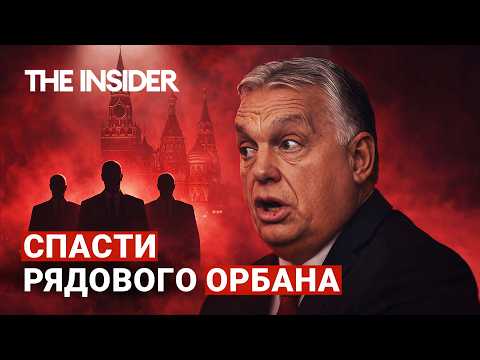
Source material: «Мышь Путина»: как Кремль спасает Орбана перед выборами в Венгрии
Summary
Viktor Orban's recent emphasizes his family's resilience against perceived Ukrainian threats, strategically aligning with his election campaign. His long tenure in power faces challenges from opposition parties, with allegations of Russian intelligence support to maintain his political influence.
Orban's partnership with Vladimir Putin has significantly influenced Hungary's political landscape and its energy policies, particularly through the Paks II nuclear project. Despite EU efforts to reduce reliance on Russian energy, Hungary continues to increase its imports, raising concerns about its sovereignty and democratic integrity.
Orban's government has increasingly aligned with Russian interests, raising concerns about the integrity of Hungary's political landscape. Allegations of Russian influence, including potential assassination plots and espionage, highlight the complex dynamics at play.
Orban's connections to Russia raise concerns about his autonomy and the influence of Russian interests in Hungary. Allegations of misconduct in Hungary's correctional facilities suggest systemic issues that could threaten Orban's political support.
Perspectives
short
Pro-Russian Influence
- Highlights Orbans strategic alignment with Putin to bolster his political campaign
- Claims Russian intelligence supports Orbans government to maintain power
- Accuses Orban of exploiting energy dependency on Russia for political leverage
- Warns of systemic issues in Hungarys governance linked to Russian interests
- Questions the integrity of Hungarys democratic processes under Orbans regime
Opposition to Russian Influence
- Denies the legitimacy of Orbans alignment with Russian interests
- Rejects claims that Orbans past criticisms of Putin were genuine
- Questions the impact of Russian influence on Hungarys sovereignty
- Argues for the need to counter Orbans narrative through opposition efforts
- Calls for transparency and accountability in energy projects
Neutral / Shared
- Notes the historical context of Orbans shifting stance towards Russia
- Observes the implications of energy contracts on Hungarys economy
- Mentions the role of opposition parties in challenging Orbans governance
Metrics
investment
10 billion euros EUR
cost of the project related to Paks II
This investment underscores Hungary's deepening ties with Russia in energy.
the US is trying to build two new energy blocks in the IS-PACS-2. Other than this contract, the Russian state of the U.K. has not yet opened the Tender.
energy_production
40%
percentage of energy produced by IS-PACS
This indicates Hungary's significant reliance on Russian nuclear energy.
the IS-PACS is producing 40% of the energy power of the Venguin-Vernos' power.
price_increase
93 percent %
increase in the price of Russian oil
This dramatic increase could exacerbate economic challenges for Hungarians.
Only by the year 21-25, the price of 93 percent is increased.
seizure
40 million dollars, 35 million euros and 9 kilograms of gold USD
cash and gold seized from a Ukrainian bank
This seizure reflects the ongoing tensions and financial maneuvers in the region.
the village was taken from the cargo, 40 million dollars, 35 million euros and 9 kilograms of gold.
other
the Kremlin's compromise on him
potential compromising information held by the Kremlin
This suggests a significant risk to Orban's political autonomy.
the crime of the Kremlin's compromise on him
Key entities
Timeline highlights
00:00–05:00
Viktor Orban's recent video emphasizes his family's resilience against perceived Ukrainian threats, strategically aligning with his election campaign. His long tenure in power faces challenges from opposition parties, with allegations of Russian intelligence support to maintain his political influence.
- Viktor Orbans recent video showcases his familys strength against perceived Ukrainian threats, serving as a tactic in his election campaign ahead of parliamentary elections
- Having been in power for 16 years, Orban faces significant opposition from the Freedom Party, with his allegiance to Vladimir Putin being crucial for his political survival
- Reports indicate that Russian intelligence is aiding Orbans campaign to bolster his support for Moscow within the EU, potentially through discrediting opposition and shaping public opinion
- Orban was once a vocal critic of Putin, promoting a pro-Western agenda early in his career, but has since aligned closely with Russia since regaining power in 2010
- There are allegations that Orbans loyalty to Putin is tied to compromising information from Russian criminal networks in the 1990s, raising concerns about the legitimacy of his political ascent
- The narrative suggests that Orbans government may be using anti-Ukrainian rhetoric to strengthen its grip on power, aligning with broader Kremlin strategies in the region
05:00–10:00
Viktor Orban's partnership with Vladimir Putin has significantly influenced Hungary's political landscape and its energy policies, particularly through the Paks II nuclear project. Despite EU efforts to reduce reliance on Russian energy, Hungary continues to increase its imports, raising concerns about its sovereignty and democratic integrity.
- Viktor Orbans alliance with Vladimir Putin has shifted from initial criticism to a strong partnership, impacting Hungarys political dynamics and its relations within the EU
- The Paks II nuclear power plant project exemplifies Hungarys collaboration with Russia, with agreements that avoided competitive bidding, enhancing Hungarys energy reliance on Russia while benefiting Orbans close associates
- Hungary is the only EU nation where Rosatom is undertaking a significant project, raising concerns about the countrys sovereignty and its compliance with EU energy policies
- Despite EU efforts to decrease dependence on Russian energy, Hungary is increasing its oil and gas imports from Russia, allowing Orban to use energy supplies as leverage against Ukraine and the EU
- Orbans administration is accused of exploiting energy dependency to influence political decisions, including threatening to obstruct EU assistance to Ukraine, highlighting regional power tensions
- The economic policies of Orban have not eased the financial strain on average Hungarians, who are facing escalating fuel costs, potentially leading to public dissatisfaction as elections near
10:00–15:00
Viktor Orban's government has increasingly aligned with Russian interests, raising concerns about the integrity of Hungary's political landscape. Allegations of Russian influence, including potential assassination plots and espionage, highlight the complex dynamics at play.
- Viktor Orbans relationship with Russia has evolved from criticism to a strategic alliance, allowing him to align Hungarys interests with Kremlin goals in Europe
- Allegations suggest that Russian hackers have infiltrated Hungarian government networks, enabling Moscow to sway EU discussions and challenge the blocs cohesion
- Orbans government is reportedly addressing personal matters for Russian oligarchs like Alisher Usmanov, indicating a troubling intertwining of Hungarian politics with Russian interests
- Claims have emerged that Russian intelligence considered staging an assassination attempt on Orban to bolster his political support by creating a false external threat
- Hungarian authorities recently seized cash and gold from a Ukrainian bank, framing it as a response to alleged military financing, which Orbans party is using to shift electoral focus towards perceived threats from Ukraine
- The Russian Orthodox Church is believed to be involved in espionage in Hungary, serving as a link between the Kremlin and Orbans administration, illustrating the complex nature of Russian influence in the region
15:00–20:00
Viktor Orban's connections to Russia raise concerns about his autonomy and the influence of Russian interests in Hungary. Allegations of misconduct in Hungary's correctional facilities suggest systemic issues that could threaten Orban's political support.
- Viktor Orbans ties to Russia suggest the Kremlin may hold compromising information on him, raising concerns about his autonomy and the influence of Russian interests in Hungary
- Orbans relationship with Russia appears to be motivated by personal gain, which could put pressure on Hungarys position within the European Union and its adherence to Western values
- The appointment of a new metropolitan reflects ongoing changes in Hungarys political landscape, potentially shaped by external pressures from the Kremlin
- Allegations of misconduct in Hungarys correctional facilities reveal systemic issues that could be leveraged by political opponents, threatening Orbans support base
- The blend of personal and political interests in Orbans governance complicates Hungarys foreign relations, potentially leading to unpredictable outcomes in negotiations with the EU and Russia
- These dynamics may have broader implications for geopolitical tensions in Central Europe, highlighting the need for EU member states to remain vigilant against Russian influence in their domestic affairs