Intel / Supply Chain Disruption
Follow supply chain disruption, strategic bottlenecks, logistics pressure and systemic risk signals through structured summaries.
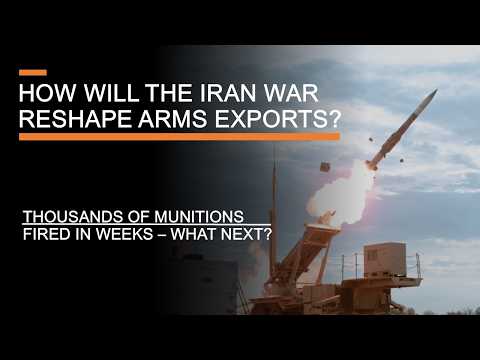
How will the Iran War Reshape Arms Exports? - Missile Consumption, Emergency Sales & the Supply Gap
Summary
The invasion of Ukraine has drastically altered the global arms market, leading to a surge in demand for munitions as major suppliers like Russia reduce their output. This situation has created a significant supply gap, compelling nations to adjust their defense strategies and increase munitions purchases.
The conflict in the Middle East has significantly increased the demand for specific munitions, particularly ballistic missiles and drones, reshaping the global arms market. This surge in demand, coupled with the depletion of U.S. stockpiles, raises concerns about military readiness and the ability to meet future defense needs.
The U.S. defense production is shifting to meet urgent military needs due to the rapid consumption of munitions in the Iran War. Countries like the UAE are prioritizing immediate solutions against Iranian missile threats, leading to increased military spending and urgent investments in defense systems.
The European defense industry is evolving to potentially reduce reliance on U.S. imports while enhancing local economic growth. However, the complexities of international defense relationships and market dynamics may complicate this shift.
Perspectives
Analysis of the impact of the Iran War on global arms exports and military readiness.
Proponents of Increased Arms Production
- Highlights the surge in demand for munitions due to geopolitical conflicts
- Argues that nations must adjust defense strategies to address supply gaps
- Proposes that increased military spending is necessary for national security
Critics of Arms Production Surge
- Questions the sustainability of increased military spending amid potential economic downturns
- Critiques the assumption that demand will consistently outpace supply
Neutral / Shared
- Notes the evolving dynamics of the global arms market
- Observes the shift in procurement strategies among nations
- Acknowledges the complexities of international arms agreements
Metrics
deliveries
26 units
annual plan of refile deliveries by Tsosol
This indicates a slight increase in production capacity amidst rising demand.
the French manufacturer Tsosol surpassed its annual plan of 25 refile deliveries by handing over 26.
sales
nearly $319 billion US dollars USD
US arms sales in fiscal year 2024
This figure indicates a record level of arms exports, reflecting heightened global demand.
In fiscal year 2024, US sales reached nearly $319 billion US dollars.
interceptors
about 2000 ground-based mid-tier interceptors units
total mid-tier interceptors fired by U.S. and allied forces
This high consumption rate indicates significant operational strain on military resources.
about 2000 ground-based mid-tier interceptors, that's mostly patriot
missiles
1,530 cruise and ballistic missiles units
total number of Iranian missiles tracked
This figure underscores the ongoing threat posed by Iranian missile capabilities.
In total, that data tracks a total of 1,530 cruise and ballistic missiles
interceptors
80% of Israel's arrow two and three interceptors
percentage of Israel's interceptors consumed in the first 16 days of the war
This depletion rate suggests a critical strain on Israel's defense capabilities.
the first 16 days of the war consumed about 80% of Israel's arrow two and three interceptors
sales
$650 million USD
emergency arms sale to Israel
This sale highlights the urgent military support required amid ongoing conflict.
$650 million worth of munitions to Israel.
munitions
12,000 units
bombs included in the emergency package to Israel
This quantity underscores the scale of military support being provided.
the largest single component of that being about 12,000, 1,000 pound bombs.
sales
$600 million USD
offensive munition package for the UAE
Highlights the shift towards a more aggressive military stance in the region.
a wider $600 plus million dollar package.
Key entities
Timeline highlights
00:00–05:00
The invasion of Ukraine has drastically altered the global arms market, leading to a surge in demand for munitions as major suppliers like Russia reduce their output. This situation has created a significant supply gap, compelling nations to adjust their defense strategies and increase munitions purchases.
- The invasion of Ukraine has significantly impacted the global arms market, increasing demand for munitions as major suppliers like Russia reduce their output. This shift has created a notable supply gap that countries must address
- Recent conflicts in the Middle East have rapidly depleted munitions, consuming years of production in mere weeks, which has intensified pressure on the U.S. to respond
- Nations are adjusting their defense stockpile strategies due to the escalating threat of war, resulting in increased munitions purchases. This trend marks a critical shift in global military readiness
- The defense industrial base is struggling to meet the surging demand for munitions, with slow production ramp-ups potentially compromising countries abilities to maintain military readiness
- Technological advancements and aging military assets are driving nations to replace outdated systems, highlighting the need for modernization in defense technology
- The current arms market is shaped by geopolitical tensions, supply chain issues, and changing defense requirements. These factors will have significant implications for future arms exports and international security
05:00–10:00
The conflict in the Middle East has significantly increased the demand for specific munitions, particularly ballistic missiles and drones, reshaping the global arms market. This surge in demand, coupled with the depletion of U.S.
- The conflict in the Middle East has dramatically increased the demand for munitions, especially ballistic missiles and drones, straining global supply chains and reshaping the arms market
- Military actions by the U.S. and Israel against Iran have generated a new demand for specific munitions, differing from the requirements seen in the Ukraine conflict, reflecting the changing nature of military engagements
- Despite having large stockpiles, the rapid military operations in the Middle East are quickly depleting U.S. resources, raising concerns about future military readiness
- After an initial surge, there has been a noticeable decrease in Iranian missile and drone launches, suggesting a potential change in their operational strategy that could affect the military balance in the region
- Conflicting narratives from both sides about the wars progress complicate the geopolitical landscape, potentially influencing international perceptions and future arms sales
- Countries are urgently reassessing their defense needs due to the ongoing conflict, which may intensify competition among arms manufacturers to meet these demands swiftly
10:00–15:00
Iran has reduced its missile and drone launches after an initial spike, indicating a shift in military tactics. U.S.
- Iran has reduced its missile and drone launches after an initial spike, indicating a shift in military tactics that may affect the conflicts dynamics
- U.S. and allied forces are experiencing unprecedented munitions consumption, leading to significant depletion of missile stockpiles
- The U.S. and its allies have utilized a large number of interceptors against Iranian missile threats, impacting their pre-war inventory levels
- The conflict has exposed a gap in drone and missile capabilities between Iran and its adversaries, with U.S. forces maintaining a higher launch rate
- As the war continues, the risk of escalation remains, especially if Iranian missile activity increases, necessitating ongoing military vigilance
- While the immediate threat from Iranian air defenses appears to be lessening, the overall high rate of munitions consumption could have lasting effects on arms production and global defense markets
15:00–20:00
The U.S. defense production is shifting to meet urgent military needs due to the rapid consumption of munitions in the Iran War.
- The rapid consumption of munitions in the Iran War is altering U.S. defense production priorities, indicating a shift in focus to meet urgent military needs
- Emergency arms sales have surged, with the U.S. reportedly matching or exceeding its own consumption rates to support affected nations
- A notable $650 million emergency package to Israel includes 12,000 bombs, highlighting the immediate military support required amid ongoing conflict
- The United Arab Emirates has placed significant orders for 400 advanced air-to-air missiles, reflecting a move towards enhanced defense capabilities against Iranian threats
- Recent arms sales from the U.S. are not offered at discounted prices, underscoring the high costs associated with military support
- The introduction of offensive munitions packages for the UAE suggests a potential shift towards a more aggressive military stance in the region
20:00–25:00
The ongoing conflict in the Middle East has led to increased military spending and urgent investments in defense systems by countries like the UAE. This trend reflects a broader global demand for munitions and military capabilities in response to perceived threats, particularly from Iranian missile and drone capabilities.
- The ongoing conflict in the Middle East has prompted countries like the UAE to make substantial investments in advanced defense systems, reflecting a swift response to perceived threats. This trend indicates a broader urgency among nations to replenish military inventories against Iranian missile capabilities
- Recent arms transactions, such as a $2 billion deal for counter-drone systems, demonstrate Gulf states readiness to prioritize immediate operational needs over cost. This shift underscores a significant commitment to enhancing defense capabilities
- NATO countries are also ramping up military spending in response to the conflict, which may trigger a wider arms race as nations seek to bolster their defense systems amid escalating tensions. This trend highlights the global implications of the ongoing conflict
- The U.S. defense industry is facing a potential supply crunch due to surging domestic and international demand for munitions
- A proposed $200 billion supplemental funding package for the U.S. military could further strain the defense industrial base, complicating efforts to maintain adequate supply levels
- The rapid consumption of munitions in the current conflict is generating unexpected demand across various nations, including France. This suggests that the wars impact extends beyond the immediate region, influencing global arms markets and military strategies
25:00–30:00
The ongoing conflict in the Middle East is rapidly depleting munitions stocks, prompting countries to urgently seek replacement supplies. This situation is reshaping the arms market, with nations like the UAE prioritizing immediate solutions against Iranian missile threats.
- The ongoing conflict in the Middle East is rapidly depleting munitions stocks, prompting countries to urgently seek replacement supplies, which will likely reshape the arms market
- The war has increased demand for air defense systems, with nations like the UAE prioritizing immediate solutions against Iranian missile threats, potentially boosting spending on American defense systems
- European nations are facing heightened munitions consumption, which may lead to changes in procurement strategies and a reduced reliance on U.S. arms, despite overall robust sales
- The geopolitical landscape is shifting as European countries focus on enhancing local defense capabilities, which could diminish American market share in specific categories
- While there is a push for localization, American systems like the F-35 continue to secure contracts due to a lack of viable alternatives, indicating ongoing reliance on U.S. technology
- The demand for military equipment is expected to rise significantly due to the Middle East conflict and tensions in Europe, potentially leading countries to explore non-American suppliers