Guido Reichstadter's Protest Against War and AI Dangers
Analysis of Guido Reichstadter's protest against the war in Iran and the threats posed by artificial intelligence, based on "Meet Guido Reichstadter, the Marine Veteran Who Scaled D.C. Bridge to Protest Iran War & AI" | Democracy Now!
OPEN SOURCEGuido Reichstadter, a former Marine reservist, protested the U.S. war in Iran and the dangers of artificial intelligence by spending five nights on the Frederick Douglass Memorial Bridge. He advocated for collective nonviolent action to end wars and urged a withdrawal of support from systems that perpetuate violence.
Reichstadter has a history of activism on the same bridge, including protests against the Supreme Court's decision to overturn Roe v. Wade, and he co-founded a movement called Stop A.I. His protest was driven by a sense of moral obligation to oppose what he perceives as mass murder by the U.S. government.
Following his protest, he was arrested and charged with unlawful entry and failure to comply with law enforcement. He emphasized the importance of individual actions in catalyzing collective movements, despite the complexities of public engagement.
Reichstadter highlighted the urgent need for regulation of AI, warning that its unchecked development could lead to catastrophic outcomes, including human extinction. His experiences as a former Marine and his evangelical background shaped his strong opposition to U.S. military actions.
He expressed concerns about the use of AI in military operations, emphasizing its dual role as both a weapon and a means of societal control. The rapid advancement of AI technologies poses a serious threat to democracy and could result in global catastrophe if not properly managed.
Reichstadter believes there is a moral imperative to address the risks associated with AI, particularly for the benefit of future generations. Confronting the dangers of AI may require uncomfortable sacrifices and proactive measures.
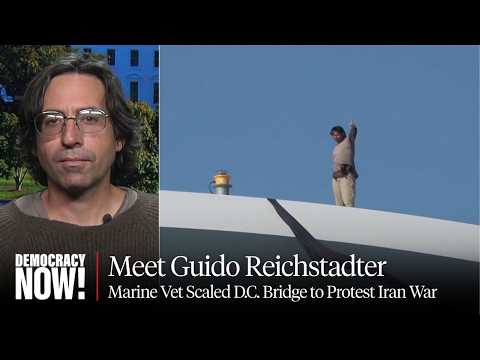
- Advocate for nonviolent collective action to end wars and address AI dangers
- Emphasize moral responsibility to oppose government actions perceived as unjust
- Maintain military actions and technological advancements for national security
- View protests as disruptions to public order and governance
- Highlight the complexities of public engagement and potential backlash against dissent
- Acknowledge the role of individual actions in influencing broader societal change
- Guido Reichstadter, a former Marine reservist, protested the U.S. war in Iran and the dangers of artificial intelligence by spending five nights on the Frederick Douglass Memorial Bridge
- He advocated for collective nonviolent action to end wars and urged a withdrawal of support from systems that perpetuate violence
- Reichstadter has a history of activism on the same bridge, including protests against the Supreme Courts decision to overturn Roe v. Wade, and he co-founded a movement called Stop A.I
- His protest was driven by a sense of moral obligation to oppose what he perceives as mass murder by the U.S. government
- Following his protest, he was arrested and charged with unlawful entry and failure to comply with law enforcement
details
- Guido Reichstadters protest on the Frederick Douglass Memorial Bridge focused on ending the war, opposing the Trump administration, and raising awareness about the dangers of artificial intelligence
- He highlighted the urgent need for regulation of AI, warning that its unchecked development could lead to catastrophic outcomes, including human extinction
- Reichstadters experiences as a former Marine and his evangelical background shaped his strong opposition to U.S. military actions, leading him to refuse deployment to Iraq in 2003
- Facing charges for his protest actions, including unlawful entry and failure to comply with law enforcement, he views his activism as a moral success regardless of the legal consequences
- He expressed concerns about the use of AI in military operations, emphasizing its dual role as both a weapon and a means of societal control
- The rapid advancement of AI technologies poses a serious threat to democracy and could result in global catastrophe if not properly managed
- There is a moral imperative to address the risks associated with AI, particularly for the benefit of future generations
- Confronting the dangers of AI may require uncomfortable sacrifices and proactive measures
- AIs development extends beyond military applications, serving as a tool for authoritarian regimes to monitor and control populations
The protest highlights the assumption that individual actions can catalyze collective movements, yet it overlooks the complexities of public engagement and the potential for backlash. Inference: The effectiveness of such protests may be limited by societal apathy and the entrenched interests of those in power, which are not addressed in the call for action.
This analysis is an original interpretation prepared by Art Argentum based on the transcript of the source video. The original video content remains the property of the respective YouTube channel. Art Argentum is not responsible for the accuracy or intent of the original material.