Intel / Middle East
Iran War and Ceasefire Negotiations
Joe Kent discusses the recent ceasefire talks between the U.S. and Iran, emphasizing their importance in reducing escalating tensions. He highlights the role of key figures like Vice President J.D. Vance in these negotiations, suggesting that direct talks are preferable to continued conflict.
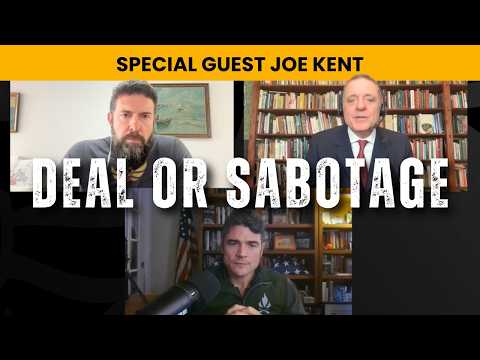
Source material: Iran War: Hubris, Miscalculation, and the Clash of Interests w/ Joe Kent
Summary
Joe Kent discusses the recent ceasefire talks between the U.S. and Iran, emphasizing their importance in reducing escalating tensions. He highlights the role of key figures like Vice President J.D. Vance in these negotiations, suggesting that direct talks are preferable to continued conflict.
Kent critiques Israel's military actions, arguing that they undermine U.S. strategic goals and complicate the ceasefire process. He asserts that Israel's approach, which prioritizes chaos over stability, diverges from American interests and calls for a reevaluation of U.S. support.
The discussion reveals that Iran's control over the Strait of Hormuz gives it leverage in negotiations, as it can influence global energy prices. Kent notes that while Iran has hardliners, there are still pragmatic voices advocating for engagement with the U.S.
Kent explains the complexities of U.S.-Iran relations, including historical grievances and the impact of past military actions. He argues that both nations have mutual interests that could be leveraged for a more stable relationship.
Perspectives
Analysis of U.S.-Iran relations and the implications of recent ceasefire talks.
Joe Kent's Perspective
- Advocates for direct U.S.-Iran negotiations to reduce tensions
- Critiques Israels military actions as detrimental to U.S. interests
- Highlights the importance of pragmatic voices within Iran
- Calls for a reevaluation of U.S. support for Israels aggressive strategies
- Emphasizes the need to understand internal Iranian dynamics for effective diplomacy
Opposing Views
- Argues that Irans actions are purely ideological and expansionist
- Claims that military intervention is necessary to secure U.S. interests
- Believes that hardliners in Iran cannot be trusted in negotiations
- Maintains that Israels security concerns should dictate U.S. policy
- Poses that Irans nuclear ambitions pose a direct threat to regional stability
Neutral / Shared
- Acknowledges the complexity of U.S.-Iran relations shaped by historical events
- Recognizes the role of external actors in influencing regional dynamics
- Notes the potential economic repercussions of continued conflict in the region
Metrics
other
the Straits of Formos were shut down
impact on global trade
Disruptions in the Straits can significantly affect global oil supply and prices.
the Straits of Formos were shut down
other
the biggest campaign yet into Lebanon against Hezbollah
Israeli military actions
Increased military actions can escalate regional tensions and undermine ceasefire efforts.
the Israelis launched their biggest campaign yet into Lebanon against Hezbollah
loss
some losses USD
U.S. economic impact due to the crisis
Indicates the broader implications of foreign policy on domestic economy.
the United States has taken some losses.
influence
control of the straight-up hormones
Iran's ability to impact global energy prices
This control allows Iran to leverage its position in negotiations.
they can strangle the straight-up hormones, they can affect world energy prices and commerce by controlling that with very little effort whatsoever.
diplomatic_contact
a good deal of contact
U.S. diplomatic engagement with Iran
Increased contact may facilitate better understanding and conflict resolution.
We've had a good deal of contact with them especially in this administration.
tariff
two million dollars USD
cost to transit the Strait of Hormuz
This fee significantly impacts global shipping and energy costs.
they're demanding that ships pay two million dollars.
oil_exports
their number one cash producing product is, which is oil USD
Iran's primary source of revenue
Oil exports are crucial for Iran's economy and influence in global markets.
their number one cash producing product is, which is oil
Key entities
Timeline highlights
00:00–05:00
Joe Kent discusses the importance of recent ceasefire talks between the U.S. and Iran, suggesting they are preferable to escalating tensions.
- Joe Kent highlights the significance of recent ceasefire discussions between the U.S. and Iran, viewing them as a preferable alternative to escalating tensions
- Kent notes that Israels military actions against Hezbollah are hindering ceasefire progress, complicating U.S. diplomatic efforts
- He argues for increased U.S. oversight of Israels military operations to ensure they align with American interests
- Kent expresses uncertainty regarding Israels reasons for starting the conflict, indicating that initial objectives may remain unmet. Understanding these motivations is vital for predicting future developments in the region
- He emphasizes the link between U.S. foreign policy and the global economy, particularly in relation to the Straits of Hormuz
- Overall, Kents analysis calls for a reevaluation of U.S. engagement in the Middle East
05:00–10:00
Israel's strategy under Netanyahu has led to unintended consequences, contributing to a global economic crisis that undermines Israeli interests. The misalignment of strategic goals between Israel and the U.S.
- Israels strategy under Prime Minister Netanyahu to destabilize Iran has backfired, contributing to a global economic crisis that ultimately harms Israeli interests
- The strategic goals of Israel and the U.S. are misaligned, with Israel appearing to prefer chaos in the region, complicating American diplomatic efforts
- Irans mistrust of the U.S. hampers ceasefire negotiations, with reports indicating that external mediation, particularly from China, was necessary for progress
- Internal divisions in Iran may lead hardline factions to favor ongoing conflict over negotiation, as moderates lose influence, perpetuating hostility
- U.S. military actions have inadvertently bolstered hardline elements in Iran by weakening moderate voices
- Israels willingness to embrace chaos as a tactic against Iran poses significant risks to U.S. interests in the region
10:00–15:00
Iran's control over the Strait of Hormuz allows it to significantly influence global energy prices, reducing its motivation to negotiate with the U.S. However, there are still pragmatic voices within Iran advocating for engagement, highlighting the need for the U.S.
- Irans dominance over the Strait of Hormuz enables it to impact global energy prices effortlessly, diminishing its incentive to negotiate with the U.S
- Pragmatic elements within the Iranian government still advocate for negotiations with the U.S, making engagement with these moderates essential for conflict resolution
- The U.S. should focus on its own strategic goals rather than prioritizing Israeli interests, particularly concerning groups like Hezbollah
- The absence of direct diplomatic channels between the U.S. and Iran has historically hindered engagement, though recent administrations have attempted to improve contact
- The U.S. and Iran found common ground during the fight against ISIS, indicating potential for cooperation despite their adversarial relationship
- As moderates in Iran lose influence, hardliners are gaining power, which may lead to a more confrontational approach towards the U.S, highlighting the urgency for American action
15:00–20:00
The U.S. has engaged in diplomatic communications with Iran to address mutual security issues despite the lack of formal embassies.
- The U.S. has engaged in various diplomatic communications with Iran under the current administration, which is vital for addressing mutual security issues despite the absence of formal embassies
- The IRGC has become a dominant force in Iran, gaining strength during the Iran-Iraq War and developing asymmetric military capabilities, complicating external military interventions
- Identifying shared interests between the U.S. and Iran, especially in regional stability and economic collaboration, could foster better relations and mitigate conflicts
- Iranian distrust is fueled by historical grievances, including U.S. actions during the 1953 coup and support for Iraq in the Iran-Iraq War
- The partnership between U.S. forces and Iranian proxies against ISIS illustrates that common goals can exist even amidst adversarial dynamics
- The belief that removing key Iranian leaders will dismantle the IRGC is misguided, as such actions are unlikely to disrupt Irans entrenched political and military structures
20:00–25:00
Iran and Shia groups in Iraq have played a crucial role in combating ISIS, indicating potential for U.S. alliances.
- Iran and Shia groups in Iraq have been pivotal in the fight against ISIS, highlighting a shared interest that could lead to potential U.S. alliances
- Despite historical tensions, the U.S. and Iran have opportunities to collaborate on stability and economic initiatives
- Irans control over the Strait of Hormuz creates significant challenges for global shipping and energy markets, especially amid Europes energy crisis
- Military interventions to secure the Strait of Hormuz may not be viable long-term solutions, as they risk escalating conflict and economic fallout for the West
- The international community may need to accept that Iran could impose transit fees for oil and gas, reshaping economic dynamics in the region
- Offering to lift sanctions could incentivize Iran to keep the Strait of Hormuz open, potentially stabilizing the region and improving relations with other nations
25:00–30:00
Diplomatic engagement with Iran could lead to the reopening of the Strait of Hormuz, which is essential for global trade stability. Iran's interest in maintaining open shipping lanes for its oil exports suggests that negotiations may benefit both Iran and the international community.
- Diplomatic engagement with Iran could facilitate the reopening of the Strait of Hormuz without imposing high transit fees, which is vital for maintaining global trade stability
- Irans interest in keeping the Strait of Hormuz open is crucial for its oil exports, suggesting that negotiations could yield mutual benefits for Iran and the international community
- While some critics view Irans actions as ideologically driven, evidence indicates a more cautious and strategic approach, particularly in response to U.S. actions
- Irans measured military responses, especially during conflicts involving U.S. support for Israel, reflect a strategic calculation rather than impulsive aggression
- The Iranian leadership is aware of the risks associated with nuclear weapons, which shapes their strategic choices to avoid military intervention like that faced by other nations
- Irans use of proxy forces is often a defensive strategy aimed at regional influence, highlighting the need to understand their actions within the context of U.S. relations