Understanding U.S.-China Relations
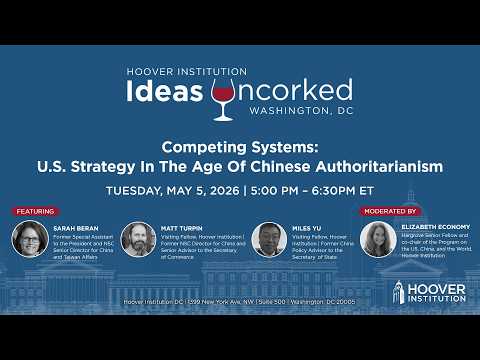
Analysis of U.S.-China relations, based on 'Competing Systems: US Strategy In The Age Of Chinese Authoritarianism' | Hoover Institution.
OPEN SOURCEThe U.S.-China relationship is characterized by a complex rivalry, with both nations perceiving themselves as engaged in competition across various domains. High-level diplomatic meetings are seen as positive, yet U.S. political unpredictability complicates long-term strategies.
Both nations acknowledge the importance of risk management through diplomatic engagement, as demonstrated by planned meetings between their leaders. However, the fundamental differences between the U.S. and Chinese political systems complicate the relationship, raising doubts about the feasibility of improvement.
China actively seeks tariff relief and relaxation of export controls, particularly in the semiconductor sector, which is vital for its domestic chip industry and AI advancements. Skepticism surrounds whether Chinese authorities would fully accept potential U.S. relaxations of export controls, given ongoing national security concerns.
The Biden administration aims to minimize unnecessary summits with China, acknowledging that such meetings often enhance China's global image without addressing key issues. Concerns exist that Chinese leaders leverage summits to challenge U.S. leadership and promote their narrative of global peace.
Public perceptions in the U.S. are gradually shifting towards a more favorable view of China, despite ongoing tensions. The rivalry between the U.S. and China is marked by mutual suspicion and competition, but both nations are unlikely to engage in direct conflict due to the risks of nuclear escalation.
The dysfunction within China's bureaucratic system is seen as a barrier to effective decision-making and coordination in foreign policy. Panelists emphasized the need for innovative approaches to U.S.-China relations amidst skepticism about China's willingness to cooperate on global issues.
- Emphasizes the need for risk management through diplomatic engagement
- Seeks to minimize unnecessary summits that enhance Chinas global image
- Aims for tariff relief and relaxation of export controls
- Views the U.S. as an existential threat, complicating cooperation
- Both nations are unlikely to engage in direct conflict due to nuclear risks
- Public perceptions in the U.S. are gradually shifting towards a more favorable view of China
- The U.S.-China relationship is marked by a complex rivalry, with both nations perceiving themselves as engaged in competition across various domains
- Sarah Beran highlights the necessity of understanding perspectives from both the U.S. and China, noting that Chinas pessimistic strategic view hinders potential cooperation
- Both nations acknowledge the importance of risk management, with high-level diplomatic meetings viewed as positive, though U.S. political unpredictability complicates long-term strategies
- Matt Turpin characterizes the relationship as one of hostile rivalry, emphasizing deep mutual suspicion and a shared desire to avoid direct military conflict, a dynamic that has defined superpower relations since 1945
- The U.S.-China relationship is defined by a long-standing rivalry characterized by mutual suspicion and competition across various domains, with both nations aiming to prevent direct military conflict
- China views the U.S. as an existential threat, which shapes its strategic choices and limits opportunities for collaboration
- Both countries acknowledge the importance of risk management through diplomatic engagement, as demonstrated by planned meetings between their leaders
- The fundamental differences between the U.S. and Chinese political systems complicate the relationship, raising doubts about the feasibility of improvement
- Encouraging China to take a proactive role in shaping the bilateral relationship is essential, rather than merely responding to U.S. initiatives
- Efforts to find common ground while setting aside differences are increasingly challenged, especially concerning human rights and trade issues
- The U.S.-China relationship is compared to a flawed vehicle, operational yet vulnerable to catastrophic failure due to inherent design flaws
- A shift from the strategy of playing the China card is deemed essential for U.S. national security, advocating for broader engagement with China rather than viewing it solely as a challenge
- There is a bipartisan consensus on China, with a significant majority of Americans expressing negative views, which has shaped congressional actions and public discussions
- The upcoming summit is perceived as more symbolic than substantive, with challenges in achieving concrete outcomes despite President Trumps pursuit of a favorable trade agreement
- The Trump administrations focus includes enhancing national security, deterring China, and rebuilding America, all of which are interconnected with the dynamics of the U.S.-China relationship
details
- The U.S. aims for a favorable trade balance with China, but experts predict persistent trade deficits, making a balanced relationship unlikely in the near term
- President Trump is focused on trade and investment agreements, aiming to reduce tariffs from approximately 45-50% to 25%, though this does not tackle deeper issues in U.S.-China relations
- Skepticism surrounds the upcoming summit, with expectations of positive rhetoric but little concrete progress on critical issues
- The U.S. anticipates tariff adjustments in exchange for Chinese commitments to purchase U.S
- Concerns arise over key strategic issues like regional stability and military communication not being adequately addressed before the summit, highlighting potential broader implications for U.S.-China relations
details
details
- China is actively seeking tariff relief, particularly aiming to ease export controls on semiconductor technology, which is vital for its domestic chip industry and AI advancements
- There is skepticism regarding whether Chinese authorities would fully accept potential U.S. relaxations of export controls, given ongoing national security concerns
- Chinas strategy involves encouraging domestic companies to increase reliance on local chip production while negotiating for reduced export restrictions from the U.S. and its allies
- The U.S. administration exhibits internal divisions over export control policies, highlighting the challenge of balancing national security with economic interests in dealings with China
- International trade negotiations are further complicated by the necessity for multilateral cooperation, especially concerning export controls and technology transfers
details
- The Biden administrations strategy towards China has faced criticism for being overly cautious and reactive, particularly in its early years, which has affected risk management in U.S.-China relations
- In contrast, the Trump administrations approach was characterized by a willingness to challenge norms and engage in direct diplomacy, which some believe is advantageous for managing complex international relationships
- There is bipartisan agreement in the U.S. on the strategic pivot towards the Indo-Pacific and China, indicating a significant shift in American foreign policy priorities
- The Biden administration is expanding its use of economic statecraft tools beyond tariffs, which is viewed positively for achieving long-term U.S. objectives in its rivalry with China
- Concerns persist regarding the potential for uncoordinated diplomatic efforts, which could complicate U.S. strategy towards China and undermine cohesive policy initiatives
- The Biden administration aims to minimize unnecessary summits with China, acknowledging that such meetings often enhance Chinas global image without addressing key issues
- Concerns exist that Chinese leaders leverage summits to challenge U.S. leadership and promote their narrative of global peace, complicating diplomatic relations
- Continuing the Trump administrations strategy, the Biden administration emphasizes the importance of having clear agendas for discussions with China, avoiding unproductive dialogue
- The historical context of past U.S.-China summits, including Nixons engagement with Mao, influences current diplomatic dynamics
- The possibility of a future summit between the U.S. and China is uncertain, with military movements suggesting preparations but skepticism about potential outcomes
details
details
- The U.S. must address both systemic and ideological conflicts with China, employing distinct strategies for each type of challenge
- While there are concerns about the U.S. losing tools to promote its values internationally, there is optimism regarding the influence of American ideals in China, especially in response to significant events
- Panelists stress the importance of enhancing U.S. domestic manufacturing capabilities as a key strategy to confront challenges posed by China, prioritizing this over diplomatic efforts
- The necessity of building partnerships and alliances is highlighted, with an emphasis on collaboration with both Asian and NATO allies to effectively counter Chinas practices
- Doubts are raised about the effectiveness of summits, referencing historical precedents and expressing concern that rising animosity between the U.S. and China could escalate tensions
details
- Public perceptions in the U.S. are gradually shifting towards a more favorable view of China, despite ongoing tensions, suggesting potential for a more positive long-term relationship
- The rivalry between the U.S. and China is marked by mutual suspicion and competition, but both nations are unlikely to engage in direct conflict due to the risks of nuclear escalation
- A significant disparity exists in educational exchanges, with around 300,000 Chinese students studying in the U.S. compared to fewer than 1,000 Americans in China, highlighting deep cultural incompatibilities
- Chinas oppressive regime is reflected in its low press freedom ranking and the high number of individuals jailed for dissent, complicating diplomatic efforts based on shared values
- The historical context of U.S.-China relations indicates that while dialogue is necessary, fundamental ideological differences may hinder a harmonious resolution, requiring a long-term strategic approach
details
details
details
details
- Engaging with the Chinese populace is essential for the U.S. to build confidence and showcase the advantages of its system, as indicated by the large number of Chinese students studying in the U.S
- A comprehensive approach to U.S.-China relations is necessary, emphasizing not only government interactions but also deeper engagement with Chinese society
- The current U.S. bureaucratic structure is perceived as ineffective, with key negotiations dominated by a limited number of individuals, which restricts broader interagency involvement and understanding of Chinese intentions
- Chinese bureaucratic sophistication enables them to exploit divisions within U.S. agencies, underscoring the need for a more unified decision-making process in U.S
- Historical examples of U.S. leaders, such as Ronald Reagan and Margaret Thatcher, highlight the significance of moral leadership and strategic engagement in shaping international relations
details
- Concerns have been raised about the effectiveness of U.S. interagency processes regarding China, particularly the lack of a unified policy among key departments such as Defense, State, and Treasury
- Establishing a clear communication channel for U.S.-China relations is essential, especially during crises, to avoid miscommunication and potential escalation
- Informal diplomacy, including track two diplomacy, is considered vital for managing risks and enhancing understanding between the U.S. and China, complementing formal government interactions
- The dynamics of the upcoming summit may be shaped by Chinas position on issues like Iran, with expectations for Xi Jinping to offer rhetorical support for U.S. interests
- Economic statecraft is identified as a crucial strategy in the long-term rivalry with China, highlighting the need for alignment between government initiatives and private sector investments in national security
- The dysfunction within Chinas bureaucratic system is seen as a barrier to effective decision-making and coordination in foreign policy
- Panelists stress the importance of utilizing diverse diplomatic channels, including both formal government interactions and informal track two diplomacy, to mitigate risks and enhance communication with China
- Skepticism exists regarding Chinas willingness to align with U.S. positions on global issues, as it may prioritize its own interests over involvement in conflict resolution
- The necessity for innovative economic statecraft approaches, as traditional strategies may fall short in addressing the complexities of contemporary geopolitical rivalries
- The panel advocates for continuous dialogue among scholars, policymakers, and media to improve understanding and strategies related to U.S.-China relations
The assumption that high-level diplomacy can effectively manage the U.S.-China rivalry overlooks the deep-rooted mutual suspicions and the unpredictable nature of U.S. political shifts. Inference: The lack of a consistent U.S. strategy may lead to further deterioration in relations, as Beijing's pessimistic view of U.S. intentions could hinder cooperation.
This analysis is an original interpretation prepared by Art Argentum based on the transcript of the source video. The original video content remains the property of the respective YouTube channel. Art Argentum is not responsible for the accuracy or intent of the original material.